




By Johan Purnomo and Soepriyadi Goenawan
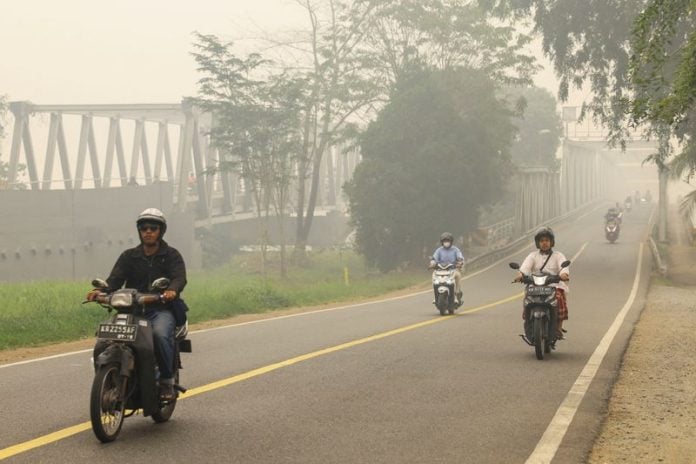
PONTIANAK, Indonesia, Sept 16 (Reuters) – Indonesian housewife Mimi Marlina rode a motorbike through thickening haze blanketing the city of Pontianak on Borneo island, making a foray to buy groceries and supplies as the Southeast Asian nation battles raging forest fires.
“We can still hold it off with medicines, but I’m concerned that if this persists, it will lead to worse illnesses,” said the masked 45-year-old mother of two children who are battling respiratory problems, from coughing and sore throats to fever.
The province of West Kalimantan on Borneo, home to Pontianak, is one of the areas worst hit by Indonesia’s most intense wildfires in 11 years as “super-El Niño” weather conditions drive up temperatures and cause punishing droughts.
Despite wearing a mask, Mimi said she herself was labouring for breath in the widespread haze and pollution spikes, which often push air quality to hazardous levels.
Volunteers are going door-to-door in the province, handing out cylinders of life-giving oxygen to residents and firefighters struggling to breathe, in a campaign called “Rumah Oksigen”, or Oxygen House.
AIR TURNS UNHEALTHY IN NEIGHBOURS SINGAPORE AND MALAYSIA
The air has also turned unhealthy in neighbouring Singapore and Malaysia because of the transboundary smog, often called haze in Southeast Asia’s humid weather, for a mix of smoke from clearing land for farming, soot and tiny suspended particles.
“Visits for respiratory illness cases are on the rise due to the fires,” said Popong Solihat, head of a public health clinic in Pontianak.
More than 12.5 million people have been exposed to haze caused by fires across seven provinces on Indonesia’s islands of Borneo and Sumatra, health ministry data shows.
The numbers battling wildfire-related respiratory illnesses in those provinces have more than doubled to 113,336 by September 9, versus 50,891 on September 1.
In the first 11 days of September, Solihat’s clinic treated 187 cases of breathing difficulties, compared to 422 for all of August. “And the daily visits now could range between 80 and 120,” he added.
OXYGEN CYLINDERS HANDED OUT
Among those who received oxygen cylinders is Suriana in the district of Kubu Raya, who said her health had deteriorated as air quality worsened.
“I often feel short of breath when exposed to the smoke,” said the 54-year-old, who goes by one name, as many Indonesians do. “It seems to be getting worse now, particularly in the mornings and evenings, when the haze is at its strongest.”
Indonesia’s emissions of 19.7 million metric tons during the week to September 7 made up more than a third of the global total, says the Fire Emissions Watch portal of the European Union’s Copernicus climate monitoring service.
From January to July this year, fires raged across 202,000 hectares (almost 500,000 acres) of land, government data showed. Environmental group YKAN has estimated that fire damaged 600,000 hectares (1.4 million acres) more in August.
Indonesia has stepped up fire-fighting efforts, sending more than 50 aircraft to drop water on the flames and engage in cloud seeding to bring rain, while Japan sent three CH-47 Chinook and 180 crew last week to help.
(Reporting by Johan Purnomo, Soepriyadi Gunawan; Additional reporting by Xinghui Kok in Singapore Writing by Fransiska Nangoy, Zahra Matarani; Editing by Clarence Fernandez)
Disclaimer: This report is auto generated from the Reuters news service. ThePrint holds no responsibility for its content.