



You may have missed it, but hostile regimes that were once shunned are now quietly being normalized. From Myanmar to Afghanistan, Belarus to Venezuela, military dictatorships, hardline Islamists and autocrats are edging their way back into the global order.
For some, that makes perfect sense. Governments naturally prioritize security and national interest, sanctions can be hit and miss, and businesses will pursue opportunities regardless of the optics. Yet there should be a cost for regaining a seat at the table.
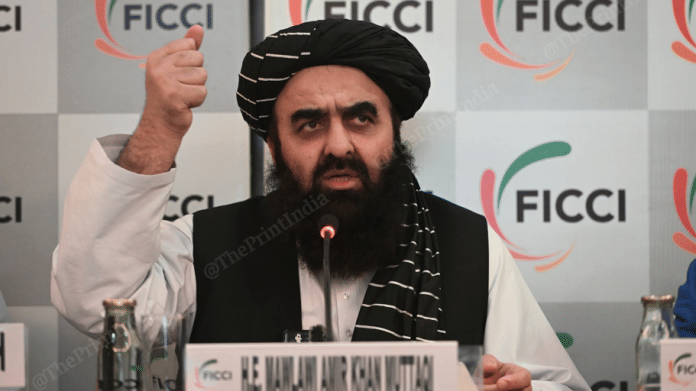
Take the Taliban. Five years after it seized Kabul following the chaotic US military withdrawal, it has won a series of key diplomatic gains. Taliban-appointed diplomats now control missions across a growing number of countries including China and the United Arab Emirates, and it has signed economic and security agreements with neighbors. Has this recognition come at a cost? Not at all. The regime’s repressive nature, its ties with al-Qaeda and transnational terrorism, and its crushing treatment of women and girls all continue unabated.
Aaron Zelin, a fellow at the Washington Institute for Near East Policy, calls it an “accreditation cascade” — through Gulf states, Turkey and Central Asia — where governments have accepted Taliban outreach without formally recognizing its rule. He notes in his analysis of five years of Taliban diplomacy that what began as meetings with a handful of nations has developed into joint commissions, trade councils and foreign missions. The regime is now making overtures to Washington on critical minerals.
On the sidelines of the United Nations General Assembly this week, High Commissioner for Human Rights Volker Türk attended a meeting that implored the world to ensure that international engagement on Afghanistan was human-rights based and principled. The governments that are cutting deals with Taliban representatives are doing anything but.
This doesn’t mean that isolating hostile regimes until they reform is the best way forward. The US has been negotiating with Belarus and easing sanctions in exchange for the release of political prisoners, while the UK is upgrading its diplomatic ties with Venezuela to support a democratic transition. And there are ways to engage without legitimizing states, or formally recognizing their governments. Representatives talk over technical and practical matters such as border movements and assistance during natural disasters. Germany, for example, explicitly says that while the Taliban hold “de facto power” it doesn’t recognize them as the legitimate government.
Nations in Asia should follow suit, particularly when it comes to dealing with Myanmar. It’s understandable that images of coup leader Min Aung Hlaing receiving an official welcome in regional capitals would cause despair among citizens, not to mention the National Unity Government that was formed by ousted lawmakers and other anti-junta figures.
Since the February 2021 coup, more than 100,000 people have been killed and 5.2 million displaced as fighting between the army and an array of ethnic militias and anti-junta groups tore the nation apart. Despite controlling as little as a quarter of the country, the military held widely condemned elections in December and January and started calling itself a government. Min Aung Hlaing was named president in April and soon embarked on a multi-nation diplomatic mission to China, Russia, Belarus, Thailand, Vietnam, Laos and Cambodia in a quest for legitimacy.
India was his first port of call. The countries share a 1,643-kilometer (1,021-mile) border, and New Delhi has every reason to communicate on issues from illegal weapons trade, drug trafficking and refugee movement. Yet it has gone far beyond that. Unlike the US and Europe, it has maintained ongoing diplomatic, military and economic contacts with the junta. On his three-day visit, Min Aung Hlaing and Indian Prime Minister Narendra Modi discussed critical minerals, trade and healthcare. It’s not clear whether Modi raised concerns about the discredited elections or the detention of Aung San Suu Kyi.
The Association of Southeast Asian Nation’s approach is no better. Asean is pushing a five-point consensus that aims to end the political and humanitarian crisis, while some member states are pursuing bilateral relations. It’s another clear lesson of what not to do. After denying the junta a seat at high-level meetings since 2021, Asean recently began testing that exclusion. To a chorus of criticism, foreign ministers held an informal meeting with their Myanmar counterpart in Bangkok in July.
Still, perhaps the gathering managed to extract a small price. The regime has since released photographs of Suu Kyi meeting an International Committee of the Red Cross representative, although it continues to reject Asean’s calls for her unconditional release and hasn’t allowed it access to her.
University of Stirling senior international politics lecturer Monalisa Adhikari has reviewed Myanmar’s outreach since the coup, tracking how the military-backed government projected normalcy through dealings with other states. She told me that nations should be clear about whether diplomatic actions constitute formal recognition or are simply technical contacts on practical issues. That would prevent the regime from portraying such engagement as an acknowledgement of its legitimacy.
When hostile regimes are allowed to reintegrate into the global order without reducing any of their abuses, it can undercut the leverage used to resolve conflicts and strengthen their hold on power. Engagement isn’t the problem. Normalization without conditions is. If refusing every demand for change carries no lasting cost because relations are eventually restored anyway, why would anyone comply?
Ruth Pollard is a Bloomberg Opinion Managing Editor. Previously she was South and Southeast Asia government team leader at Bloomberg News and Middle East correspondent for the Sydney Morning Herald.
Disclaimer: This report is auto generated from the Bloomberg news service. ThePrint holds no responsibility for its content.
Also Read: Pakistan strikes Afghanistan days after Kohat mosque attack, Taliban says 3 of family killed