



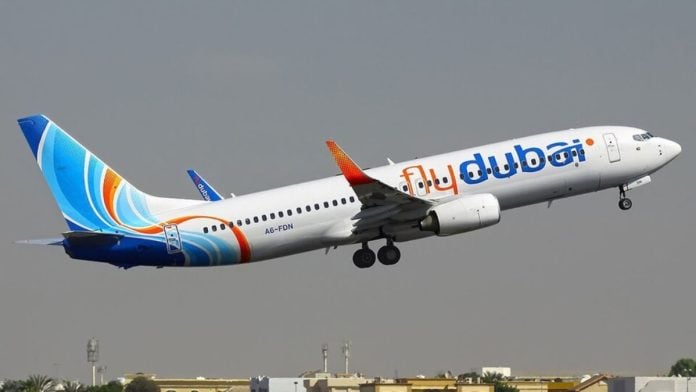
New Delhi: The flydubai flight made an emergency landing in Saudi Arabia after Captain Smit Machchhar was stabbed by its co-pilot on Wednesday. So who investigates a mid-air incident which involves multiple countries?
Flight FZ1073 was flying from Dubai to Tel Aviv when the cockpit scuffle unfolded. The injured captain is Indian, the airline is based in the UAE, the aircraft is a US-manufactured Boeing 737, and the horrific incident came to an end in Saudi Arabia. Under international aviation rules, each of these links can give different countries a defined role in the investigation.
Aviation accident and serious-incident investigations are governed by international standards laid down by the International Civil Aviation Organization (ICAO), rather than by the nationality of the pilots or airline.
According to ICAO’s Annex 13, the country where the accident physically occurs—State of Occurrence—generally takes the lead and possesses the ultimate authority over the investigation.
To ensure global safety and technical precision, this leading nation collaborates with accredited representatives from other jurisdictions—the State of Registry (where the plane is registered), the State of the Operator (where the airline is based), and the States of Design and Manufacture (where the aircraft was engineered and built).
While countries whose citizens were affected are granted rights to access factual findings, the core investigative framework is entirely structured around geography, manufacturing engineering, and operational registration to maintain technical objectivity.
“The State of Occurrence shall institute an investigation into the circumstances of the accident/(incident) and be responsible for the conduct of the investigation,” states Annex 13.
However, there are exceptions. In certain cases when the exact location cannot be established, Annex 13 has separate provisions. In such cases, the State of Registry assumes responsibility for the investigation. The state conducting the investigation can also delegate all or part of it to another state by mutual agreement.
Since the flydubai cockpit confrontation took place mid-air, determining which state has primary responsibility for the aviation investigation depends on the precise location and classification of the occurrence.
The UAE, meanwhile, said its General Civil Aviation Authority is investigating the incident.
“The Authority’s investigation teams, in coordination with the relevant authorities, are continuing their work to determine the causes and circumstances of the incident, including a review of the operational and security aspects,” it said in a statement.
Flydubai has also issued a statement, saying that the reasons and motives behind the incident remain subject to a formal investigation.
“Following the incident involving flight FZ 1073 on 30 September, and in coordination with the relevant authorities, flydubai flights to and from Israel will be suspended while the investigation continues,” a flydubai spokesperson said in a statement.
Therefore, the investigation is unlikely to be limited to a single country. The location of the incident, the aircraft’s registration, the airline’s country of operation, the aircraft’s manufacturer and the nationality of those involved can all determine what role different countries play.
So what role can the different countries play?
The UAE’s role comes first because flydubai is a UAE-registered operator. Under Annex 13, the State of the Operator has the right to appoint an accredited representative to participate in an investigation. This can include access to relevant evidence, participation in investigative activities and receiving the final report.
But the State of the Operator and the State of Registry are not always the same. The aircraft’s registration is, therefore, a separate factor in determining which country’s authorities can participate.
The aircraft itself brings another country into the investigation. FZ1073 was operated by a Boeing 737-8, manufactured by the US aerospace company Boeing. Under Annex 13, the State of Design and State of Manufacture can appoint accredited representatives to participate in an investigation.
Their role is relevant to technical questions involving the aircraft. But participation does not mean that the US would lead the investigation. The lead responsibility remains with the state responsible under the Annex 13 framework.
Meanwhile, India’s position is different.
Machchhar is an Indian citizen and was seriously injured in the incident. His nationality does not make India the investigating state. However, Annex 13 provides special rights to a state whose citizens are killed or seriously injured in an accident. Such a state can appoint an expert who is entitled to access relevant information and participate in the investigation within the limits prescribed by the annex.
Also read: Flydubai sudden descent—What happens to your body when a plane drops 14,000 feet?
Role of Saudi Arabia
As the plane made an emergency diversion to Tabuk, Saudi Arabia currently holds physical custody of the co-pilot, who was arrested on the ground. Saudi authorities are conducting initial local interrogations.
Saudi forensics and law enforcement are responsible for processing the physical crime scene inside the cockpit while it sits at Tabuk.
Since the UAE Public Prosecution is explicitly investigating whether the mid-air stabbing was tied to a pre-planned terrorist plot, Saudi intelligence agencies are playing a critical intelligence-sharing role. They are actively sharing their local interrogation findings with both UAE investigators and international intelligence networks to determine if the suspect had broader operational ties.
Additionally, Saudi authorities had to secure the airfield, house the transit passengers in a secure zone, and coordinate with international partners to arrange the passengers’ evacuation to Israel.
Saudi Arabia also has its own aviation investigation framework. Its Civil Aviation Law provides for an investigation committee to investigate aviation accidents, including those involving a foreign aircraft within Saudi territory. The law also specifically provides for coordination with relevant parties when an accident is suspected to have been caused by a criminal offence.