


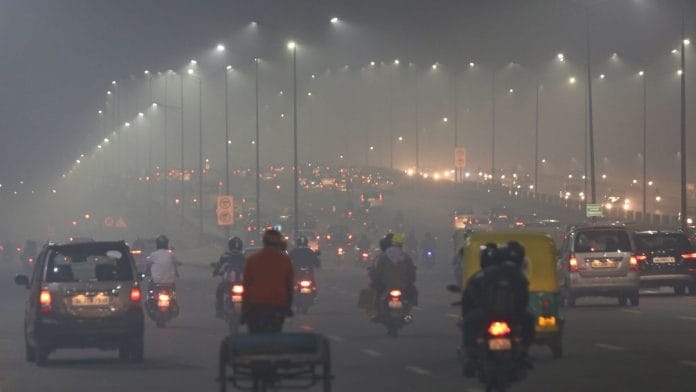
New Delhi: Shutting the windows, drawing the curtains and staying indoors have become familiar responses to Delhi’s winter pollution. But stepping inside does not necessarily mean leaving the polluted air behind. Fine particles can follow people into their homes through openings that are easy to overlook, while everyday activities such as cooking can add to the pollution already indoors.
In other words, a house is not an airtight refuge from the air outside.
How does outdoor pollution enter a home?
There are three main ways outdoor air enters a building: through open windows and doors, through mechanical ventilation systems, and through a process called infiltration.
Infiltration happens when air moves through small openings, joints and cracks in walls, ceilings, floors and around doors and windows. Wind and differences in temperature and air pressure help drive this movement. Even when windows are shut, some exchange between indoor and outdoor air continues.
The particles carried by this air include PM2.5, the fine particulate matter that can penetrate deep into the respiratory system. Vehicle exhaust, industrial emissions, smoke and road dust are among its sources.
A US Environmental Protection Agency guide on indoor air quality explains that outdoor particles can enter through both obvious openings and tiny gaps in a building’s structure. The amount that gets inside depends on the building, ventilation, outdoor pollution levels and weather conditions.
Your kitchen can add to the problem
Outdoor pollution is only part of the picture. Indoor activities can also generate particulate matter.
Cooking, particularly frying and other high-temperature methods, can release fine particles. Burning incense sticks and candles, smoking, using certain heaters and carrying dust indoors can also affect air quality.
This means closing windows to limit outdoor pollution can create another problem if indoor sources are not controlled. With insufficient ventilation, pollutants generated inside can accumulate.
Research on Delhi households has highlighted how serious this problem can be. A study by researchers including Michael Greenstone, Kenneth Lee and Harshil Sahai, published in the AEA Papers and Proceedings in 2021, found that wintertime indoor PM2.5 levels in both high- and low-income households exceeded World Health Organization guidelines by more than 20 times.
The study also found that indoor pollution was not necessarily reflected in readings from the nearest government outdoor monitoring stations.
Also Read: India is spending Rs 14,500 crore on energy storage. Why does the grid need it?
Can you keep polluted air out?
There is no single measure that can completely isolate a home from outdoor pollution. But exposure can be reduced.
Keeping windows and doors closed when outdoor pollution is high can limit the amount entering directly. Properly sized air purifiers with high-efficiency particulate air filters can reduce airborne particles in a room. Kitchen exhaust fans that vent outdoors can help remove cooking emissions, while avoiding indoor smoking and unnecessary burning can cut additional sources.
Ventilation still matters. When outdoor air quality improves, opening windows can help remove pollutants generated indoors. The challenge is to balance the need for fresh air with the pollution outside.
Delhi’s winter air makes that balance difficult. But it also underlines an important point: tackling air pollution cannot stop at the doorstep. Cleaner outdoor air and better indoor ventilation and filtration are both necessary if people are to breathe easier.