



New Delhi: US Vice President JD Vance says the US will build the Alaska LNG project with or without South Korea. But there is a problem: Seoul has not actually agreed to invest in it yet.
“Whether it’s with (South) Korea’s current government or the next government or, frankly, whether we have to work with Japan or other countries, we are going to complete this project,” Vance said in an interview.
His remarks came after US President Donald Trump said South Korea would invest $200 billion in US projects, including the proposed Alaska LNG pipeline. Seoul, however, has pushed back on the suggestion that it has already committed to the project, saying it first needs to establish whether the investment makes commercial sense.
A finance problem
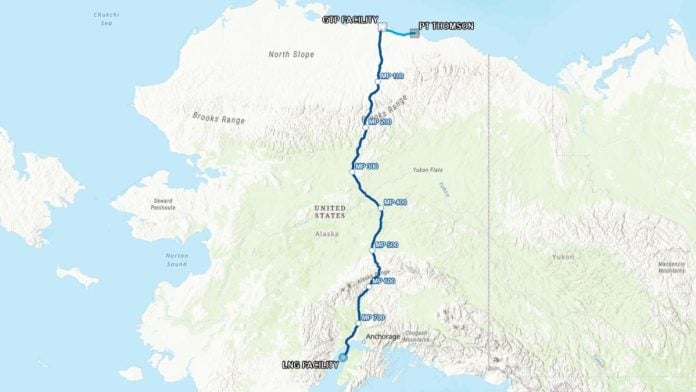
The Alaska LNG project is a proposed $44.5 billion to $54.5 billion development to transport natural gas from Alaska’s North Slope, in the state’s far north, through a pipeline to an LNG liquefaction and export facility in southern Alaska.
US infrastructure company Glenfarne Group owns 75 per cent owned of the project and 25 per cent is owned by the state of Alaska. It involves building a pipeline of nearly 1,300 km from the North Slope to Nikiski, a port on the Kenai Peninsula, where the gas would be converted into liquefied natural gas and shipped to overseas buyers.
The project is targeting a final investment decision on the pipeline in 2026 and on the export facility in 2027, with first LNG exports planned for 2031.
One of its biggest selling points is the geography. The proposed export terminal on Alaska’s southern coast could offer a shorter shipping route to East Asian markets than LNG shipped from terminals on the US Gulf Coast. The project currently has preliminary agreements covering around 13 million tonnes of LNG a year with buyers in Japan, South Korea, Taiwan, Thailand and French energy major TotalEnergies. But not all of these agreements are binding.
Alaska LNG is not a new idea. The project has been discussed for decades but has struggled to secure financing, firm buyers and a final investment decision. The Trump administration has now revived it as part of its broader push for US “energy dominance”, presenting the project as a way to increase American energy exports while strengthening energy security and ties with Asian allies.
But that does not automatically make the project commercially attractive. Alaska LNG would be an expensive and technically challenging development. It requires not just the LNG export terminal but also an entirely new, roughly 1,300 kilometer pipeline. Its costs could translate into higher LNG prices for buyers, while the project would have to compete with cheaper US Gulf Coast exports as well as Canadian LNG projects seeking to supply Asian markets.
That is where South Korea comes in. Trump had announced that Seoul would invest $200 billion in US projects, including the Alaska LNG pipeline. But South Korean officials subsequently made clear that participation in Alaska LNG was not yet final.
Also read: Should US colleges ban frats? Cornell’s fraternity case has revived an old question
‘We are going to get this done’
South Korean Finance Minister Lee Hyoung-il told parliament on Tuesday that the government would review the proposed investment to assess its commercial viability.
“The US shares the understanding that commercial reasonableness is important,” Lee said.
South Korean Industry Minister Kim Jung-kwan similarly said commercial viability was a prerequisite for participation, while acknowledging that the project had strategic value, particularly amid disruptions to global energy supplies linked to the conflict in the Middle East.
Vance, meanwhile, has sought to make clear that Washington does not intend to let South Korea’s hesitation derail the project.
“You have a President who delivers on his promises,” Vance posted on X Wednesday, arguing that the Trump administration’s energy agenda had already channelled hundreds of billions of dollars into American oil and gas.
“We are going to get this done,” he added.
He also argued that there was strong demand for Alaskan gas, describing it as “cheaper, higher quality and more reliable” than gas from “some petty dictatorships”.
His comments underline the gap between Washington’s political commitment and Seoul’s commercial calculation. The US may be prepared to pursue Alaska LNG with Japan or other buyers if South Korea does not participate. But for Seoul, the central question remains whether the project can deliver LNG at a competitive price.
The project is also being folded into the broader economic and political messaging ahead of the US midterm elections in November.
(Edited by Saptak Datta)