



In 1970, my uncle came back from Japan with a battery-operated Godzilla. Eleven-year-old me — a kaiju cinema fan for years by then — loved it. But a couple of weeks later, the monster stopped wobbling around on its thick metal legs. I sadly reached for an explanation that today would be called a meme: What did you expect, it was made in Japan.
The year my Godzilla went kaput, that punchline for shoddiness already had been around for more than two decades. I was not the only boy unhappy with his toy. Take this short item from February 1953 in The New Yorker’s Talk of the Town column: “A youthful recipient, at Christmas, of a furry mechanical bear — one that came in a box stamped ‘Made in Japan’ — had occasion to operate on it, and discovered that, apart from its skin, it consisted largely of a Schlitz beer can.” Even the country’s most famous export in the late 1950s and ‘60s, the transistor radio, wasn’t completely reliable.
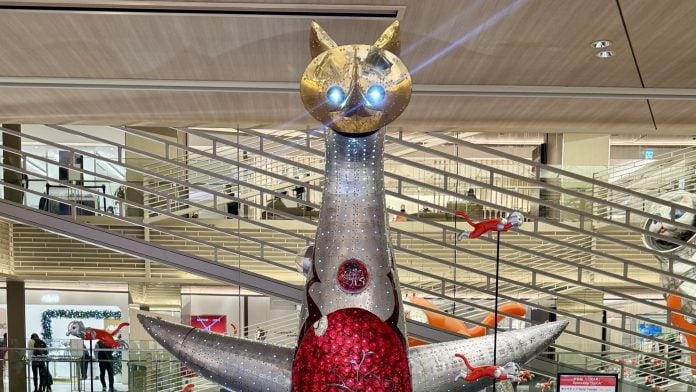
But by 1970, “Made in Japan” as an insult was getting a good bit unfair. My Godzilla-gifting uncle had in fact been to Expo ‘70 in Osaka, such a historic showcase for the country’s artistic and commercial prowess that its centerpiece Tower of the Sun still proudly stands and is a recognizable Japanese pop-art icon more than a half-century later.
In the years leading to that world’s fair, Japan and its people had been assiduously establishing a reputation for exacting excellence. Tokyo held the Summer Olympics in 1964 — the first time the games had taken place in Asia — which became the backdrop for the introduction of the Shinkansen, the record-setting intercity bullet train.
Meanwhile, the cameras and lenses of Nippon Kōgaku were converting American photojournalists and eventually whole generations of amateurs. The quality was so unexpected from a country long ridiculed for the caliber of its goods that the 1964 Stanley Kubrick movie Dr. Strangelove had a character saying, “Strange thing is that they make such bloody good cameras.” Nippon Kogaku is now called Nikon. As for the primary manufacturer of the transistor radio, the company was originally called Totsuko (short for Tokyo Tsushin Kogyo). Today, we know it as Sony. Scores of global brands now radiate Japanese quality around the world.
I was reminded of Nikon’s rise while reading my colleague Wes Kosova’s story on the global ascendance of Chinese consumer brands — and how Shenzhen-based Viltrox has crept into the elite ranks of the world’s best camera-lens makers. That led me back to Chinamaxxing. When I wrote this around eight months ago, I thought I was late to the party and the trend would vanish. But it hasn’t. Instead, the concept has grown. We are no longer talking about merely the grassroots adoption in the West of almost stereotypical Chinese habits such as drinking hot water, but rather the overpowering force of high-quality Chinese exports around the world.
The European Union — home to some of the most competitive and technically advanced automakers in the world — has become a thriving market for Chinese EVs and hybrids. As an HSBC Global Investment Research report concluded in June: “Chinese cars are better.” While consumers in the US still scoff, that’s only because they have little experience with the vehicles, the result of a virtual ban rooted in 100% tariffs. Europeans know better, having gone head-to-head with Chinese producers in both price and quality, as my colleague Chris Bryant has written about here and here. It’s a major flex by the People’s Republic — and it has led the EU to defend its turf with tariffs on EVs since 2024 and to negotiate quotas with Chinese carmakers this year (just as it did with Japanese automakers in the 1990s).
Of course, apart from their Labubu charms dangling from bags, many ordinary consumers don’t realize that many of the products and retailers they like are from China. The companies themselves seem to hide that fact. I had to click several times on the Viltrox website to get to a chronology that said the brand had its origins in China. And there are other forms of disguise. Miniso, the lifestyle shop and toy store, is based in Guangzhou, but has a logo that echoes the Japanese fast-fashion giant Uniqlo. Impersonations like these reflect an innate creative diffidence and do little to dissipate China’s reputation for copying. It’s almost as if the admission of country of origin might taint them by association with the infamously cheap crap of compatriot Temu, the online marketplace operated by PDD Holdings (which was founded in Shanghai but established its legal domicile in the Cayman Islands while headquartered in Dublin).
The reticence may change as China’s consumer companies get more confident about where they’re from (Bloomberg’s Juliana Liu has written about Shein Group Ltd’s failed attempt to pivot away from its super-efficient manufacturing base in the mainland). The lesson from Japan is that pride of place is part of the product, which was true even when “made in Japan” wasn’t a compliment. I kept my non-working Godzilla on the shelf for years — I think it’s still somewhere in the old family home in the Philippines — unwilling to give it up because, after all, it was made in Japan.
This column reflects the personal views of the author and does not necessarily reflect the opinion of the editorial board or Bloomberg LP and its owners.
Howard Chua-Eoan is a columnist for Bloomberg Opinion covering culture and business. He previously served as Bloomberg Opinion’s international editor and is a former news director at Time magazine.
Disclaimer: This report is auto generated from the Bloomberg news service. ThePrint holds no responsibility for its content.