



Taipei: Even as intense debate continues around the world over fears of Artificial Intelligence (AI) replacing human workers—from manufacturing floors and warehouses to offices—tech giants have already moved on to the next wave of generative AI, where intelligent “agents” can perceive, reason, plan and perform productive work autonomously.
It may appear like science fiction, but isn’t.
In Taipei this week, the who’s who of the tech world have gathered at COMPUTEX 2026—one of the world’s leading technology trade shows—to unveil or introduce their companies’ “agentic AI”, or what in layperson’s language is called “Useful AI” models.
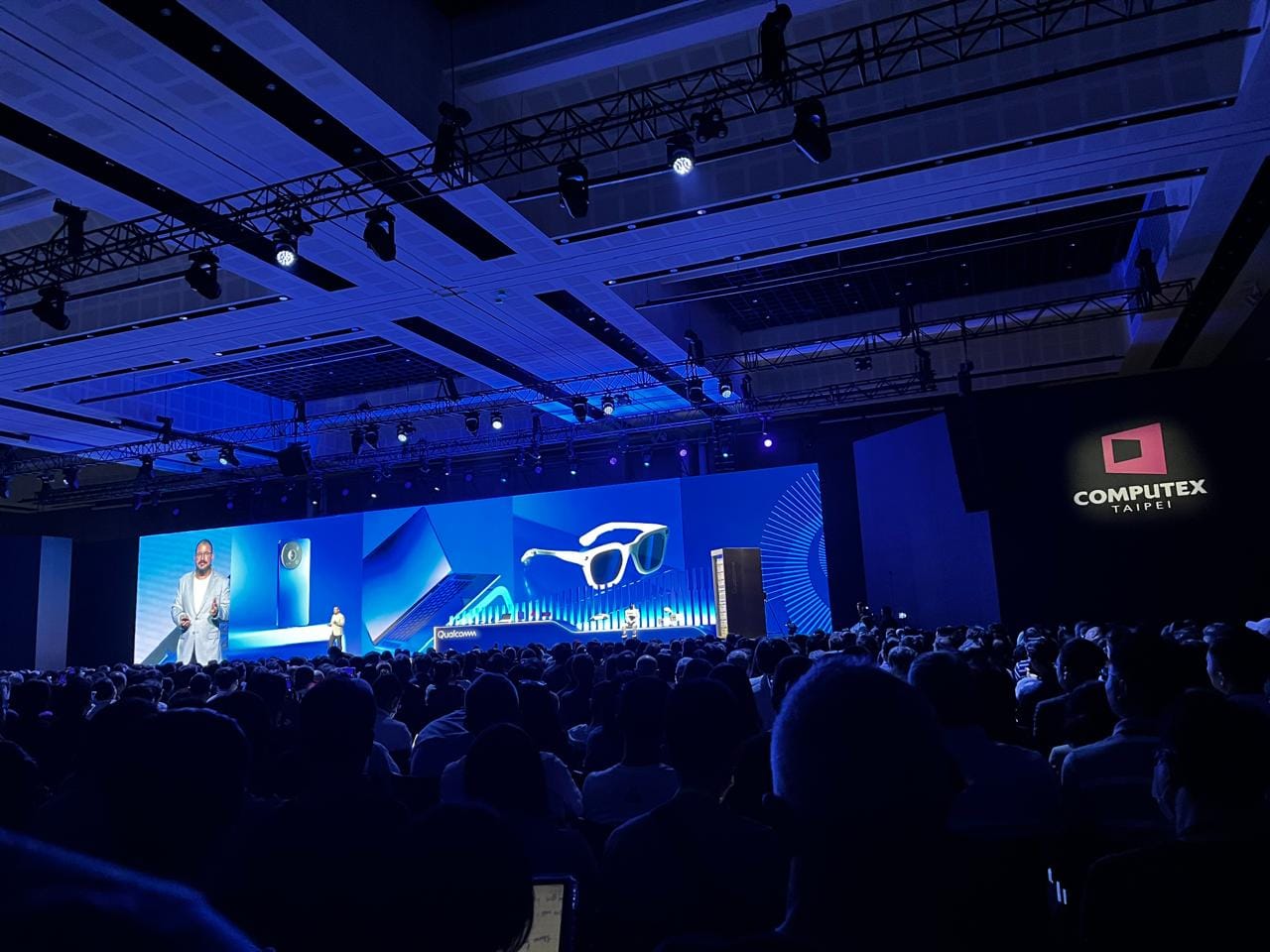
Delivering his inaugural keynote address Monday at the five-day event, Cristiano R. Amon, President and CEO of Qualcomm, a leading US-based semiconductor and telecommunications equipment company, said the “era of agentic AI has officially arrived”, and that people will increasingly come to depend on AI agents at home and workplace to filter information, handle daily chores, get personal updates and plan their activities.
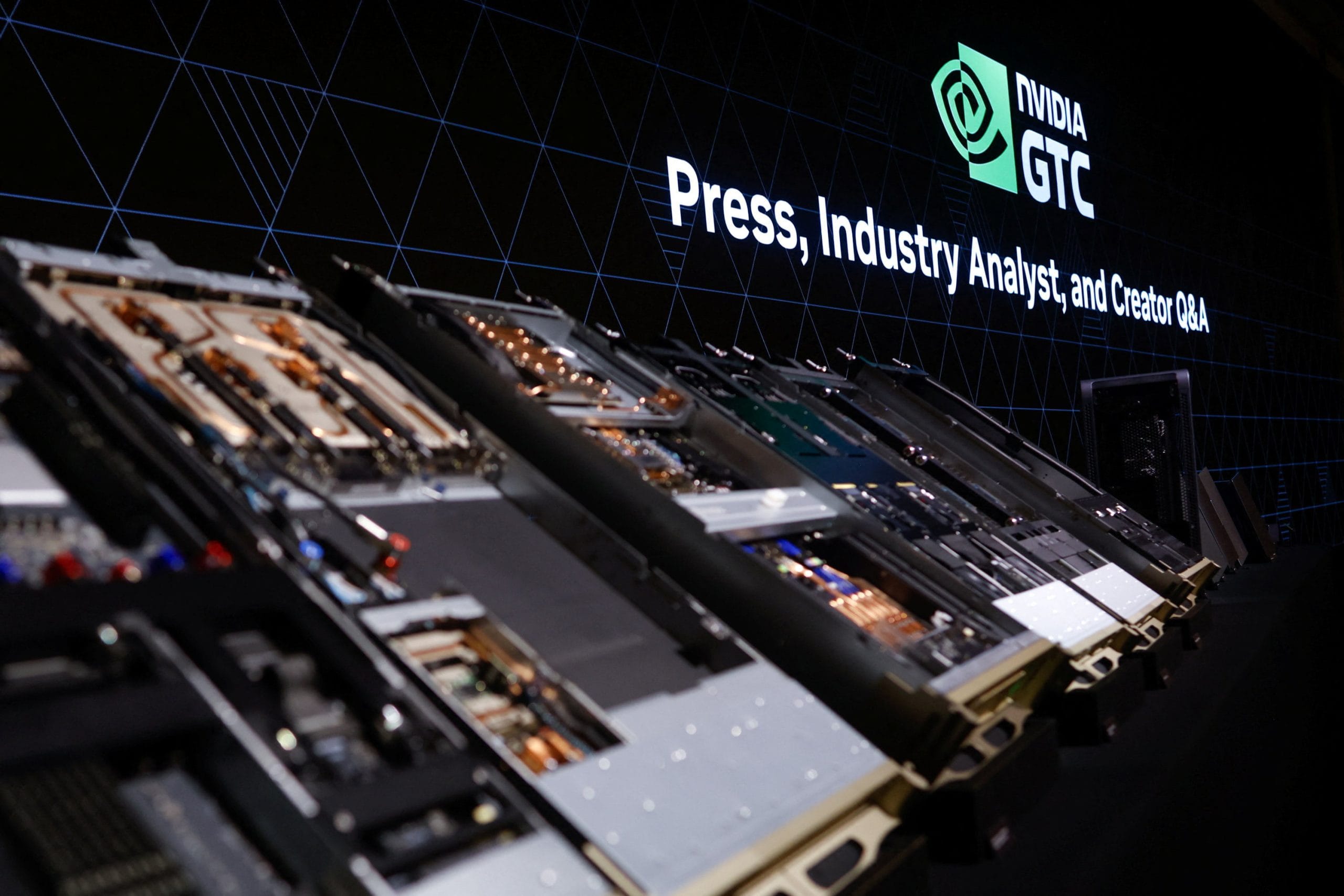
Jensen Huang, the founder and CEO of US-headquartered NVIDIA, one of the world’s most valuable tech companies, introduced Vera Rubin, a multi-rack pod-scale system built to process agentic AI at scale.
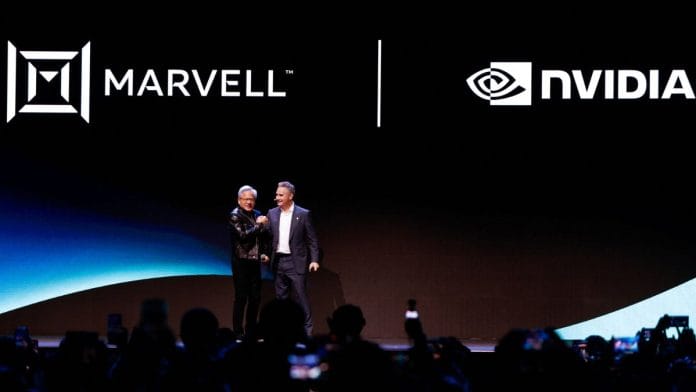
Speaking alongside Matt Murphy, CEO of US chipmaker Marvell Technology at COMPUTEX Tuesday, Huang said that agentic AI will fuel demand for AI hardware.
“It’s the reason why your (Marvell Technology) and my (NVIDIA) demand are going through the roof,” Huang said jokingly. “And the computing pattern that makes it possible is called agents. These agents have a particular computing pattern that is disaggregated and distributed.”
The Qualcomm CEO explained more elaborately how agentic AI will change the way we work.
“At home, you can have agents that are going to basically update everyone about your activity in your schedule; all the things you need to do at work will be with you… all the projects that you need to do, what are the tasks that you need to do, it flags the decision, and it is going to be working with you,” Amon said in his address at the Nangang Exhibition Centre. “And in your personal life, it will give you information that is relevant to you, all the updates that you need, work in your schedule.”
The Qualcomm CEO added that 2026 is going to be the year of “agents”.
“Everything is going to be a little different. It is going to feel more autonomous. It is going to feel more personal and it is going to feel really like a companion.”
Agentic AI, according to Amon, is going to change the human-computer interface and, as a consequence, will change the architecture of all our personal computing devices.
“It is going to get to an incredible amount of scale that has evolved from simply answering prompts in work as a tool that augments how we as humans work with our computers into something that can take action on their own,” he said.
With agentic AI, your mobile phone will not be at the centre of your digital life, the CEO said. “Those agents become the centre of your digital experience. It is not about an extension of the phone. The digital ecosystem is no longer at the phone itself and ioS and the applications… Those devices become endpoints for agents and agents are not trapped or attached to a single ecosystem.”
Also Read: Agentic AI is the real threat to white collar jobs. It’ll spell more trouble for Indian middle class
What is agentic AI
According to MIT Sloan, AI agents or agentic AI are a new breed of AI systems that are “semi- or fully autonomous and thus able to perceive, reason, and act on their own”.
“Different from the now familiar chatbots that field questions and solve problems, this emerging class of AI integrates with other software systems to complete tasks independently or with minimal human supervision,” it says.
NVIDIA’S website describes autonomous AI agents as the new digital workforce—working for and with us.
“They represent the next evolution in artificial intelligence, transitioning from simple automation to autonomous systems capable of managing complex workflows within defined security and governance boundaries. These agents not only automate repetitive and time-consuming tasks but also empower individuals and organizations to operate more efficiently by acting as intelligent personal assistants,” the website reads.
Unlike traditional generative AI models that follow a basic “request-and-respond” framework, autonomous agents are systems of AI models that orchestrate and collaborate with other agents and utilise tools such as large language models (LLMs), retrieval augmented generation (RAG), vector databases, APIs, frameworks, and high-level programming languages like Python.
At his keynote address Monday at another event at GTC Taiwan as COMPUTEX kicked off, the NVIDIA founder explained the difference.
“What used to be an application, code or operating system, today, it is an agent, which consists of a large language model, or many, sitting inside a harness, and that harness helps it, orchestrates it, to do productive work. This is the input. When that input comes, it has to understand, observe, reason, act, use tools. That tool could be a spreadsheet, web browser, a data processing engine, database engine, for example. This is orchestrated—this harness orchestrates, this routing of information,” he said.
This entire system is called an agent.
“The LLM is used to do the thinking, and the harness connects everything together, just like an operating system. And so this is the new computing model and this is what an agent is. It could do incredible things,” Huang added.
“This is now the new computing pattern. Where earlier we used to launch an application, click and type, we now replace that with explaining to the AI what we want — our intent — and the AI generates the code or uses tools and produces the necessary output. This is how computers are going to work in the future. This is agentic AI. For two years we’ve been building towards this and now it has arrived,” the Nvidia CEO said.
Also Read: Indian AI firms staring at a structural trap—building on open-source models that will soon plateau
‘AI reducing jobs claim–complete nonsense’
The NVIDIA CEO also brushed aside talk of agentic AI reducing the number of jobs.
“The number of engineers, software engineers, is actually increasing. People talk about AI reducing jobs—complete nonsense. It’s causing more software engineers to be hired. And the reason for that is very simple. If you can hire a software engineer and you could generate $9 trillion worth of productive work, why wouldn’t you want to hire more software engineers?” Huang said.
“If that line was flat, then obviously people will hire fewer software engineers. But because the output is so incredible, people want to hire more software engineers. This is going to show up in our economy somehow soon.”
He added that from the industry’s perspective, this means tokens are now in extraordinary demand. “Because if you could do this, you’re going to want to produce more of it. And because tokens are now profitable units, the AI companies want to build a lot more tokens, generate a lot more tokens, build more AI factories, which is the reason why compute demand here in Taiwan has skyrocketed.”
Compute refers to the hardware resources that make AI models work, allowing them to train on data, process information, and generate predictions
AI tokens are tiny units of data that come from breaking down bigger chunks of information. According to the Nvidia website, models process tokens to learn the relationships between them and unlock capabilities including prediction, generation and reasoning. The faster tokens can be processed, the faster models can learn and respond.
Huang said many people have told him, “Jensen, AI is coming, agentic AI is coming; therefore all of the software companies are going to go out of business.”
The NVIDIA CEO said that it’s going to be exactly the opposite.
“Because there are going to be so many agents, the world is no longer limited by the number of people. Therefore, those agents are going to use more tools than ever. This is actually an incredible time to be a software company. But the software has to be presented to the agent in a way that the agent can use it. This is a big breakthrough.”
Amon also said that the arrival of agentic AI is going to throw up ïncredible opportunities” in computing.
Today’s devices, he said, were not designed for such experiences. “It will require a different kind of device when agentic AI becomes the number one AI function in our daily lives, especially for personal computing as we interact with those devices,” he said.
“All those devices today have been built for actions initiated by the user, not by the agent. The agent operates all the time. They carry context forward. They will orchestrate multiple tasks, but they are going to do it on their own, not necessarily with human intervention. That alone gives a glimpse of how those devices are going to change and how the architecture of those devices is going to change,” he added.
This will need a change of hardware, the operating system and the application. “That’s an incredible opportunity that we have in computing across this entire safer surface area of devices, which are going to be upgraded for this age of AI. You need to tightly integrate across all the compute domains.”
Along with opportunities, the Qualcomm CEO also flagged enormous challenges as agentic AI takes off, especially the strict power and latency constraints. “If it’s challenging to make your phone last all day, with you operating it, what happens when you and the agent are operating it? That’s an enormous challenge.”
The reporter is in Taipei at the invitation of COMPUTEX 2026.
(Edited by Sugita Katyal)