







Mumbai: Pallavi Pednekar, who lives in one of the redeveloped buildings at Kannamwar Nagar in Mumbai’s Vikhroli, is embarrassed to invite guests to her home.
“I am afraid they will say you live in such a nice building but it stinks so badly in here that we don’t feel comfortable,” she said, when ThePrint visited the area Thursday.
The windows of her fifth-floor home open to a small green patch of mangroves followed by a large saucer-shaped cake-like structure, which is the backbone of Mumbai’s solid waste disposal system. This is the Kanjurmarg landfill where 90 percent of the city’s garbage is dumped and processed.
Located in Mumbai’s eastern suburbs, with buildings having mushroomed around the site over the years, the Kanjurmarg landfill has turned into a major bone of contention between the Mumbai civic body and residents of Kannamwar Nagar, a housing colony nearest to the dumping ground, which comprises a material recycling facility and a bioreactor landfill.
The residents have been fighting in the Bombay High Court since 2018, complaining about the foul odour they have to live with every day. They say they will settle for nothing less than the dumping ground’s closure and shift to some other location, far away from human population.
“The BMC’s (Brihanmumbai Municipal Corporation) stand is that we cannot shift the dumping ground to another location. We will only be moving the same problems somewhere else. Instead, we can focus on finding ways to run the landfill as scientifically as possible, minimising the problem of odour,” Kiran Dighavkar, deputy municipal commissioner, solid waste management, told ThePrint.
Then, there is also a petition by Vanashakti, a non-government organisation, challenging the environment clearances for the landfill project. According to the NGO, the site was earlier protected forest land and it demands that the status be restored.
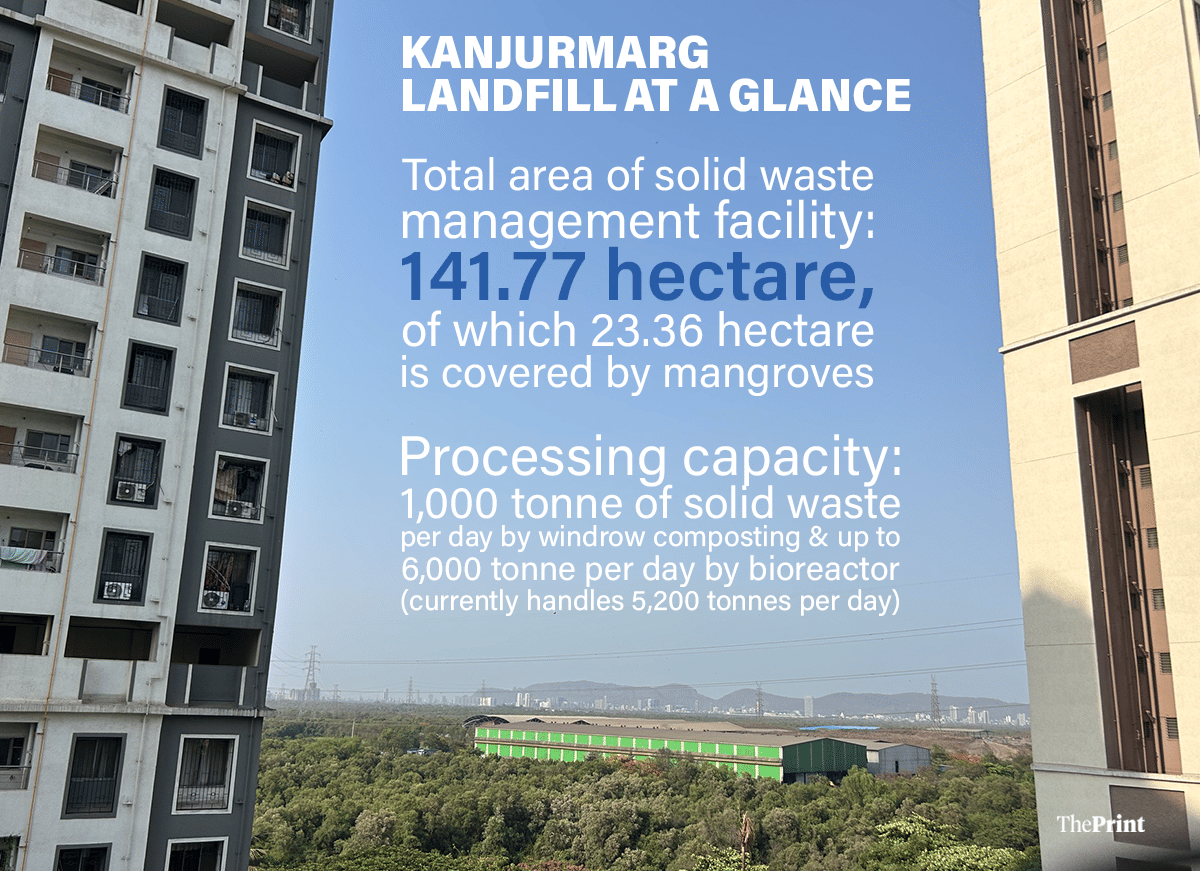
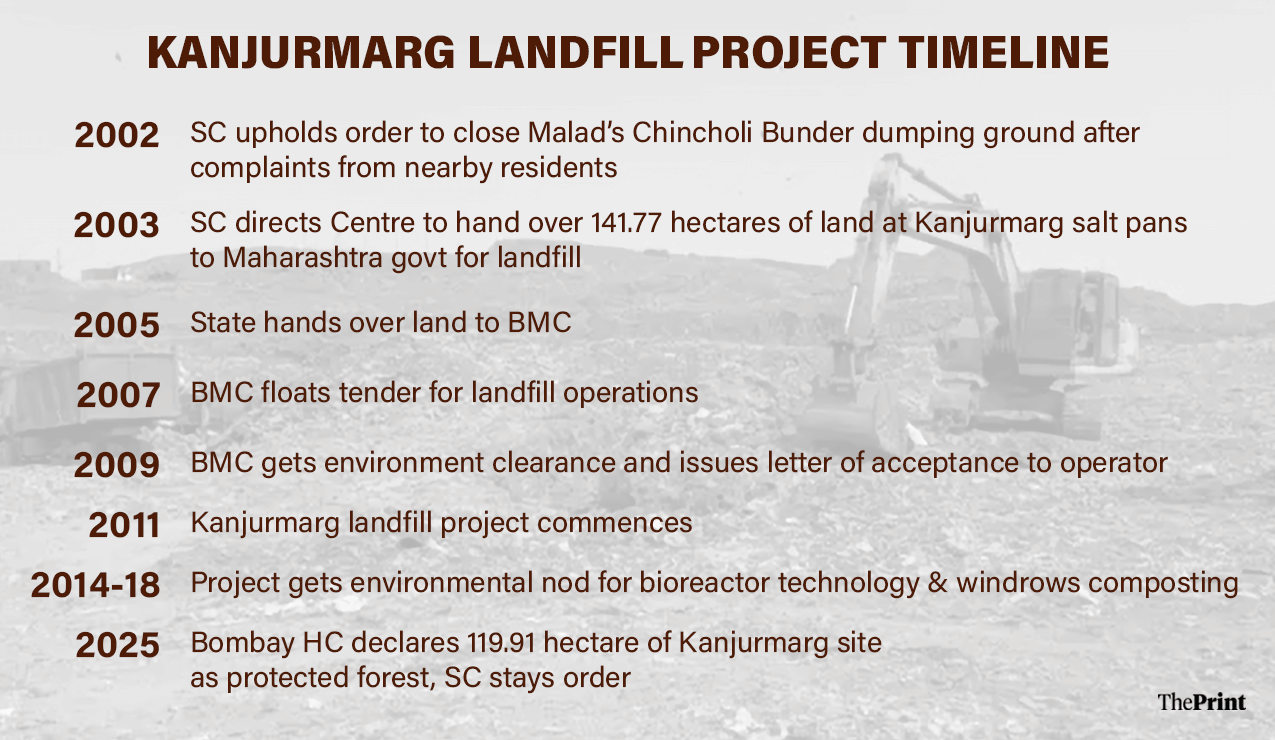
The Bombay High Court had last year obliged, declaring 119.91 hectare of the 141.77-hectare landfill as a “protected forest”. The BMC got a stay on the order in the Supreme Court, and while the apex court has permitted the landfill operations, the case about the status of the land is still sub-judice.
Earlier this week, municipal commissioner Ashwini Bhide paid a surprise visit to the Kanjurmarg site to inspect the garbage collection, segregation and processing facilities.
Prior to her visit, last month, the two Bombay High Court judges hearing the case—Justices Girish Kulkarni and Aarti Sathe—also visited the site.
In the last hearing on the matter on 7 May, the judges said that odour and emissions from the site have “since the beginning been the most disturbing issue before the court, affecting the innocent public who are suffering for no fault whatsoever on their part”.
“This, more particularly as observed by us when such odour and emissions have spread to distant areas like Mulund, Bhandup, Kanjurmarg and Vikroli. The seriousness and magnitude of this issue is hence beyond any measure,” the judges stated in the order.
The operator of the solid waste management facility at Kanjurmarg, Antony Lara Enviro Solutions Pvt Ltd, maintains they are running the site “very scientifically with the best technology procured from around the world”.
“We operate the landfill as a circular economy, with scientific processing, creating compost and generating electricity for captive purposes. We send a monthly air quality report to the MPCB (Maharashtra Pollution Control Board) and ensure that the readings are all well within limits. We are increasing the green cover around the landfill site. We are using a misting system, and also spraying bio enzymes on fresh waste received,” Srinivasan Chari, DGM, Operations, of the company, told ThePrint.
He added that the Bombay High Court’s intervention had helped improve the facility.
Further, the contractor has proposed to set up a waste-to-energy plant at the facility that can potentially take care of up to 80 percent of the waste going to the landfill.
Speaking to ThePrint, urban planner Sulakshana Mahajan said there’s no real solution to the issue.
“The problem is real. One can smell the stench a good 2-3 kilometres away. When the Kanjurmag site was proposed, there were other solid waste disposal sites in operation. But, over the years these shut down and load on the Kanjurmarg site increased greatly.”
“There is no alternative site that is suitable within Mumbai. For that matter, the Kanjurmarg site was also not ideal to begin with, there being mangroves around and the site being close to the Thane creek,” she added.
Also Read: Garbage mafia’s iron grip on Bengaluru. Even Deputy CM Shivakumar’s admitted defeat
A matter of irony
Tapan Datta, who works a government job, had in the late 2000s got a house in a building at Kannamwar Nagar through the state housing board lottery for affordable houses. In 2008, he moved into his new breezy house with a fabulous open view of the mangroves and salt pans.
“Then gradually, I found out that this place has been designated as a new dumping ground. Trucks would be in and out of the site, dumping silt on the salt pans, probably to get the area ready for the landfill,” Datta said.
Anticipating the problems, Datta put his Kannamwar Nagar house on rent and bought a flat in Dombivli, a town outside Mumbai city limits, in the Mumbai Metropolitan Region, far away from the dumping ground.
An official overseeing the Kanjurmarg landfill told ThePrint: “When this project was planned, there weren’t as many high-rise buildings in the immediate vicinity. There were just two-three storied buildings in Kannamwar Nagar that have been there since the 1960s, originally built to be a large workers’ housing colony.”
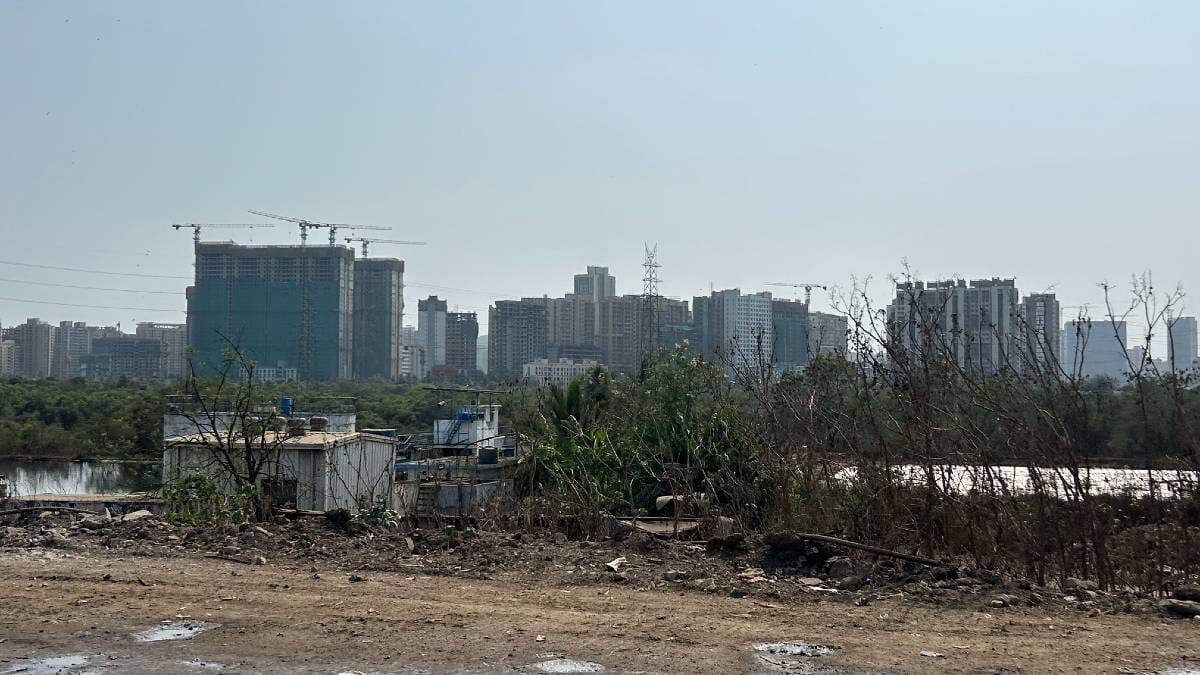
In the last decade, he said, the Maharashtra Housing and Area Development Authority (MHADA) has redeveloped a large number of the buildings, replacing the low-rise ones with multi-storied towers. From the landfill, one can now see a skyline of tall towers.
The official explained that all this hectic activity increased the population in the vicinity of the dumping ground, increased the amount of solid waste generated from the neighbourhood, and also highlighted the problem of odour as the stench wafted upwards in the heat.
“There are a lot more buildings coming up generally in the neighbourhood, and no one wants to pay crores for a flat with a landfill in the area. That’s another reason why there is intense pressure on the landfill to shut down,” the official said.
Ironically, what is being seen at Kanjurmarg today is something that had played out 20 years ago in Malad, a western suburb of Mumbai. Back then, the BMC used to have four solid waste disposal sites: Deonar, Gorai, Mulund and Chincholi Bunder at Malad.
These dumping grounds were created at a time when the suburbs were considered to be the city’s outskirts, and barely had any population density. But, over the years, the population in these suburbs surged and in 2001, residents around the Chincholi Bunder dumping ground went to court, demanding its closure, citing odour and health issues due to the decaying garbage. The MPCB subsequently ordered the dumping ground’s closure, which the Supreme Court upheld in 2002.
Based on the suggestions of the Mumbai suburban collector, the then Maharashtra chief secretary and BMC commissioner had filed a joint affidavit before the Supreme Court to consider the vacant salt pan land at Kanjurmarg, which was free of encumbrances and partially out of Coastal Regulation Zone 1.
Accordingly, in an order in 2003, the Supreme Court directed the Centre to hand over 141.77 hectares of the land at the Kanjurmarg salt pans to the Maharashtra government as an alternative landfill for the BMC.
The Maharashtra government took another two years to officially hand over the land to the BMC, and the project got an environment clearance in 2009. Meanwhile, the BMC floated the tender for the Kanjurmarg landfill in 2007, selected Antony Lara Enviro Solutions Pvt Ltd as operator, and the project formally started operations in 2011.
Of the total land, 23.36 hectares that was covered by mangroves has been retained by the government as a mangrove forest.
Meanwhile, the other dumping grounds were shut down. Now, the Kanjurmarg landfill handles and processes approximately 6,200 metric tonne of solid waste per day, almost 90 percent of Mumbai’s solid waste, while some goes to the Deonar dumping ground.
Earlier this year, a report by the University of California Los Angeles (UCLA) had ranked the Kanjurmarg landfill among the world’s 25 top methane hotspots.
In the 7 May hearing, the BMC had told the Bombay High Court that it wasn’t possible to make any technical comment or give any validation to the UCLA report “as the reference datasets, methodology, baseline assumptions, instrumentation details and contextual parameters relied upon in the UCLA study are not available”.
A monitoring committee set up by the court earlier this year under retired IAS officer Umakant Dangat has given directions to engage NEERI (National Environmental Engineering Research Institute) for a methane audit.
According to the latest report on ambient air quality at the Kanjurmarg solid waste disposal site submitted to the MPCB, which ThePrint has seen, methane levels, which are to not exceed 25 percent of the lower explosive limit of methane as per the Solid Waste Management Rules, were “within limits” at less than 0.5 micrograms per cubic metre.
Also Read: Gazab Ghaziabad wants to clean up its act. No longer just a dirty NCR town
At Kanjurmarg landfill
Every day, about 850 garbage trucks make their way to the Kanjurmarg dumping ground, unloading the entire waste of Mumbai, according to BMC figures. Essentially, there are two ways in which this waste is tackled.
About 1,000 metric tonne goes to the contractor’s material recycling facility (windrow composting), and the rest—about 5,200 metric tonne per day—goes to the bioreactor landfill.
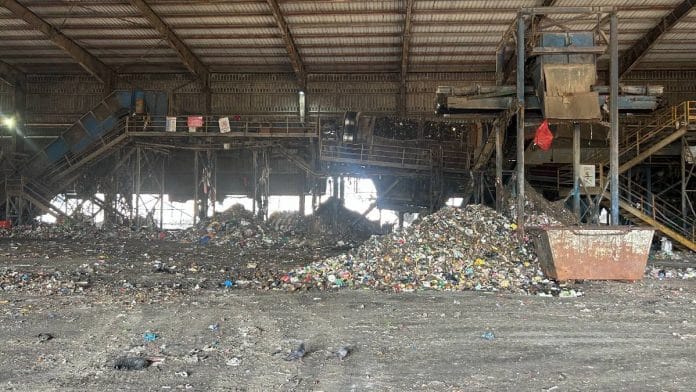
On Thursday, about 20-odd workers were gearing up to start their shift at the Kanjurmarg dumping ground’s material recycling facility, preparing to tackle the mountain of waste that lay to their side. The workers first pre-sort bulk objects such as mattresses, wooden logs, stones and so on from the freshly received waste. Then they segregate organic and inorganic material. The organic waste is used to produce compost, while the inorganic waste goes through further segregation.
Workers recover the recyclables from the inorganic waste through a sorting conveyor and magnetic separator. The inorganic and non-recyclables are shredded, further processed to get refuse derived fuel (RDF). It is then sold to cement industries, which use it as a sustainable substitute for coal.
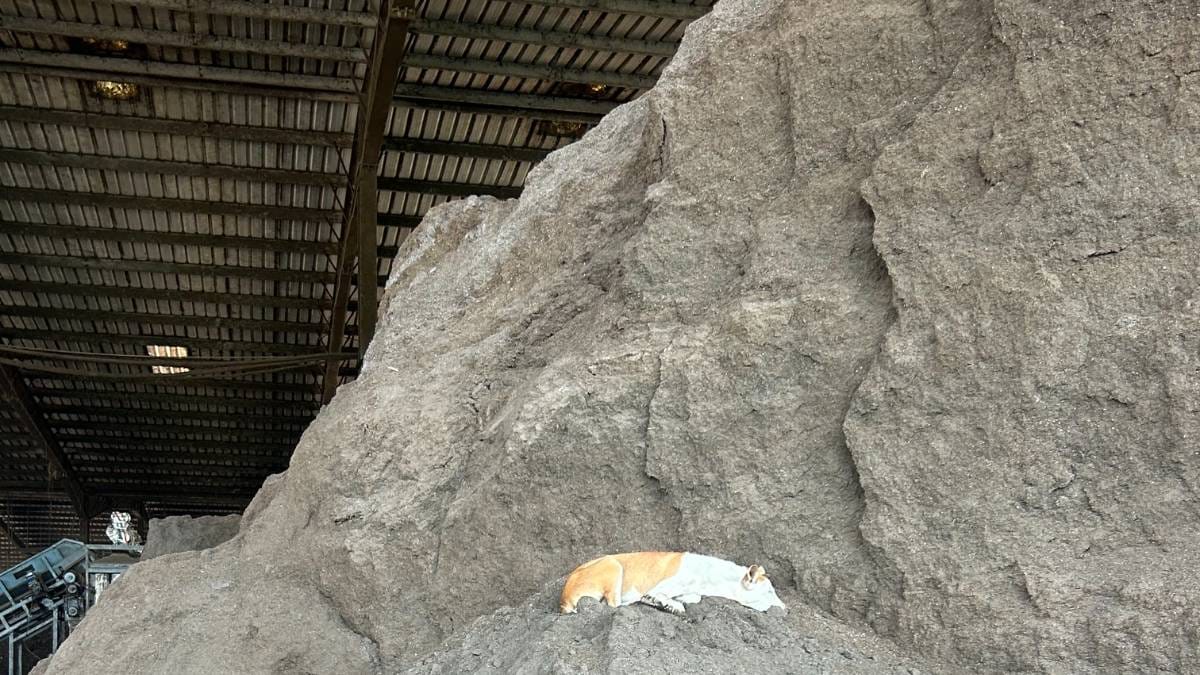
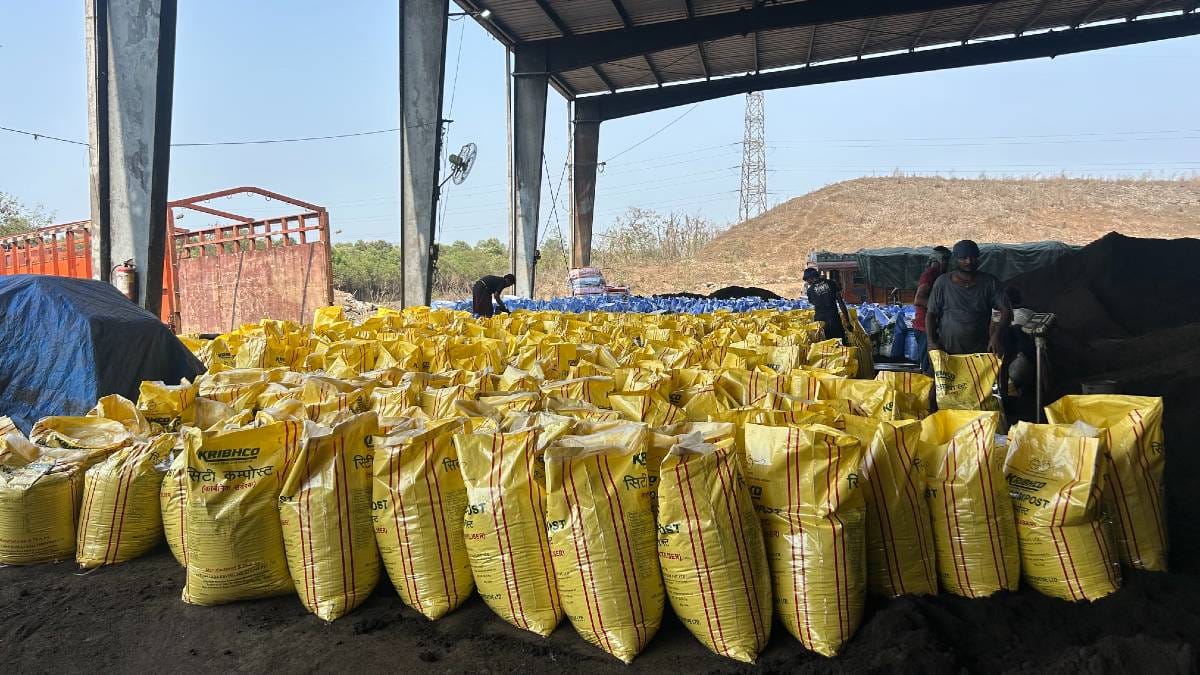
The windrow composting plant has the capacity to tackle 1,000 tonne per day, which is being fully used. At the composting plant, there were a few small mountains of compost, which workers were filling up in small sacks, ready to be dispatched to different places in Maharashtra, Gujarat, Madhya Pradesh and Telangana. The kharif agricultural season is approaching, and the demand for compost is very high right now, the workers said.
Since the inception of the Kanjurmarg landfill till March this year, according to BMC data, the contractor operating the dumping ground has treated 24.83 lakh metric tonne of waste through windrow composting and sold 91,434 metric tonne of city compost.
Similarly, since inception, the contractor has processed and dispatched 4.92 lakh metric tonne of RDF to cement industries.
Some of this is lost in translation. Back at Kannamwar Nagar, as Sangeeta Loke pointed to the landfill beyond the mangroves from the terrace of her building, she told ThePrint: “I have heard that in foreign countries, they process the waste and sell it to cement companies. Then it is used to make roads. The BMC should do something like that here to take care of some of the waste.”
The bioreactor landfill, which caters to a bulk of the city’s waste, is a large saucer-like structure which takes mixed waste.
Srinivasan explained that there are pipes every six metres to collect gas and leachate regularly, and the landfill is divided into seven cells.
“The leachate is recirculated so that the organic matter is degraded at an accelerated rate. Once a particular cell reaches 50 metres in height, we close it, but leachate is continuously recirculated and the landfill gas is extracted. Once the gas extraction decreases, we open up the cell and start post-sorting, where we get RDF, certain quantities of recyclables, metals and bio-soil conditioners,” Srinivasan said.
The gas is used to generate up to 1 megawatt of electricity, which is used internally within the facility. According to the BMC, this is the country’s only landfill where landfill gas is used to generate electricity, and has generated 162.90 lakh units of electricity since its inception.
Overall, the facility has processed 189.9 lakh metric tonne of waste, of which 164.97 lakh metric tonne went through the bioreactor landfill. Composting, processing of waste to get RDF and electricity generation are continuously under way to make the facility as scientific as possible, but the problems of nearby residents are still real.
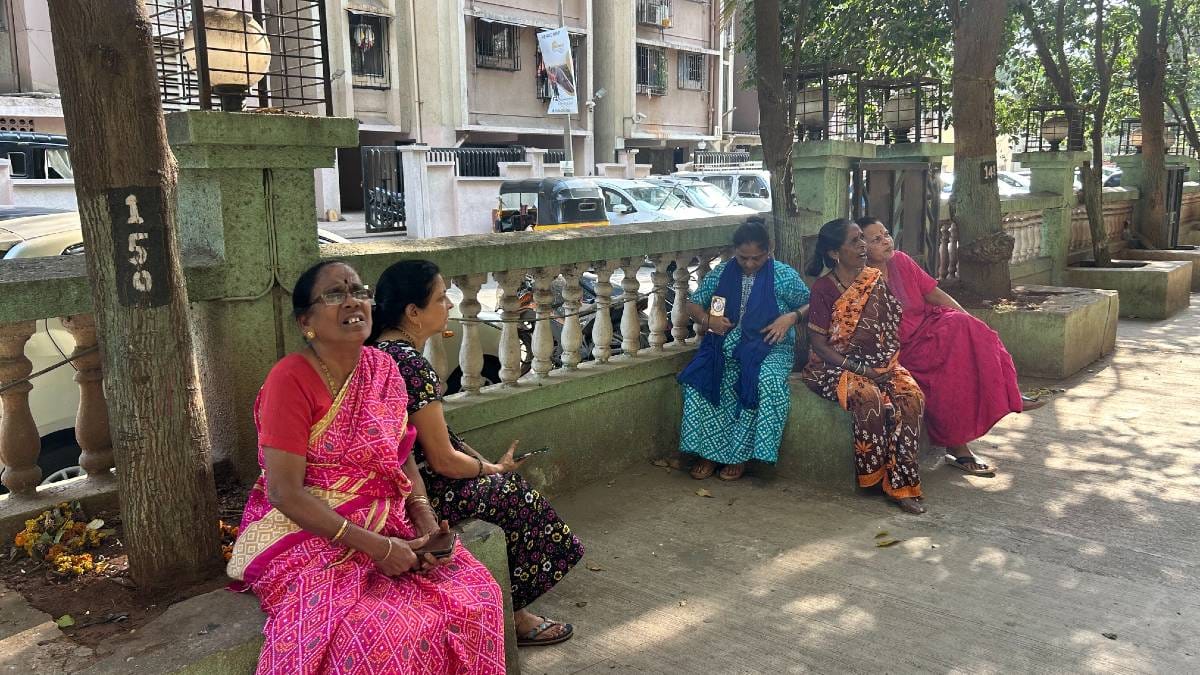
It was an odour-free Thursday afternoon at Kannamwar Nagar, but Loke said, “let this not fool you”.
Visibly worked up, she said: “The moment we sit down for dinner, we start getting that stench. During the day too, it is intermittently there. It doesn’t matter if we keep our windows or doors shut, the stench still gets through. We have suffered for a really long time and we just want this to stop.”
Efforts to control odour
Residents in the area have consistently complained of the foul odour being especially unbearable during the night and early morning hours, between 1 am and 6 am.
While garbage trucks are in and out of the Kanjurmarg facility all day, often a large number of them bring waste from the city’s refuse transfer stations located at Mahalaxmi, Versova, Kurla and Gorai at night.
An official who did not wish to be named explained: “Nearly 3,000 tonne of waste comes from refuse transfer stations, and by the time it reaches Kanjurmarg, sometimes it is already almost 24 hours old. The decomposition process has already started. And the wind velocity is often low at night, so the stench lingers.”
Mahajan said waste which has already started decomposing remains at the dumping ground till the segregation is completed, before it can be processed, which further aggravates the problem of odour.
“Segregation should happen at source and the government should enforce this strictly. There needs to be political will to get this done. And if segregation happens at source, even composting can be decentralised, diffusing the problem, instead of decomposing the city’s entire organic waste at Kanjurmarg.”
The Bombay High Court has also taken cognisance of the odour being strong between 1 am and 6 am, pulling up the BMC and the contractor for it, and demanding answers. The intervention has led to the contractor and BMC monitoring waste during these hours more closely.
The BMC told the court that it has deployed officers at the site between 1 am and 6 am “to identify the quality of waste and to closely monitor the receipt of waste during night-time operations”.
It has also deployed a person for mobile air pollution monitoring round the clock. The contractor’s officials are also present at the site during the problematic night-time hours.
The contractor has procured 30,620 square metres of tarpomatic cover for the inactive area of the landfill, installed 63 surveillance cameras around the facility and increased the application of bio-enzymes, microbial solutions and other odour neutralising agents on fresh waste, Srinivasan said.
The BMC, in a statement Wednesday post Bhide’s visit to the site, said it would strengthen bio-filters and odour scrubbers at the material recycling and composting facilities.
There is also a plan to thicken the green zone around the Kanjurmarg site based on the directions of the court-appointed monitoring committee which has representatives of the BMC, MPCB and experts from IIT-Mumbai and NEERI.
In the 7 May hearing, the BMC told the court that it has directed the operator to get a detailed action plan prepared within 15 days. It has also asked the operator to ensure that saplings, pits and drip irrigation facilities are in place before the monsoon so that plantation can begin as soon as the rains start. The monitoring committee has recommended three-tier plantation with species that include photo-remediates that absorb atmospheric pollutants.
According to the BMC’s submission in court, the material recycling facility, which is 120 metres from human habitation, is perhaps the major source of odour as fresh waste is received and kept here till segregation is complete.
In Wednesday’s statement, the BMC said it has asked the contractor to submit a “time-bound action plan for relocation/rationalisation of material recycling facilities falling within sensitive buffer zones”.
Also on the cards is an ‘Integrated Solid Waste Management Project’ at the site with the help of the contractor through a ‘change of technology’ clause in the contract.
This will include a waste-to-energy plant that can process up to 3,500 metric tonne of solid waste per day and generate about 60 megawatt energy, according to details from the BMC. This can be supported by a bio-methanation project that can process 500 metric tonne a day and produce 16 tonne per day of compressed biogas, and a composting plant catering to 1,000 metric tonne of waste a day.
“The proposal was put up by the operator in 2024, but the plan is currently on hold as the Bombay High Court in 2025 declared the Kanjurmarg site a protected forest. While the Supreme Court has allowed operations to continue, the matter regarding forest status is still pending in court,” the official who did not wish to be named said.
Pending the top court’s order on forest status, efforts as of now are all aimed at ensuring the site is as odour-free as possible.
Meanwhile, the residents of Kannamwar Nagar are left reminiscing how things used to be when they were growing up in the area.
“For almost 10 years now, we have been living with a foul smell, which is especially nasty during the rains, and mosquitoes,” Nikhil Jagtap, one such resident, told ThePrint.
“I remember during my childhood, we had a view that resembled a thick forest, followed by vast salt pans. We just want that back.”
(Edited by Nida Fatima Siddiqui)
Also Read: Chennai is starting to clear the Perungudi garbage mountain. And make furniture from it