



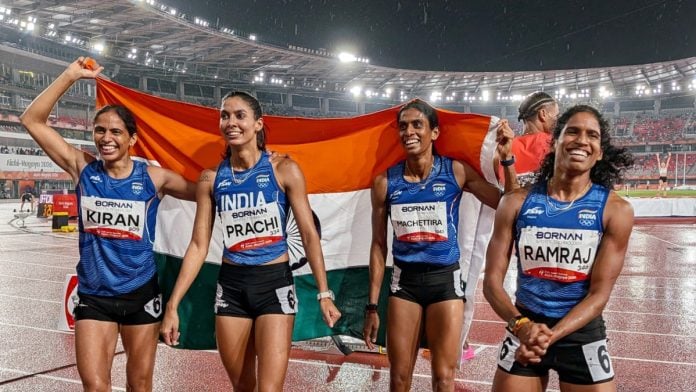
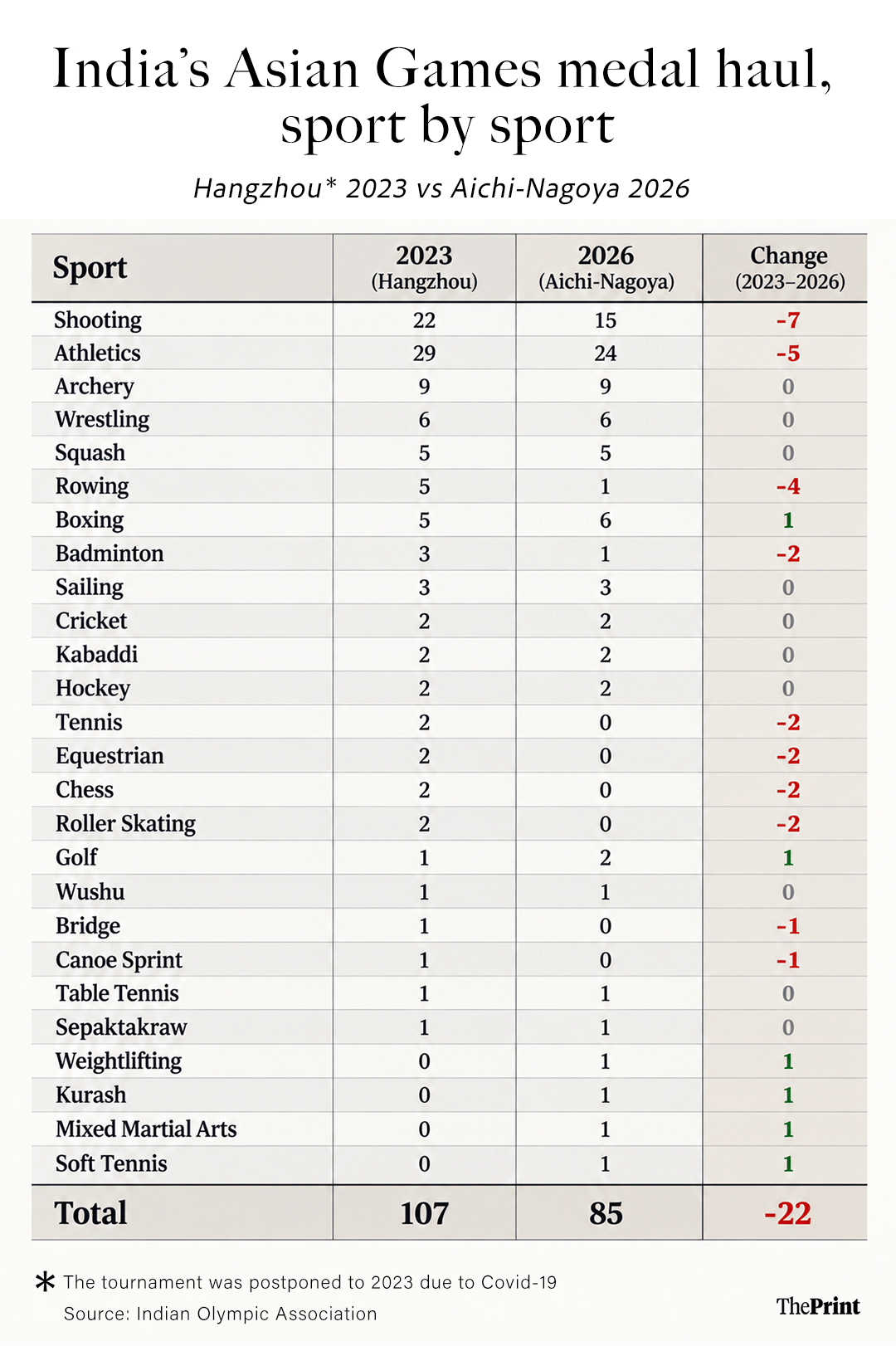
New Delhi: India’s medal haul at Asian Games 2026 helps it retain the rank (4th) it scored in its historic run at the 2023 event, but the total marks a setback. While India has wrapped up Aichi-Nagoya with 85 medals, it picked up 107 medals at Hangzhou 2022 (games were actually held in 2023 owing to Covid-19), which marked India’s highest medal tally in the tournament’s 75-year history.
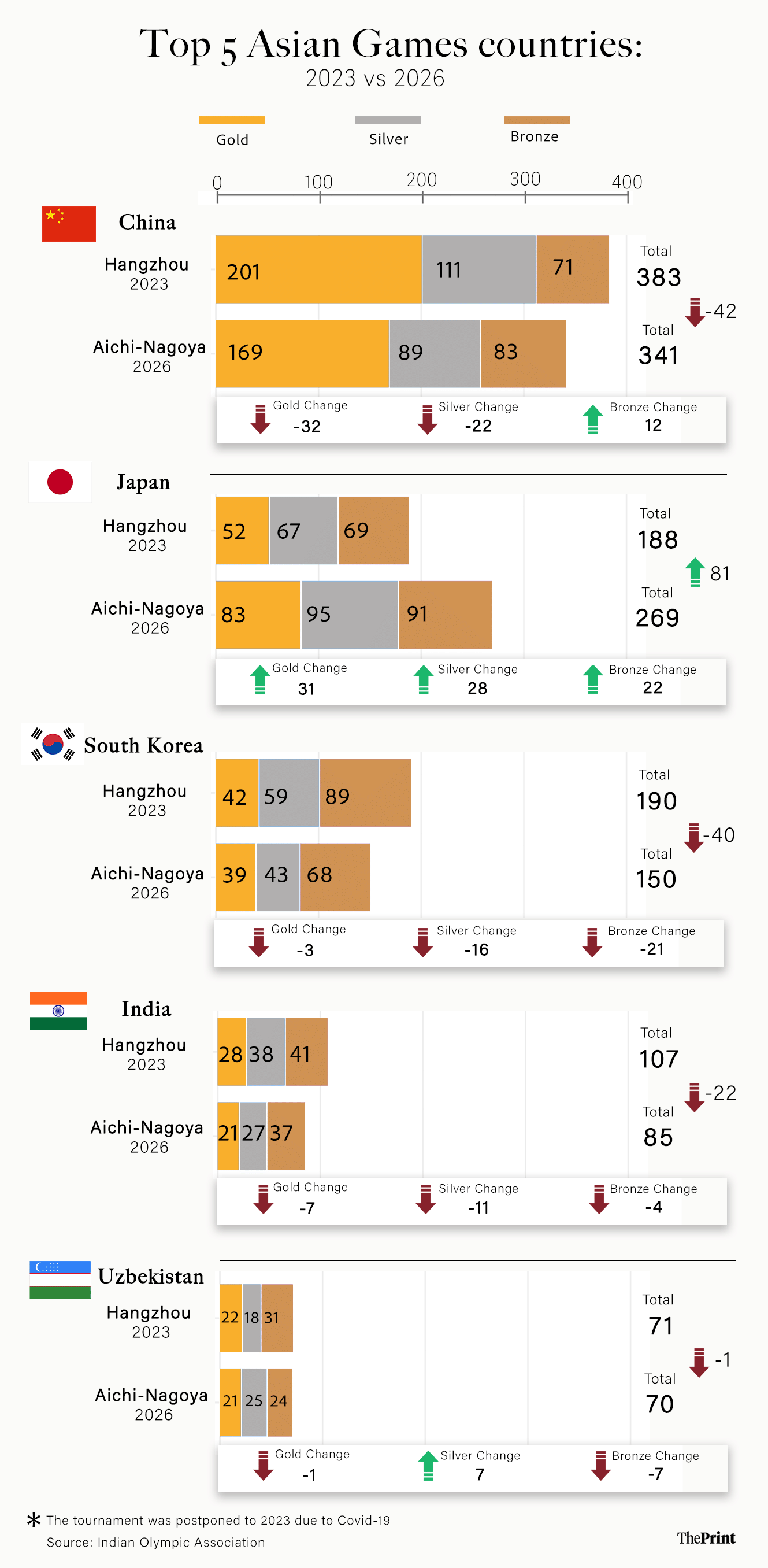
The number of golds has fallen too: 21 this time against 28 in 2023. From 38 in 2023, India’s silver tally is down to 27, and bronze from 41 to 37. Among other countries in the top 4, only Japan managed to improve its medal tally in comparison to 2023 (from 188 to 269).
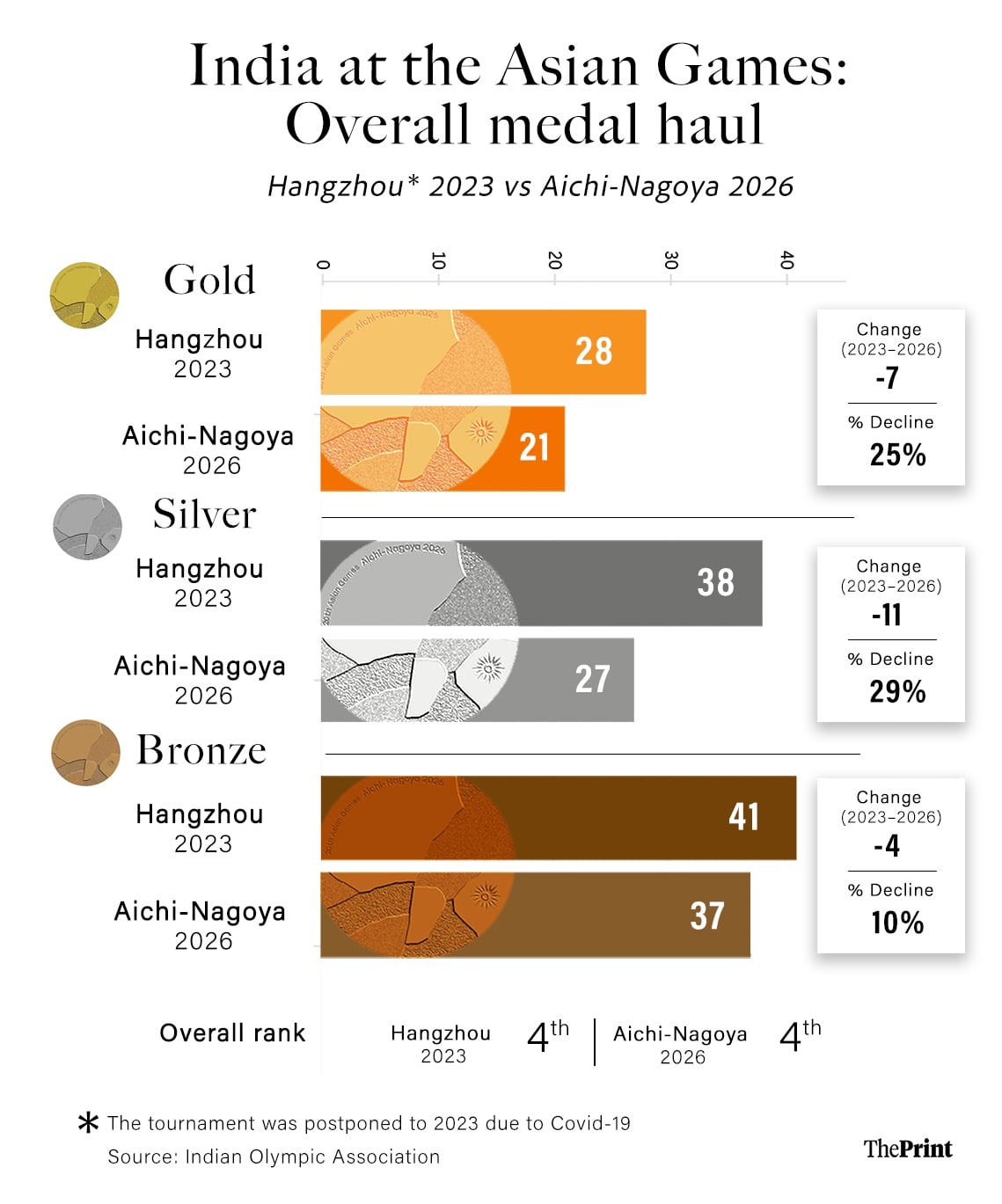
So, where exactly did India lose out? Two of its biggest medal-producing disciplines from Hangzhou—athletics and shooting—again provided the bulk of the haul at Aichi-Nagoya, but saw a significant decline all the same. Athletics produced 24 medals in Aichi-Nagoya, compared to 29 at Hangzhou, while shooting fell from 22 to 15. Apart from these, the losses were spread across archery, badminton, equestrian, squash and tennis. More strikingly, the individual golds that had helped define India’s rise at Hangzhou largely disappeared.
At the same time, Aichi-Nagoya saw Indians win medals in sports that didn’t yield any in 2023, including Mixed Martial Arts and soft tennis.
Also Read: Only one gold, but a big silver lining
Sport by sport
Athletics and shooting together account for 39 of India’s 85 medals this time. This includes three shooting golds and one athletics gold (women’s 4x400m relay). At Hangzhou, the shooting team shot seven golds, while athletics produced six.
The biggest disappointments came in pistol events. Manu Bhaker, one of India’s biggest medal hopes, finished fifth in the 10m air pistol final, while Hangzhou silver medallist Esha Singh finished 15th in qualification and Suruchi Singh Phogat 26th.
India also narrowly missed a team medal, finishing fourth. The 25m pistol event brought more missed opportunities, with Esha reaching the final while Manu finished 11th and Rahi Sarnobat 30th.
“There is pressure for everyone but this performance is unpardonable. It’s not like the other countries have any advantage. There is no point in pointing fingers at any individual but overall this was not what we expected,” India’s pistol and high-performance coach Ronak Pandit told Sportstar.
Yet shooting also produced one of the clearest signs that the next generation is coming. Neeru Dhanda won the women’s trap gold and later added another gold in mixed trap with Kynan Chenai. Her individual title was particularly significant: it was India’s first individual gold in the campaign at the time, and came in an event where the country had never won an Asian Games individual women’s title.
In athletics, Gulveer Singh emerged as one of India’s busiest medallists, winning silver in the 10,000m and 1,500m and bronze in the 5,000m. Parul Chaudhary added two bronzes, while Tajinderpal Singh Toor, Ancy Sojan, Sarvesh Kushare, Murali Sreeshankar and Yashvir Singh won silver. This creates an important distinction. India’s athletics programme has not stopped producing international-level performers. It is struggling to turn medal depth into gold-medal dominance.
Two of India’s fastest sprinters, national record-holder Gurindervir Singh and previous national record-holder Animesh Kujur, were among the most closely watched names in the 100m category, but both fell in the semi-finals. Kujur later finished fifth in 200m, while the pair returned to the podium with bronze in the mixed 4x100m relay, setting a national record.
In badminton, India won three medals at Hangzhou. This time, it returned with just one, the men’s team bronze. The most smashing failure was the first-round exit of Satwiksairaj Rankireddy and Chirag Shetty, the defending men’s doubles champions.
H.S. Prannoy, who won the men’s team bronze, called the Aichi-Nagoya experience “sad” for athletes, criticising the accommodation and transport arrangements and describing the badminton scheduling as “cruel” because players could be required to play twice in a day.
A women’s golfing gold FTW
India won a silver in golf at Hangzhou. In Aichi-Nagoya, Pranavi Urs won the women’s individual gold, becoming the first Indian woman to win an individual Asian Games golf title. She also helped India win silver in the team event.
In weightlifting, India’s ‘miracle girl’ Mirabai Chanu won silver, giving India its first Asian Games medal in the sport in this cycle. Boxing, meanwhile, went from no golds at Hangzhou to three through Lovlina Borgohain, Parveen Hooda and Ankush Panghal.
Wrestling retained its six-medal tally but added two golds through Sujeet Kalkal and Aman Sehrawat.
Archery also returned exactly the same haul—nine medals including five golds—as Hangzhou. Kumkum Mohod, 17, brought in a nice shift, however, as she won India its first-ever individual recurve archery gold.
Hockey & cricket offer final-day medal surge
India won 11 of its 21 golds in the final two days at Aichi-Nagoya, with hockey, cricket, boxing, wrestling and archery in the driving seat. The men’s hockey team retained its title, beating Malaysia 5-1, while the women’s team won gold, ending a 44-year wait for the title. With the win, both the men’ and women’s contingents earned a direct entry ticket for the upcoming LA Olympics.
Cricket also delivered two golds, with both the men’s and women’s teams emerging winners.
India’s Hangzhou run was driven heavily by individual champions. Aichi-Nagoya relied much more heavily on teams and collective events, and individual winners arrived late. At one point, when India had only 10 golds, most of the country’s golds had come through team, relay or mixed formats. Neeru Dhanda’s trap title was the only individual gold at that stage.
The final days corrected that imbalance through Mohod, Urs, the boxers and wrestlers.
Perhaps the most useful way to judge India’s 85 medals is not against the 107 from Hangzhou, but against what happens next. Hangzhou showed that India could produce 28 golds. Aichi-Nagoya proved that keeping up is hard. But it also showed something potentially more important: India is no longer dependent on exactly the same people and exactly the same events to win medals.
Edited by Sunanda Ranjan
Also Read: 1 gold, 4 women, 44 years—India’s Asian Games relay streak lives on