





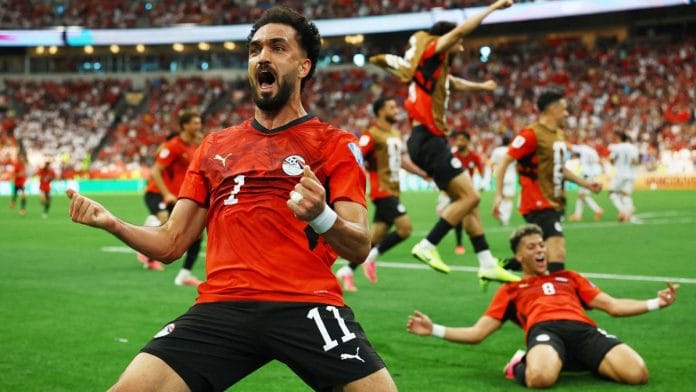


New Delhi: Egypt sits at the top of Group G after a sweeping 3-1 victory against New Zealand in the 2026 FIFA World Cup on Monday. The scorers of the African nation were Mostafa Ziko, Mohamed Salah and Trézéguet.
For long-time viewers of the World Cup, Egypt’s 2026 squad feels disorienting—a walk through football’s history books. Every few minutes, the commentator seems to summon a legend from the past. “Zico receives the ball. Dunga breaks up an attack. Trezeguet makes a run into the box,” the commentator said a few times.
For a moment, it feels as though the 80s, 90s, and 2000s have returned.
Then reality sets in. These are not the legendary Brazilian icons or French World Cup winners. They are Egyptian internationals carrying some of football’s most famous monikers.
Egypt’s 2026 roster is the ultimate example of a long-standing tradition. Mostafa Mohamed, better known as “Ziko,” is a key attacking threat. Midfielder Nabil Emad is “Dunga.” Mahmoud Hassan is “Trezeguet.” Ahmed Sayed is universally recognised as “Zizo,” a variation of the Brazilian playmaker’s nickname.
To outsiders, it is confusing. In Egypt, it is entirely normal.
The nickname economy
In most countries, childhood nicknames disappear once a player enters the professional ranks. In Egypt, they often become permanent brand identities.
Mahmoud Hassan’s is a case in point. Early in his career, coaches saw shades of French striker David Trézéguet in his game. The nickname stuck. Today, many fans know him better as Trézéguet than by his birth name.
The same logic applies across the squad. “Dunga” evokes toughness and authority in midfield, “Zico” suggests technical elegance and creativity. A nickname tells supporters exactly what kind of player they expect to see. It is less about imitation than recognition—a label bestowed when a player mirrors the essence of an icon.
The trend contrasts with one of the World Cup’s other recurring themes: football dynasties.
Across the tournament, famous surnames are everywhere. Luca Zidane carries the legacy of his father, Zinedine; Marcus Thuram follows the path of Lilian; Giovanni Simeone and Justin Kluivert inherit some of the most recognisable names in the sport.
One comes through bloodlines; the other through culture.
Also read: Lamine Yamal joins the top 10 youngest World Cup scorers list. He surpasses Lionel Messi
Why the tradition endures
The explanation for this tradition lies in the global reach of the World Cup itself.
For generations of Egyptian fans and players, global football was experienced almost exclusively through major tournaments. The stars they watched on television became the ultimate reference points. Nicknames based on those icons offered an easy way to describe a young player’s style, personality, or promise. Over time, these labels became permanent fixtures of the sport.
Egypt’s squad sheet reads like a roll call of football history. The players are new. The names are not.
(Edited by Saptak Datta)