



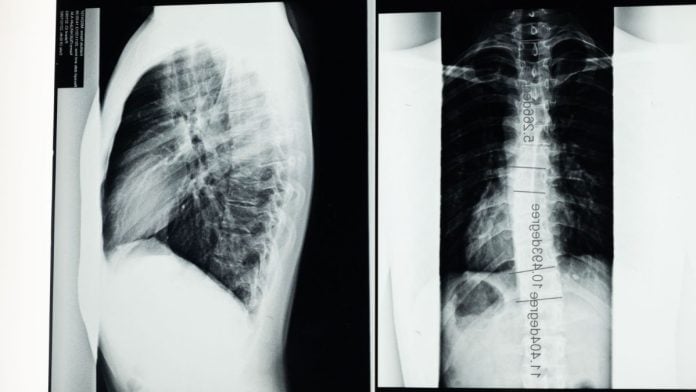
New Delhi: A team of Chinese and Russian surgeons has reportedly transplanted a section of the spinal cord from a brain-dead donor into a patient who was paralysed due to a spinal cord injury. However, several scientists have questioned whether the surgery will allow the patient to move again, especially since no evidence of a recovery has been made public so far.
“The unique surgical intervention, which lasted 12 hours, was performed at the Skliphosphovsky Ambulance Institute. A patient who was threatened with complete immobility had a chance to recover. Now he feels good,” the Mayor of Moscow, Sergei Sobyanin, wrote in an announcement on 16 October. Chinese specialists were involved in the procedure, he said, adding that the patient was doing well.
Chinese surgeon Xiaoping Ren, who was involved in the operation, told New Scientist that the team removed damaged spinal cord tissue and replaced it with a section from a brain-dead donor. The surgeons used microsurgery and polyethylene glycol (PEG), a substance that can help cell membranes fuse, to join the tissues.
The spinal cord carries messages between the brain and the rest of the body. When it is severely damaged, these signals can no longer travel properly, leaving a person unable to move or feel parts of their body. Unlike many other tissues, nerve cells in the brain and spinal cord have a limited ability to repair themselves.
The challenge goes beyond just joining the two pieces of tissue. The nerve fibres must form working connections so that signals can travel across the damaged area. The transplanted tissue must also receive a blood supply, while the recipient’s immune system may attack the donor tissue.
Also read: Ashoke Sen is the first Indian to win physics honour Oskar Klein Medal
Questions over the evidence
Scientists have raised concerns about whether the technique can overcome these problems. Melissa Andrews, a neuroscientist at the University of Southampton, questioned the quality of the animal studies supporting the approach and warned of the risks involved.
Experiments using PEG to repair damaged spinal cords have shown some promise in animals. However, repairing a recently severed spinal cord is different from replacing tissue in a patient whose injury is three years old.
So far, details of the patient’s injury, neurological assessments and any changes in movement or sensation have not been made public. No peer-reviewed clinical report documenting the procedure and its outcome has been published.
The operation marks an attempt at a highly experimental treatment, rather than proof that a spinal cord transplant can reverse paralysis. Independent assessment of the surgical findings and the patient’s recovery will be key to establishing whether this approach really works.
“Moscow medicine is actively developing international cooperation, adopting world experience and introducing modern technologies. This operation was one example of such interaction – with the participation of Chinese colleagues and the transfer of medical technologies,” Sobyanin added.