



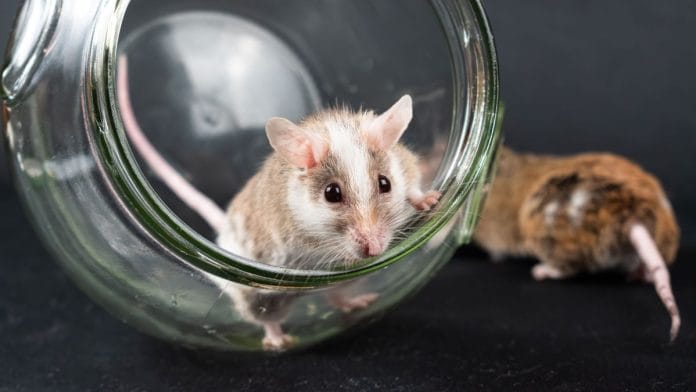
New Delhi: It doesn’t take a genius to spot a connection between loneliness and alcohol consumption. But it takes a team of psychiatrists and neuroscientists to prove that isolation can rewire the brain to crave alcohol. Now, a team of researchers at Northwestern University have proven it in the case of male mice.
Their study, published on 25 August in Nature Neuroscience, was led by Reesha Patel, assistant professor of general psychiatry and neuroscience at the Northwestern University Feinberg School of Medicine.
“This is the first study to identify a specific brain circuit that explains how social isolation can drive increased alcohol use in males, marking a major advance for the field. These findings provide a much clearer biological target for understanding and eventually treating alcohol misuse that arises from isolation, a problem that is becoming increasingly common,” Patel said in a press release.
Alcohol use disorder is one of the most prevalent substance use disorders in the world. It affects an estimated 7 per cent of the global population over the age of 15, according to the World Health Organisation (WHO).
While several factors influence a person’s decision to drink alcohol, the researchers wanted to study the role isolation played. To do so they used adult male and female mice and created two groups, one where the mice were housed in communities, and another where they were isolated.
Every day the isolated mice were given access to two bottles for an hour. One of the bottles contained water and the other contained 15 per cent alcohol. The study found that isolated male mice began consuming alcohol more frequently, especially after a week of isolation. However, female mice reduced their alcohol consumption, even after long periods of isolation.
Also read: Egyptian deserts were once underwater. The discovery of a shark graveyard is proof
A game of neurons
To understand the biology at play, researchers recorded the activity of neurons in the basolateral amygdala (BLA) which impact the medial prefrontal cortex (mPFC) of mice. The BLA is involved in processing emotions, stress, and social information while the mPFC is the part of the brain in charge of making decisions and processing rewards.
This link between the BLA and mPFC became far more excitable in isolated males and less excitable in isolated females. Researchers then wanted to confirm whether the neural circuit caused drinking. To do so they used pulses of light to manipulate neurons. When they triggered the circuit in non-isolated males, those mice too began increasing their alcohol intake as if they had been isolated.
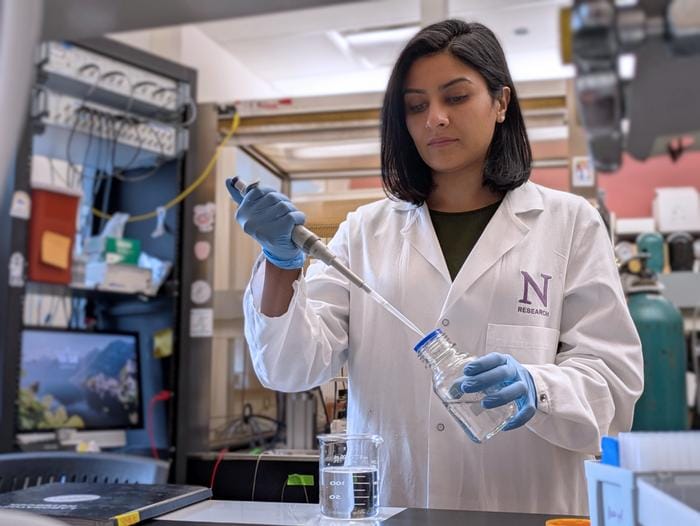
“Our work shows that a defined pathway becomes overactive during isolation and directly increases drinking, and that males and females rely on different neural strategies when they’re lonely. This may help explain long-standing sex differences in neuropsychiatric disorders,” said Patel.
For Patel, the next step is to understand how this circuit gets triggered during isolation and if other parts of the brain also contribute to the effect. Her team also wants to study why males and females respond to isolation in such different ways and whether hormones play a role.
While these findings are limited to mice, Patel also wants to understand how they could translate to human beings too.