



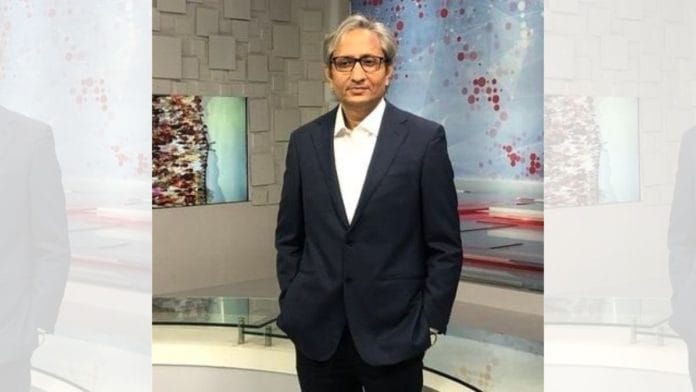
New Delhi: Indian journalist Ravish Kumar this week posted a video on social media platform X, accusing YouTube channels such as Ravish Kumar AI, DLS News India, N2R News, The Bharat Doctrine (formerly Ravesh News Chakar), Ravish News Join, VR Analysis, and Ravish Ki Awaz of creating and posting deepfake videos of him presenting news.
Ravish Kumar further alleged that these creators posted videos, disseminating fake news and controversial statements, which would lead to disharmony among communities and hurt the sentiments of the masses. Advising users to stay clear of the channels, he said that due to a lack of employment in India, youth are using Artificial Intelligence as a means to deceive people.
Ravish Kumar also claimed that a conspiracy may be afoot and that creating numerous channels in his name may be directed at barring people from reaching his original channels. He has filed a complaint with YouTube and appealed to users to follow only the channels that have a tick, indicating authenticity, and report the unverified channels.
ThePrint has gone through most of the channels mentioned. The channels are relatively new and have more than 1,000 subscribers, except VR Analysis and Ravish ki Awaz, which have only two subscribers with over 34 views and seven subscribers with 15 views, respectively. On the other hand, DLS News India is no longer up on YouTube.
In the case of the videos on the N2R News channel, ThePrint neither found Ravish Kumar’s image nor heard his voice in any of the uploads.
What is a deepfake?
The United States Government Accountability Office uses AI to alter images, videos, and audio recordings, all of which are only used to impersonate a person with deepfakes. Deepfake uses underlying AI technologies, notably autoencoders and generative adversarial networks (GANs), to replace faces and manipulate facial expressions. Besides manufacturing faces resembling famous personalities, this technology can create speeches in voices that sound like theirs. So, it can depict someone saying something or performing an action that they never said or did, acting as a catalyst for the spread of misinformation among the masses.
There has been a massive rise in the use of deepfakes these days. In a research paper published in the Journal of Legal Research and Juridical Sciences—Deepfakes in India: Legal Challenges and Regulatory Imperative—the technology, once considered innovative and original, is said to have transformed into a tool posing risks and threats. Misuse of deepfakes leads to social division, aiding in criminal activities and weakening public faith.
According to the World Economic Forum, the Misinformation Combat Alliance established a Deepfakes Analysis Unit (DAU), a WhatsApp-based bot to engage with the public via WhatsApp links. On it, the public can share and check the authenticity of a video or audio assumed to be generated by AI. The project was launched in 2024, the year of the general election in India. Sensing the increasing dangers of deepfakes ahead of the polls, a 2023 Ministry of Electronics and Information Technology (MeitY) advisory asked all intermediaries to ensure compliance with the existing IT Rules. The directives specifically target the growing concerns around misinformation powered by AI–deepfakes.
Powered by Deepfakes, more crimes have surfaced. Karnataka has seen a rise in cybercrime involving deepfakes. The state police have registered 12 cases, which include seven cases in 2024 and five more in 2025.
Neetu Sharma is an intern with ThePrint
(Edited by Madhurita Goswami)
Ever since he resigned from NDTV, he has lost his mind. The name should be changed to Rubbish Kumar.