





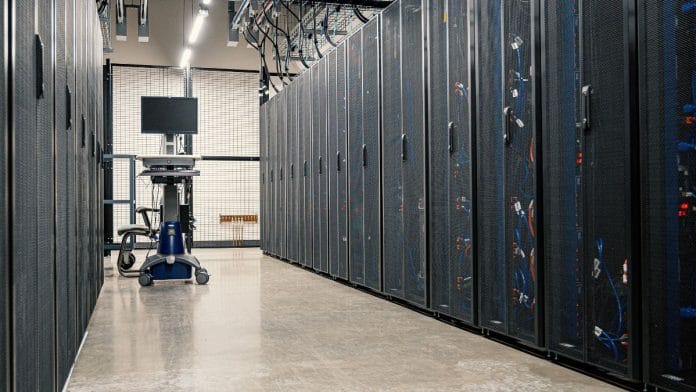


New Delhi: Data centres are not remote nor are they far away from big cities, humming away silently and hardly disturbing urban life.
A recent study published in Nature Cities analysed the locations of 4,283 data centres in the US and found that nearly 97.5 per cent of them are located in metropolitan areas or smaller urban areas with populations of 10,000 to 50,000 people. The remaining 2.5 per cent too are located about 13 km away from the nearest urban hub.
“There is a prevailing narrative of these data centres being somewhere in the middle of nowhere, in rural areas, being a positive force for employment, and being the future of rural communities,” lead researcher, New York University Tandon Institute professor Maurizio Porfiri, said in a university statement.
The study found that nearly one-third of all data centres in the US were located in five metro areas — Washington-Arlington-Alexandria, Chicago, Dallas-Fort Worth, New York-Newark-Jersey City, and Phoenix. There were about 610 data centres in the Washington region alone.
Also read: Hyderabad researchers have a new way to clean biopharma waste. It’s cheaper, energy-efficient
Data centres in metros
This concentration of data centres boils down to the availability of energy, IT workers, and high speed internet. Of these, electricity is the most important component.
Data centres are power guzzlers. They run thousands of servers all day long drawing enormous amounts of power from the grid. But the study found that closed coal plants are particularly attractive spots for upcoming data centres. The reason is simple, although the coal plant might have shut, the power lines laid out for it are not dismantled and those who build the new datacentres and use that old infrastructure to their benefit.
“The patterns we found were consistent and clear. Where the infrastructure already exists, the data centres follow. The question now is whether that is the future we want to build,” added co-author Anton Rozhkov, a CUSP Industry assistant professor.
However, the study found that even though data centres consume large amounts of water for cooling, local water shortages hardly have an impact on where data centres are placed.
The study was conducted after its authors Porfiri and Camilla Ancona, co-author and postdoctoral researcher in Porfiri’s Dynamical Systems Lab, were selected in the 2026 cohort of Microsoft Research Fellows. They are now studying the rapid growth of data centres, how it strains electricity grids, and whether it is indeed outpacing the clean energy transition.
“We are at an inflection point. The digital economy is growing faster than our ability to power it cleanly, and right now planning decisions are being made without the quantitative tools needed to understand their long-term consequences for cities and grids,” said Porfiri.