





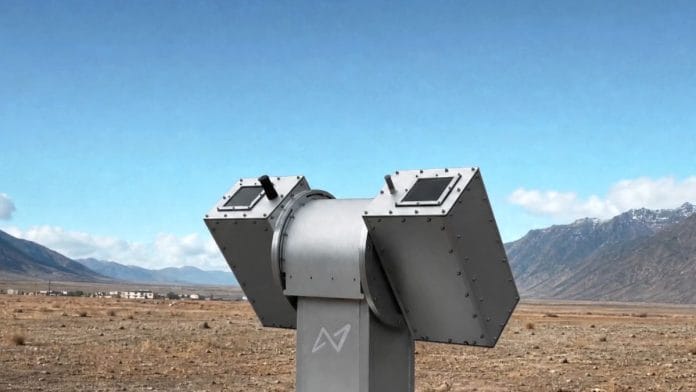


New Delhi: Bengaluru-based space domain awareness company Digantara on Tuesday unveiled MOSAIC, an AI-powered, distributed optical sensor network aimed at real-time detection, tracking, and analysis of space objects. The company said that after India’s Operation Sindoor, the need for a new class of India-made surveillance technology became necessary. MOSAIC is meant to take on that role.
In a statement released Tuesday, Digantara said that MOSAIC extends the company’s existing space domain awareness infrastructure, which spans space-based tracking and data fusion through the in-house processing engine.
“MOSAIC is designed to serve as the wide-area detection and custody layer feeding Digantara’s ability to detect, characterise, and track objects across the full range of orbital regimes, from Low Earth Orbit (LEO) to Geostationary Earth Orbit (GEO),” the statement reads.
The technology
The company said that the initial deployment of MOSAIC will comprise five nodes operating as a single coordinated surveillance network.
Each of these nodes is a self-contained electro-optical sensor system, comprising an optical head unit for precision sky imaging, paired with an electronics head unit for onboard processing, timing, communications, and autonomy. The system will also run independently on solar power with battery backup, engineered to survive in “the summers of the Thar desert and in the winters of the Himalayas”.
“MOSAIC’s hardware architecture strikes a balance between sensitivity and a large field of view, enabling it to catch faint RSOs (resident space objects) across a wide swath of sky,” the statement reads.
The MOSAIC detection runs on an AI machine learning-based technique that identifies stars and RSOs, including the faintest targets. The system then follows a lost-in-space attitude estimation approach to determine the RSO position—assuming there is no prior information or cueing about the object.
This model will also be extended to alternative navigation use cases, primarily celestial navigation in GPS-denied environments.
“In our early days, we started by asking a simple question of what is actually up there. Now, we are answering what you should know about it, and how fast can you know? Every capability we build, MOSAIC included, is really one more piece of that same answer. We aim to proliferate these sensors across the world to maintain custody and have independent catalogue maintenance,” said Anirudh Sharma, founder and CEO of Digantara.
(Edited by Prasanna Bachchhav)
Also read: NGT directs Delhi pollution body to recover Rs 10 lakh from Kondli sewage treatment plants