







Chennai: All eyes will be on the DMK and its eight MPs if the BJP-led NDA brings back, as is being speculated, the women’s reservation amendment and the linked delimitation bill in the wake of a weakening INDIA bloc and a potential split in the Trinamool Congress helping the government in its legislative agendas.
The DMK, which had earlier strongly opposed the bill, walked out of the INDIA bloc last week after its alliance with the Congress in Tamil Nadu ruptured last month.
“Even as the DMK has moved out of its alliance with Congress, our stance on the major issues affecting the people of Tamil Nadu would not change. We will continue to raise our concerns and if a bill affects the people of Tamil Nadu based on its contents, we will stand against it. However, it is too early to decide on the Delimitation Bill ahead of the session, and we will comply with whatever our leader decides,” DMK MP P Wilson told ThePrint.
In April 2026, the government’s Constitution (131st Amendment) Bill and related delimitation proposals failed to secure the required two-thirds majority in Parliament. DMK leaders, including Wilson, responded by introducing a private member’s bill to implement women’s reservation immediately within the existing 543 Lok Sabha seats, without linking it to delimitation or a new census.
DMK MPs like Kanimozhi sharply criticised the linking of the issues as a “trap” and an assault on federal structure.
Party sources indicate that while the DMK is unlikely to vote in favour of a bill seen as detrimental to Tamil Nadu’s interests, it will discuss the contents of the revised bill before making a formal stance. The party sources also say that they have pushed for factoring in metrics beyond population for Delimitation exercise, such as GSDP, industrial growth, and family planning success.
DMK Spokesperson R S Bharathi told ThePrint that the reintroduction of the Delimitation Bill is still a speculation. But when it comes to making a decision, they would have an internal discussion on the revisions before taking a call.
“It is not mandatory for us to decide anything now but we will keep the interests of the people of Tamil Nadu first. We have not yet decided on what the party will do. We have made it clear that we are with the secular parties and will not change that,” he said.
Also Read: There’s no avoiding delimitation. Here are 4 possible solutions that don’t ‘hurt’ the South
Changing political environment
While in Tamil Nadu, the DMK has walked out of its longstanding alliance with the Congress after the latter backed actor Vijay’s Tamilaga Vettri Kazhagam (TVK) to form the government following the Assembly election results, the DMK is exploring a new anti-BJP, anti-Congress regional front.
Simultaneously, in West Bengal, the Trinamool Congress (TMC) is headed for a major split after its defeat to the BJP in the May Assembly polls. With about 58 MLAs revolting and backing expelled leader Ritabrata Banerjee as the Leader of the Opposition, around 20 of its 28 Lok Sabha MPs have signaled a shift toward the BJP-led NDA.
These developments reflect weakening opposition unity and a clear setback to the INDIA bloc due to regional fragmentation, which serves as a consolidating advantage for the BJP-led NDA at the national level.
The Constitution (131st Amendment) Bill, 2026 was defeated in the Lok Sabha on 17 April. It received 298 votes in favour and 230 against, out of 528 members present and voting. It fell short of the required two-thirds majority which was approximately 352 votes.
If the DMK abstains from voting against the Delimitation Bill upon reintroduction, it would likely help the BJP significantly by reducing the number of votes against the bill. Such a scenario can push the government closer to the required votes in a revised attempt, especially if combined with potential support or abstentions from other shifting opposition factions like parts of the TMC.
Meanwhile, DMK sources say that the public position of the party remains rooted in protecting southern states’ representation and pushing for delinking women’s reservation from delimitation.
DMK’s opposition before assembly poll
The women’s reservation bill, which is tied to the next Census and a subsequent delimitation exercise in the country, has seen an opposition from the DMK earlier fearing that a population-based redraw of Lok Sabha constituencies would reduce their representation, as northern states with higher population growth would gain more seats and, hence, greater say in law-making.
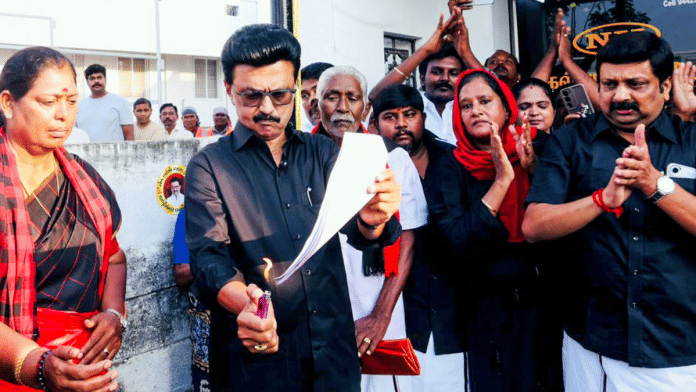
Before the Tamil Nadu Assembly elections, DMK president and the chief minister M.K. Stalin had burnt a copy of the then proposed Delimitation Bill and led black flag protests in the state.
He had also issued a video statement calling it a “stern final warning” to the Modi government against pushing the Constitutional amendment on delimitation. He had said that any move harming Tamil Nadu or disproportionately empowering northern states would trigger a massive statewide agitation, with “every family hitting the streets”.
Stalin had emphasised Tamil Nadu’s compliance with family planning measures urged by the Centre in the past. “When the Union government urged us to control population growth, to have smaller families, and to follow family planning measures, we complied. Is this now the punishment for having done what was asked of us with discipline?” he asked.
The DMK also accused the Centre of acting unilaterally without consultation, ignoring appeals from southern states, and warned of undermining federalism. Stalin vowed to lead protests reminiscent of the DMK’s historic self-respect and anti-Hindi movements of the 1950s and 1960s, declaring it a fight for principles and state rights over electoral power.
(Edited by Ajeet Tiwari)
Also Read: TMC’s LoP in Bengal has given BJP control over both govt and Opposition. Mamata is rudderless