







Chennai: From the establishment of India’s first dedicated AI and Innovation City to monthly stipends for graduates, branded cycles with helmets and skill training initiatives—
the C. Joseph Vijay-led Tamilaga Vettri Kazhagam (TVK) government’s first budget is an outreach to Gen Z.
The youth of Tamil Nadu played a major role in bringing the TVK to power. Political analysts point out that while the initiatives are not entirely new, they are rebranded with improvements to existing ones, which could appeal to young voters who are likely to benefit from them in the coming years.
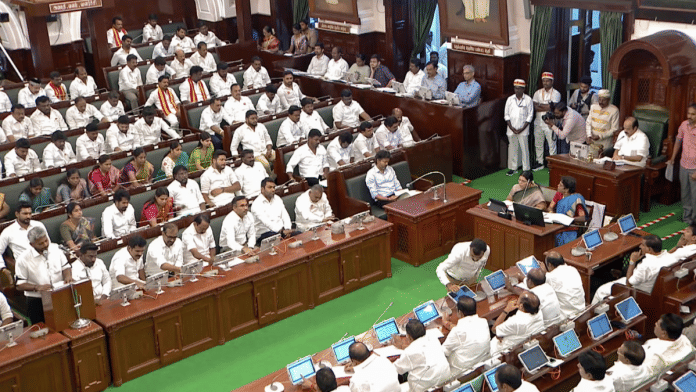
Finance Minister Dr N. Marie Wilson presented the Revised Budget Estimates on 5 August 2026, framing the measures within the ‘Vetri Tamizhagam—Vision Document’ that aims to make Tamil Nadu a poverty-free, 1.5-trillion-dollar economy by 2036.
The Vetri Skill Training Scheme has been allocated Rs 150 crore, under which the government will provide industry-aligned skilling to 12 lakh college students and 1 lakh unemployed youth this year. Internship training programmes in collaboration with government and private industries will cover 20,000 youth in the first phase.
There will be monthly stipends for graduates and those with vocational qualifications, and priority will be given to youth from families without permanent employment. Moreover, coaching classes for SSC, RRB and IBPS examinations will also be expanded through District Employment and Career Guidance Centres with an allocation of Rs 3.38 crore.
Approximately 5.32 lakh students studying in Class XI across government and government-aided schools will receive modern branded bicycles equipped with helmets and water bottles in the current academic year, at an estimated cost of Rs 277 crore. The budget speech specifically identified the beneficiaries as “Gen-Z students”, underscoring the government’s outreach to younger voters.
College students will benefit from the Vetri Laptop Scheme, under which free laptops will be provided as an essential learning resource for technical expertise, skill development and digital access, with an allocation of Rs 2,000 crore.
To address student accommodation, the government will establish the Tamil Nadu Student Housing & Infrastructure Corporation (TNSHIC) with an initial equity infusion of Rs 10 crore.
Under the TN-SUDAR initiative, the minister announced that 200 integrated student hostels delivering one lakh modern beds will be constructed across major educational hubs through a de-risked public-private partnership model, with an estimated capital outlay of Rs 3,200 crore.
These campuses will feature fully air-conditioned study hubs, 24×7 security, hygienic kitchens and an automated allocation framework designed to ensure diversity and social parity.
Big push for AI
The growing interest of youngsters in artificial intelligence and emerging technologies has also pushed the government to include several related announcements in the budget.
India’s first dedicated AI and Innovation City will be established in Tamil Nadu. The TVK government plans to name it ‘Arivagam’, with Rs 5 crore allocated for a feasibility study. The planned AI hub is expected to bring together AI companies, startups, research institutions, an AI university, skill centres and related infrastructure.
The government has also announced the launch of an AI Industry Development Programme in partnership with premier institutions such as IIT Madras. An expert committee of academic and industry leaders will curate specialised AI curricula, with the aim of skilling and empowering five lakh youth across engineering colleges, polytechnics and ITIs by 2031.
Additionally, a new trade in Artificial Intelligence and Machine Learning will be introduced in 50 government Industrial Training Institutes over five years at an estimated cost of Rs 10 crore, benefiting 24,000 students, while five new ITIs will be established at a total cost of Rs 90 crore.
The Tamil Nadu School Programme for Artificial Intelligence, Robotics and Knowledge of online tools (TN SPARK) will be expanded from the existing 5,000 government schools to an additional 2,600 schools. Under a three-tier framework, students of Classes 6 to 8 will learn fundamentals, Classes 9 and 10 will receive intermediate training, and Classes 11 and 12 will be offered specialised elective courses.
Modern education initiatives
The School Education Department under the Vijay’s TVK government has been allocated Rs 44,527 crore and the Higher Education Department Rs 8,393 crore.
School modernisation is also been given attention. Under the Palli Niraivu Thittam, 3,734 schools will be modernised, including 2,514 primary, 365 middle, and 855 high and higher secondary schools at an estimated cost of Rs 2,132 crore.
The Perunthalaivar Kamarajar Schools of Excellence will be established as modern residential institutions for academically talented students from socio-economically disadvantaged backgrounds studying in Classes IX to XII, providing free education, food, boarding, textbooks and uniforms, with Rs 125 crore set aside for infrastructure.
The Vijay government has also announced Super Clean, Super Campus scheme that will ensure daily cleaning, maintenance of drinking water facilities and toilets, and 24-hour security in 10,000 schools in the first phase, with an allocation of Rs 139 crore.
The curriculum revision is aimed at making education experiential, inquiry-based, holistic and competency-driven. The curriculum will focus on critical thinking, creativity, financial literacy, gender equality, environmental awareness, digital competence and global citizenship. The scheme has been allocated Rs 25 crore.
Sports, anti-drug and holistic youth development
Linking physical fitness with the campaign against substance abuse, the Vijay government will launch an Integrated Youth Development Programme under the message “Take Up Sports, Give Up Drugs”.
A marathon was conducted as part of this initiative in June that saw the participation of Chief Minister Joseph Vijay himself. The initiative will also integrate major youth organisations such as the National Cadet Corps and the National Service Scheme with the Health, Police and Social Welfare Departments to channel the younger generation towards sports, community service and well-being.
Anti-drug clubs and student volunteer groups will be established in schools, the 10581 helpline will be prominently displayed, and the ‘Drug-Free Tamil Nadu’ mobile application will enable confidential reporting, with Rs 7 crore allocated for these initiatives. The Youth Welfare and Sports Development Department has been allocated Rs 1,051 crore.
Additionally, 10 Olympic Centres of Excellence will be established across the state with an allocation of Rs 50 crore to nurture elite sporting talent. An additional Rs 5 crore will support world-class training for select school students aged 8 to 18, while Rs 22 crore will provide financial assistance to 500 athletes excelling at national and international levels.
The Tamil Nadu Rural Sports Competition has been allocated Rs 42 crore to take traditional Tamil sports to the global stage. Structured sports and physical exercise activities of one hour per day will be introduced after school hours in all government and government-aided schools, supported by the required equipment and facilities. Neighbourhood sports facilities, small gymnasiums and sports complexes will also be created in all blocks and urban local bodies.
Emotional kinship language for schemes
Beyond the schemes, the budget’s language itself is crafted to strike an emotional chord with younger audiences. Terms such as “Thai Maman” (maternal uncle), which has been used repeatedly to describe the Chief Minister Vijay and the “Annan Seer Thittam” (elder-brother’s gift scheme providing gold and silk sarees for brides) draw on deep-rooted Tamil familial bonds.
Political analysts say that by positioning Vijay as a caring uncle or elder brother, these phrases are aimed at creating a sense of personal affection, protection and relatability. For Gen-Z voters, such kinship-based branding feels intimate and trustworthy, reinforcing the idea that the government is not just delivering schemes but looking after them like family.
Political analyst Sunil Kumar says that while most of these schemes are not new, they are upgraded versions of existing initiatives. “Tamil Nadu has consistently focused on technology, with both the DMK and AIADMK laying the foundation through IT parks, TIDEL Parks and skill development programmes. The proposed AI City and AI University are essentially an evolution of that model, creating an integrated technology ecosystem that could boost employment, investment and education,” he said.
He added that the welfare schemes such as free bicycles and laptops have continued across successive governments with minor upgrades. “The bicycle scheme, introduced under Jayalalithaa and later expanded by the DMK, is now being modernised by TVK.
The budget’s explicit references to Gen-Z, free devices, AI skilling, modern hostels and sports infrastructure signal an effort to consolidate that base while addressing employability and future-readiness,” added Sunil Kumar.
Analysts say that Vijay’s budget’s focus on AI city, free laptops and cycles for school children should be encouraged, but placating the Gen Z voters is misplaced since most school children are not yet voters.
Political analyst and academician Ramu Manivannan says that AI growth and investments are both intrinsic and necessary. “It is important to place these budgetary allocations as necessary and promising as long as it is seen as overall educational and human development investments rather than just rewarding the Gen Z, although the dominative narrative may appear so, since the budget cannot overlook AI and additional facilities for school children,” he said.
“The building of sports facilities and the campaign of choosing sport over drug and proposal to build 10 Olympic standard sports facilities in the state are encouraging,” Ramu Manivannan told ThePrint.
(Edited by Viny Mishra)
Also read: Gen Z vote can impact India’s electoral future. Just look at Tamil Nadu