







India Prime Minister Narendra Modi isn’t letting his failed bid to overhaul the parliament go to waste.
Last week, in a rare show of unity, opposition parties closed ranks to block the Modi government from increasing the number of seats in the lower house by over 50% and boosting the number of women lawmakers to at least 33%. It was the first time in the 12 years that Modi has been in power that his party has failed to pass a constitutional amendment.
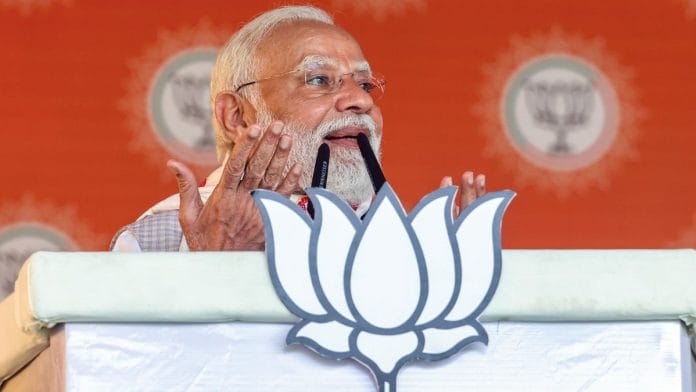
The prime minister has now used the defeat to his advantage, shifting the debate to election rallies in the run up to crucial votes in opposition-controlled states of West Bengal and Tamil Nadu on Thursday. He’s accused the opposition, especially West Bengal’s Chief Minister Mamata Banerjee of betraying women by opposing the move to increase their representation in the parliament.
“They have strangled women’s dreams,” Modi said at a rally in West Bengal’s Medinipur district on Sunday, urging voters to “punish” the ruling All India Trinamool Congress.
Opposition groups and political analysts had questioned the motives of the ruling Bharatiya Janata Party for seeking to pass the legislation knowing it didn’t have two-thirds of the votes needed to make constitutional changes. Some had said Modi’s party was aiming to revive a popular issue and deploy it as a campaign strategy. In the end, 298 lawmakers voted in favor and 230 voted against on Friday. Modi needed 352 votes to win.
Modi has now seized on the defeat to cast himself as a champion of women’s representation and the opposition as obstructionist, a message that could resonate with female voters in West Bengal, who number more than 31 million. In a televised address to the nation a day after the setback, he accused rivals of a grave mistake and warned they would be punished by voters.
“Relationship between the opposition and the ruling party has hit an abysmal low,” said Priyankar Upadhyaya, a political analyst and UNESCO Chair Professor of Peace at Banaras Hindu University. “The BJP should have taken the opposition into confidence before bringing the sensitive bills.”
Opposition groups say they feared the changes could dilute their influence in federal decision-making. The proposals would have increased the number of seats in the lower house of the parliament to an estimated 850 from current strength of 543, which opposition groups say would benefit more populous northern states where the BJP has a stronger foothold. The Modi government dismissed the fears, saying the changes would not impact the share of seats held by southern states.
By shifting the debate to public rallies, Modi is attempting to turn a legislative loss into an electoral advantage, said Kakoli Ghosh Dastidar, a lawmaker from the Trinamool Congress. Opposition parties backed greater female representation but objected to the rushed plan to expand the parliament, a prerequisite for raising the women’s quota, she said.
Opposition leaders also criticized Modi’s use of the public broadcaster for his national address on Saturday, in which he launched a sharp attack on rivals ahead of the key state elections. Banerjee, who is seeking a fourth term as chief minister in this week’s election, accused the prime minister of misusing state machinery.
“How can you use government machinery for illegal political campaigning. You have to answer people,” she said Sunday on the campaign trail in Tarakeswar in West Bengal.
Manish Tewari, a lawmaker from the main opposition Indian National Congress party, said it was “unfortunate” that Modi used state resources to target rivals. “If the prime minister had to make a political point, there were a lot of podiums and election rallies available,” he said.
Disclaimer: This report is auto generated from the Bloomberg news service. ThePrint holds no responsibility for its content.