







Thiruvananthapuram: When Kerala’s Leader of Opposition V.D. Satheesan said, while presenting the Congress party’s election policy document in January, that the United Democratic Front (UDF) would come back to power with over 100 seats, many—even within the alliance—were skeptical. At the time, the alliance seemed fragile, with at least four leaders wanting to be chief minister and many incumbent MPs wanting to contest.
Most importantly, the Congress lacked an organisational structure in the state.
But Satheesan’s predictions came true.
On Monday, the Congress-led UDF made a comeback in the state after being in the opposition benches for a decade, winning 102 of the 140 seats and pushing the incumbent Left Democratic Front (LDF) to just 35 seats from 99 in 2021. The Bharatiya Janata Party (BJP) won the remaining three.
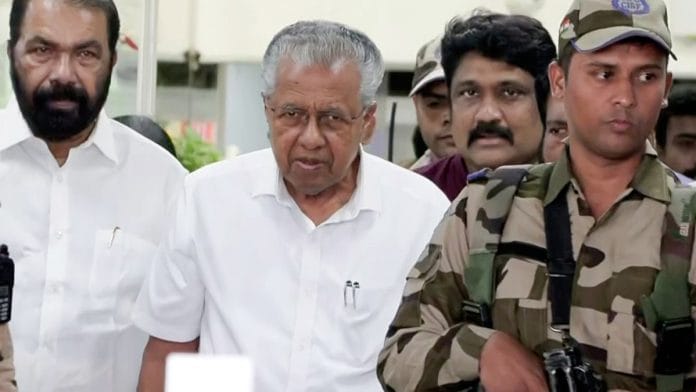
Chief Minister Pinarayi Vijayan, who won with a massive margin of over 50,000 votes from the CPI(M) bastion Dharmadam in 2021, won by just over 19,000 votes this time. Moreover, 13 of his 21 ministers lost.
The result showed an erosion of votes from LDF supporters and cadres, evident in its losses in bastions such as Kannur.
The election also has bigger national ramifications for the Left, as this is the first time the Left Front is not in power anywhere in the country in about 50 years.
The Left had ruled West Bengal for 34 years until Mamata Banerjee’s Trinamool Congress came to power in 2011. Tripura was the next Left stronghold to fall when the BJP ended 25 years of Left rule in 2018.
Kerala was the only state that remained with the Left, with the LDF returning to power in 2016, until Monday’s election results.
Analysts said the result wasn’t just an anti-incumbency vote in Kerala.
It also reflected deep discontent with the Left leadership on matters such as the centralisation of power under Pinarayi Vijayan, discontent within the CPI(M) over certain issues, and a perceived erosion of ideological and democratic debate within the Left.
K.P. Sethunath, a state-based political analyst, said the result showed discontent with the CPI(M) leadership even among its own supporters and functionaries, which favoured the Congress. “The discontent against the leadership could be one of the reasons for this kind of sweeping victory for the UDF. I don’t think the Congress had expected it,” he said.
Moreover, analysts said the vote also reflected discontent with the perception that the party was using soft Hindutva to retain its traditional vote base.
Kerala has around 55 percent Hindus, 26 percent Muslims, and 18 percent Christians. The Hindu community, especially the largest OBC Ezhavas, has been the CPI(M)’s biggest vote base.
However, the 2024 Lok Sabha elections marked a shift, with the BJP starting to get the support of sections of Ezhava voters.
The formation of the Bharath Dharma Jana Sena (BDJS), headed by Thushar Vellappally, son of Sree Narayana Dharma Paripalana Yogam chief Vellappally Natesan, has been a key factor.
SNDP Yogam is the organisation working for the upliftment of the Ezhavas. Seen as close to Pinarayi Vijayan, Vellappally Natesan sparked controversy several times last year with remarks about the Muslim community. But, Vijayan defended him, saying the Ezhava leader was not against any religion or community, and his views were against one particular party, without naming the Indian Union Muslim League (IUML).
Analysts said the party was caught in the difficult act of balancing its secular image while appeasing the Hindus in Kerala.
After the result, the CPI(M) issued a statement saying it would introspect and make corrections. Addressing a press conference soon after the results, the party’s state secretary, M.V. Govindan, said the party would understand its mistakes and continue forward.
Former minister Thomas Isaac told ThePrint the verdict was clearly against the LDF. He said the majority of people were beneficiaries of the LDF’s welfare measures and infrastructure push, which the Congress completely avoided during the campaign.
“Ten years is quite a bit of time; you take these things for granted. They voted more for the agenda set by the UDF, the alleged deal between the Left and the BJP. It was laughable, but it was more serious than we thought,” Thomas said.
He added that another thing the party should introspect on was its style of functioning, and whether it had given reasons for people to believe the narrative that it was pro-Hindutva.
Also Read: VD Satheesan, KC Venugopal or Ramesh Chennithala. Who will be Congress’s CM pick in Kerala?
End of Pinarayi era?
The result of the third consecutive election under Pinarayi Vijayan’s leadership has significant ramifications for the LDF and its leader.
The LDF government first came to power in 2016, winning 91 seats.
In its first tenure, the government under Pinarayi Vijayan gained popularity for its crisis management in critical situations such as the Nipah virus outbreak, the 2018 floods, and the pandemic.
The government also gradually increased the monthly welfare pension for the elderly from Rs 600 during the previous Congress tenure to Rs 1,600, and then Rs 2,000. These measures helped the LDF win a second term with a bigger tally of 99 seats in 2021.
Vijayan’s second tenure as chief minister saw the government focus on infrastructural and industrial development through policy reforms, investment conclaves, and big projects such as the high-speed railway corridor across the state, a project that also drew widespread public criticism.
However, in the run-up to the polls, the government faced a setback with the Sabarimala gold scandal, which peaked with the arrest of A. Padmakumar, a former Travancore Devaswom Board president and former CPI(M) MLA.
The government was often criticised for its so-called “soft Hindutva” and for allegedly appeasing the Hindu community to retain power. It also faced allegations of seeking the support of the BJP and RSS.
The LDF approached the 2026 Assembly polls with the campaign slogan, “Mattarund LDF allathe” (If not the LDF, then who), centring its pitch around Vijayan and the promise of continuity of the development and welfare measures rolled out in the last 10 years.
Political analyst C.R. Neelakandan said the party’s slogan suggested there was nothing beyond Vijayan, which sent a message of “arrogance or fascist tendency”. He also said the front avoided politics in its discourse, focusing largely on infrastructural development.
“Another thing is that, aware or not, they attempted to spread Islamophobia, which showed in their partnership with Vellappally Natesan. It created an impression of Islamophobia among minorities, even in the party,” Neelakandan said.
Natesan, the head of SNDP Yogam, had sparked repeated controversies in the run-up to the Assembly polls for making remarks targeting the Muslim-dominated Malappuram district. For instance, in April 2025, Natesan described Malappuram as a “separate nation” or “a state of certain people” where members of the economically backward Ezhava community live in fear.
Neelakandan said focusing on Vijayan backfired, as anti-incumbency sentiment against him was perceived as anger against the entire party. He added that the party lacked democratic discussion among its cadres this time and decision-making was centralised.
One of the most organised parties with a strong cadre base, the CPI(M) also faced a crisis in the run-up to the polls after many of its senior leaders openly criticised the party leadership. This included G. Sudhakaran, who alleged she was sidelined within the party, and former CPI(M) district member V. Kunhikrishnan, who made allegations of corruption in the party, particularly in the Kannur unit. Similarly, another senior leader, T.K. Govindan, publicly criticised the party’s decision to field P.K. Shyamala, party state secretary M.V. Govindan’s wife, from Kannur’s Taliparamba. The seat had been vacated by Govindan.
All three leaders were fielded as UDF independent—Sudhakaran in Ambalappuzha, Kunhikrishnan in Payyannur, and T.K. Govindan in Taliparamba. The Left lost all three seats. “The party didn’t even know its cadres in its own bastions were voting for the opponent. If there was a democratic discussion, they would have known,” Neelakandan said.
(Edited by Sugita Katyal)
Also Read: BJP’s lotus blooms in three Kerala seats, one of them by a margin of 428 votes