



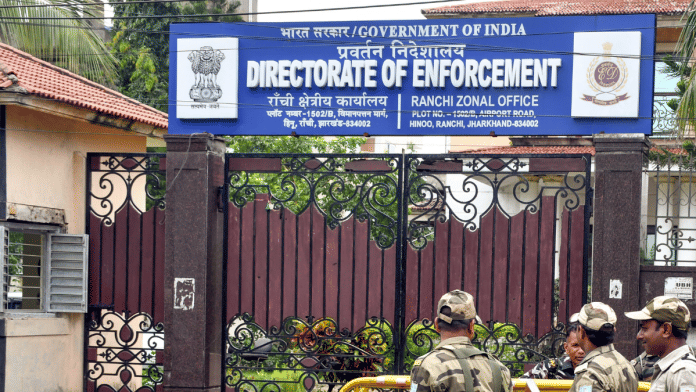

If you have acquired assets, whether real estate, shares or anything else, the ED can seize or attach them if they suspect these were bought using illicit funds. It then falls to you to prove otherwise and fight to get your assets released.
Once an enforcement case information report (ECIR), the ED version of an FIR, is filed, there’s no telling how long the case will stretch. Months. Years. Maybe longer. And by the time you realize what’s happening, your name, business and reputation are already under a cloud. So what should a CXO do when the ED comes summoning?
What To Do When You Receive an ED Notice
- Verify the notice: Check if it falls under PMLA or FEMA, as both have different legal implications. Consult a lawyer specializing in ED cases to assess the risks.
- Do not ignore the summons: Absence escalates the case and may lead to coercive action.
- Organize financial records: Keep tax filings, property papers and loan agreements ready.
- Stay calm and strategic: Composure and preparation will keep you in control of the situation. After I spoke to my father, I immediately called my lawyer. He specialized in ED cases and answered on the first ring. These ED cases didn’t come out of nowhere. They built up months before the first notice was served. Something had been going on well before the department had knocked on my door.
‘Why are they after me?’ I asked him. My lawyer spoke to a few people and found out the backstory. A group of homebuyers had gone to the North Delhi ED office a few days ago. Angry about delays in their project, which our company was managing, they had cried, begged, even touched the officers’ feet, claiming they had lost everything. They wanted action. An officer from the department had promised them exactly that. The ED would, in his words, put the fear of God into those responsible for their plight. Eight names had been listed, including mine.
‘The ED doesn’t handle real-estate delays,’ I said. ‘They do when someone convinces them it’s about financial fraud,’ my lawyer said. ‘Come to my office. We need to practise how you’ll conduct yourself when you go in.’ So we gathered at my lawyer’s office that evening, eight of us around a long table, each holding a copy of our ED summons. My lawyer scanned the room and laid out what to expect. We would be called in separately. The officers would make us wait for hours before even acknowledging us. They would ask the same question five different ways, watching for contradictions. If they sensed hesitation or nerves, they would push harder.
‘We start with the basics,’ the lawyer said. ‘How you sit, how you speak.’ ‘Ridiculous.’ One of my colleagues adjusted his cuffs. ‘It’s just an inquiry.’ ‘Show me how you’ll enter the room.’
The same colleague stood, straightened his blazer, and walked toward the door. He stepped inside and, in one smooth motion, pulled off his Ray-Ban sunglasses and slid them into his pocket.
‘Try that in front of ED,’ the lawyer said, ‘and they’ll make you wait all day.’ ‘Why?’ the colleague asked.
‘Because they can. And you’re acting like an arrogant fool.’ Someone let out a nervous laugh. For the next few days, we practised. How to enter. How to sit. How to respond. One colleague kept crossing his arms whenever he was asked a question. The lawyer made him redo it 10 times. By the time we finished, it was clear that I was walking into a psychological war zone.
I didn’t want to give them a reason to pull the trigger. Despite all the preparation, I’d be lying if I claimed I wasn’t nervous. Cops and income tax officials, I’d dealt with before. The ED was a whole new beast. And their office was exactly as I had imagined. Uncomfortable. There were no chairs in the waiting area, just an empty space where people stood or paced.
The person at the reception desk took my phone and sealed it in an envelope. I signed a logbook confirming its confiscation. Another officer verified my ID. Then I had to sign a declaration stating that I would not leave the premises without permission. After waiting for almost two hours, I was led down a narrow corridor. Just a long, enclosed passage that seemed to pull you deeper into a place you weren’t sure you’d exit anytime soon. We entered a corridor on the first floor and again my gate pass was checked and a manual entry was made in a register by the guard.
Inside the interrogation room, a man sat across from me. He studied me for a second and slid a thick book across the table. I glanced down. Prevention of Money Laundering Act, 2002.
He watched me flinch. Then he leant back. All he had to do was to accuse me under the PMLA. Then I would no longer be ‘innocent until proven guilty’, the standard principle of criminal law. The onus of proving my innocence would be on me.
Also read: Not all judges are intoxicated by power. Some make do with drugs & alcohol
Powers of the ED under PMLA
- Presumption of Guilt (Section 24): If accused of money laundering, it is presumed that the assets are proceeds of crime unless proven otherwise. The accused must show their transactions are legitimate.
- Asset Attachment without Conviction (Section 5): The ED can provisionally attach properties suspected of money laundering before proving guilt. The accused must prove the assets were legally acquired.
- Statements as Evidence (Section 50): The ED can record statements under oath, which are admissible in court. Refusing to answer may be seen as non-cooperation.
‘This Frankenstein’s monster can eat you alive,’ the officer said, referring to the PMLA. ‘It didn’t even spare the man who created it.’
 This excerpt from Vineet Relia’s ‘Relax, It’s Only a Raid: Confessions of a Crisis Manager’ has been published with the permission of Juggernaut.