







In a recent book, Francis Cody notes that “the popular phrase ‘media event’ points to the fact that we have long recognized conditions in which events are staged in anticipation of recording by news cameras and reporters.”
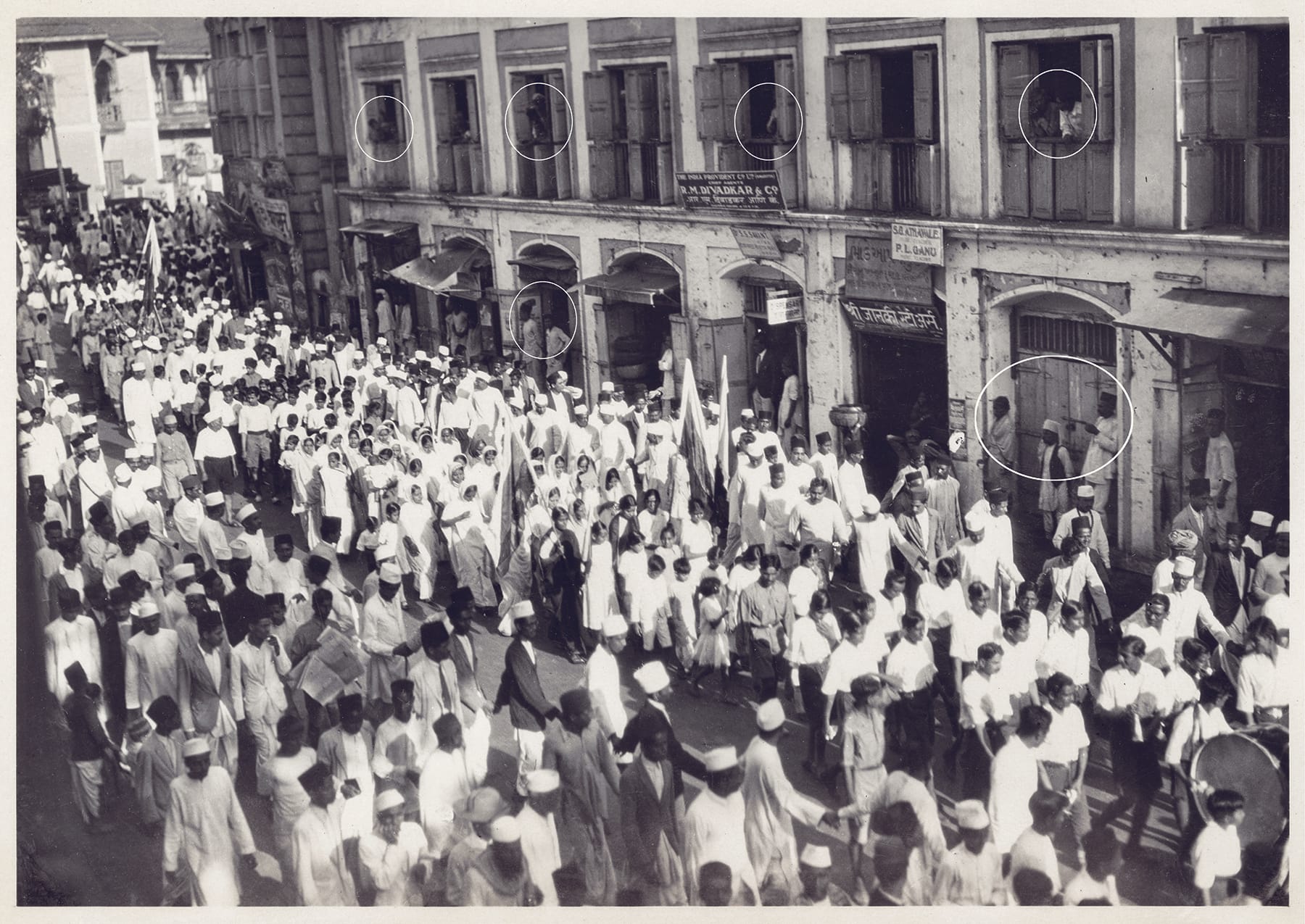
Undoubtedly, many of the Nursey album photographs were designed to generate a media event through the combination of planned daily practices of mass civil disobedience and strategically placed cameras that documented these staged events.
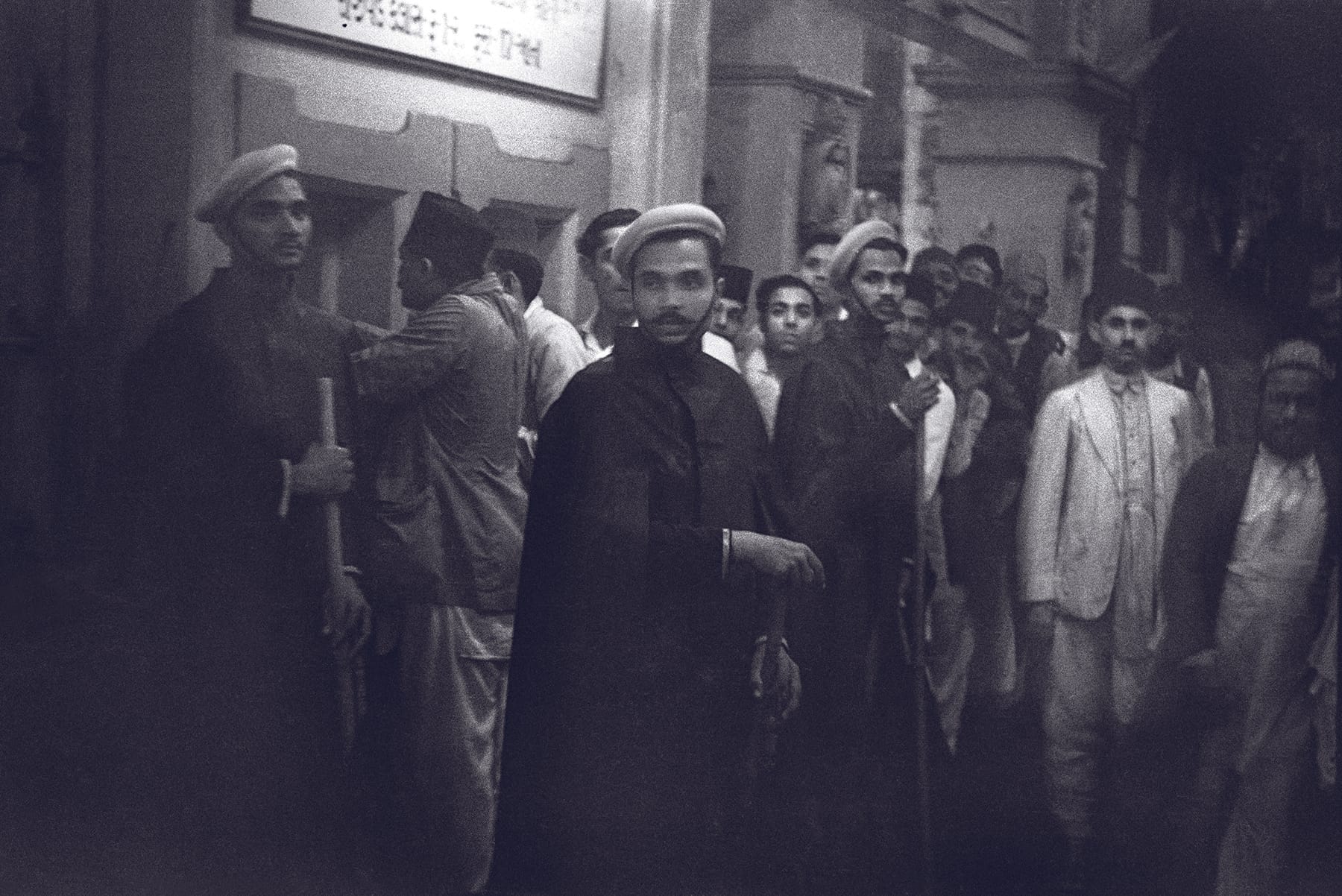
Representationally, these photos were intended to fulfil a political function: to document and disseminate political rallies, but also to intervene in the active erasure or misrepresentation of anticolonial activities in mainstream media, which was a visual mode of political suppression. In response, these images defiantly configure the public spaces of Bombay city as spaces of oppositional politics, framing the varied actors as visibly antagonistic: police versus public, colonial power versus people power, might versus right. But media don’t simply represent events or publics—media such as photography and cinema can materially engineer significant orientations of social relations and attitudes.
It is in the early 1930s that cinema emerged as a conspicuous site for—and subject of—political debate, negotiation and contestation in colonial India. By the late 1930s, a robust anticolonial cultural movement had sprung up against foreign films that displayed a patently racist or imperialist agenda in their depictions of India.
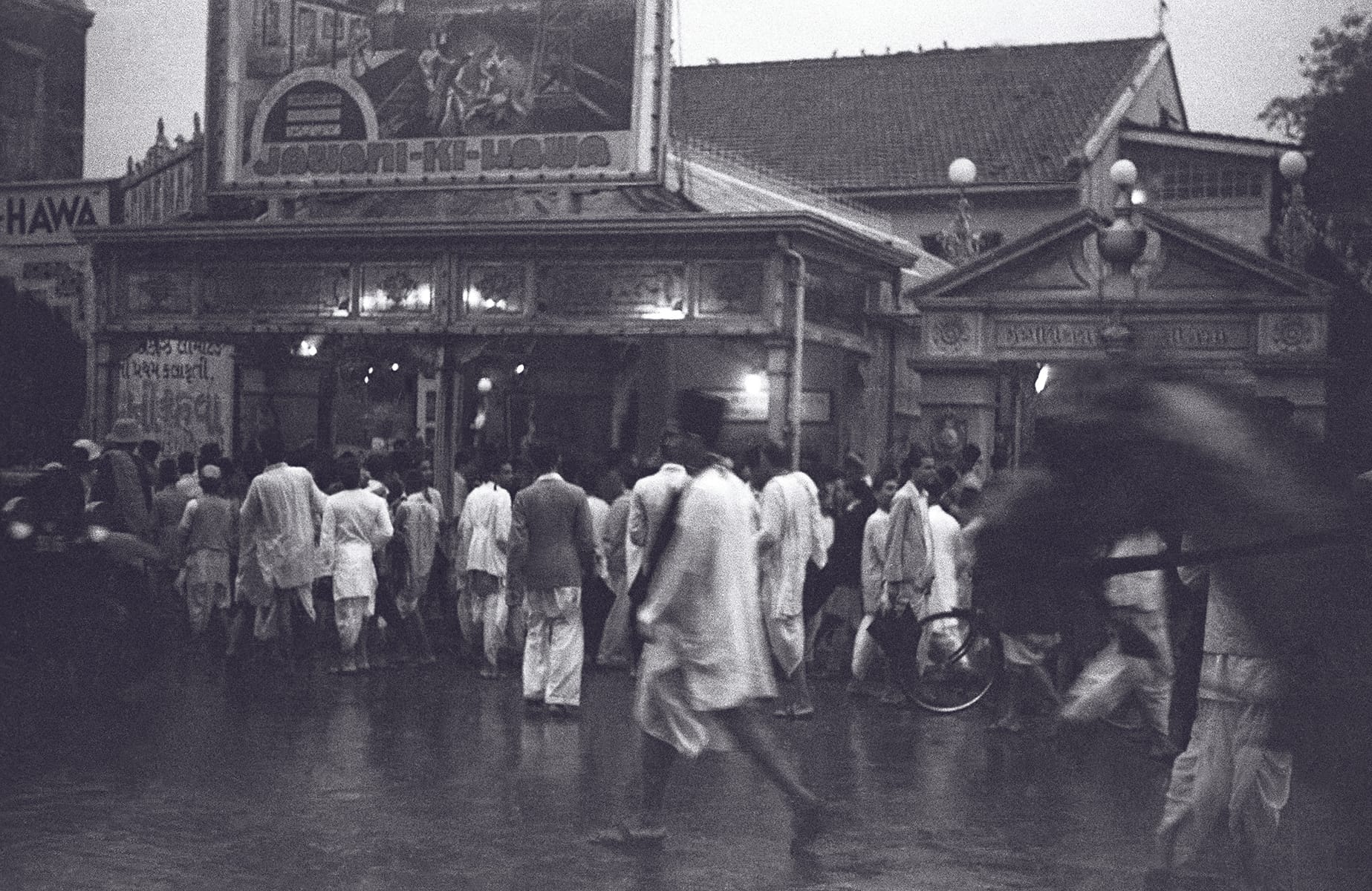
Whether we examine the censor’s control of films considered unsuitable in a factory town, or the nationalist Indian’s outrage against racist representation, we are confronted by a widespread belief in the power of cinema to sway hearts and minds. This power was conceived to lie in cinema’s sensory address, the visceral potential of mise en scène and spectacle to move audiences into action and agitation.
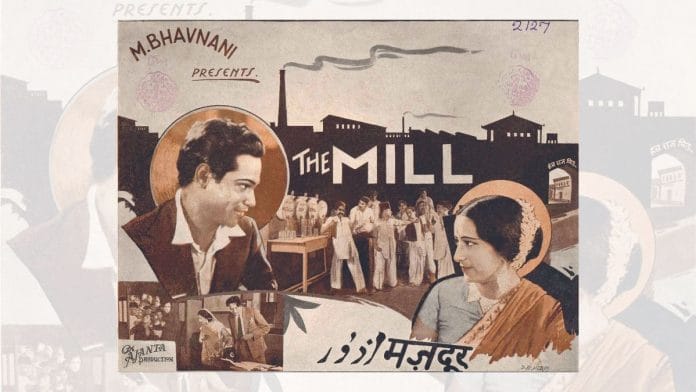
The palpable quality of this power is clear in descriptions of the heavily-censored The Mill that was released in 1939. A young socialist Khwaja Ahmad Abbas excitedly wrote, at the time, “Whatever dramatic vigour [The Mill] has is in the strike scenes … A shot in which a worker is shown clenching his fist in indignation, by itself, has intense drama in it.”
For the censor board, the dramatic intensity of a filmic fist clenched in anger threatened to translate into a thousand fists raised against the city’s capitalist infrastructure. At the core of the censor’s anxiety was trepidation about the mimetic power of cinema to induce action, to successfully instigate a collective uprising by an anonymous urban crowd that has turned political.
Lotte Hoek has written powerfully about the actual use of film projection screens in political processions in present-day Bangladesh. For her, the “screen in the crowd” is a “modular political form in the digitally enabled crowd of the 21st century,” and is effective because it taps into the political potentials of a crowd that is immersed in the visual proliferations of a heavily mediatized contemporary world. In this brief essay, I have tried to shed light on the spatial and sensorial continuities between cinema-in-the-hall in 1930s Bombay and politics-in-the-streets. Here, the very specific crowds of Bombay city are attuned to an emerging visual imagination via the movies and are being trained in new techniques of seeing.
Also read: Officers on early East India Company ships played a mix of political, diplomatic, military roles
The continuities between cinema hall and city street pulse along the axes of spectacle and address, the training of the gaze and the material interpellation of a collective. The Nursey album images, with their immediate appeal to the visual and the spatial, urge us to move beyond the content of speeches (which we cannot hear), to the material practices of civil disobedience, the physical choreography of collective resistance and the physical reconfiguration of city spaces into political theatre.
The album offers an intermedial story that moves between architecture, photography, newspapers, urban design, public processions and policing. My goal has been to introduce the urban fact of cinema into the story as a mass perceptual machinery that attunes the individual to a collective gaze and extends into the street as political spectatorship.
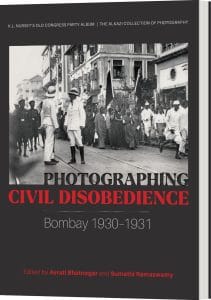 This excerpt is from ‘Photographing Civil Disobedience: Bombay 1930–1931’ (2025), edited by Avrati Bhatnagar and Sumathi Ramaswamy, published by Mapin Publishing, Ahmedabad (www.mapinpub.com), in association with the Alkazi Collection of Photography, New Delhi.