


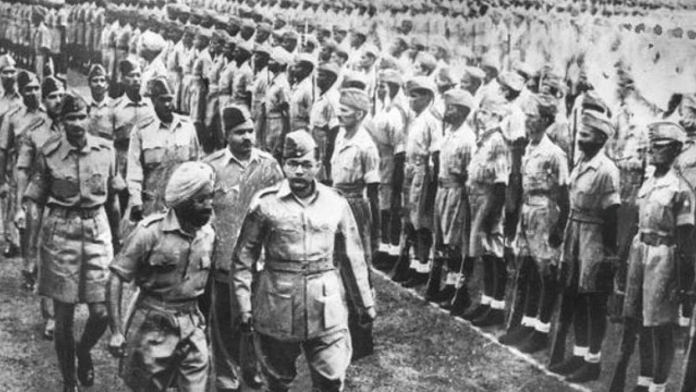
What had started off as a trial of three INA officers accused of waging war against the British Empire soon turned into a riveting examination of the empire itself in both the court of law and, more importantly, the court of public opinion. Occurring at the end of the Second World War, the INA trial constituted a key moment: the claim for Indian freedom from British rule was grounded, for the first time in the history of the Indian anticolonial movement, in a public challenge to the collusion between empire and the discourse of international law. The British government lost the case in the public sphere largely because the defense lawyers vigorously challenged the juridical discourse that had served as the anchor of the British Empire in India.
The INA trial was the first major political trial in which an Indian lawyer invoked the discourse of international law to claim the right to national self-determination and freedom. In previous political trials in India, such as the Sedition Trial of Bal Gangadhar Tilak in 1908 and Gandhi’s trial in 1922, while the accused had challenged the sovereignty of the British colonial state and even its claim to the allegiance of the colonized subject, they did not do so by invoking international law. It was also unprecedented in the history of political trials in colonial India for Indian lawyers to assert publicly the right of the Indian people to wage a violent struggle for national independence. Confident of being the ground of law, the empire found itself exposed in this trial to a counter-discourse of international law that, by offering historical, political, and legal justifications for the anticolonial war waged by the Indian National Army against the British Indian Empire, challenged its fundamental premises.
Even though the three accused were ultimately convicted in the courtroom, the British Empire lost the case in the public sphere. The recognition of this loss is evident in the order issued by Claude Auchinleck, the commander in chief of the British Armed Forces in India, soon after the trial, commuting the sentences of the three convicted INA officers. The three men were set free with only forfeiture of pay and allowances. Auchinleck later disclosed his reasons for the order in a letter to some army commanders: “Any attempt to force the sentence would have led to chaos in the country at large and probably to mutiny and dissension in the army, culminating in its dissolution.”
The British Indian Army, the primary pillar of British rule in India, was no longer the reliable institution it once was, when contingents of Indian soldiers could be ordered to fire at other Indians as they had done in the Revolt of 1857 or the Amritsar Massacre. As Auchinleck put it in a secret letter to the chiefs of staff, “Most Indian officers [in the army] are nationalists.” He warned that if the British lost control of the army in India, they would lose it in other parts of Asia as well because large numbers of Indian troops served in other parts of Asia occupied by the British. As he put it:
If the Indian forces as a whole cease to be reliable, the British Armed Forces now available are not likely to be able to control the internal situation or to protect essential communications. . . . To regain control of the situation . . . nothing short of an organized campaign for the re-conquest of India is likely to suffice. [And] . . . if the Indian Armed Forces are not prepared to support Government, they will almost\ inevitably actively oppose it. Further such active opposition is not likely to be confined to India alone. Disaffection will inevitably spread to Indian troops now being employed by His Majesty’s Government in overseas theaters such as Burma, Malaya, Java, and the Middle East. . . . The situation in India is, therefore, extremely delicate.
Also read: India was central to the Empire. It’s why the British dismantled it before they left
Auchinleck’s order could not, however, prevent the outcome that he feared. As the trial ended, the British Empire faced hostility on an unprecedented scale in the form of widespread mutinous disaffection in the Royal Indian Navy and units of the British Indian Army and Royal Indian Air Force and mass public agitation against British rule. Particularly alarming for the British administration was the Royal Indian Navy mutiny that started in Bombay on February 18, 1946, and soon spread to other ports of Calcutta, Karachi, Madras, and Vishakhapatnam, involving seventy-eight ships and over twenty thousand sailors. This mutiny was clearly inspired by Bose’s INA, as evident in the fact that sailors consistently voiced support for the INA soldiers in their slogans. Significantly, the mutineers also called themselves the Indian National Navy rather than the Royal Indian Navy. The sailors’ call for a general strike on February 20 and 21 was met by a tremendous response from the Indian public in Bombay, with three hundred thousand workers from different industries, including textile mills and railways, stopping work. Strikes and demonstrations also broke out in other major cities like Calcutta. In addition, the mutineers were supported by Indians in other branches of the armed forces as well, including the Royal Indian Air Force and the British Indian army. While the mutiny was eventually ended through negotiations by Indian National Congress leaders, what became eminently clear by 1946 was that the British government could no longer rely on the allegiance of the Indian armed forces, which had played a decisive role in the acquisition and preservation of the empire not only in India but throughout Asia, Africa, and the Middle East.
 This excerpt from ‘Asianism and the Fall of Empire’ by Mithi Mukherjee has been published with permission from HarperCollins Publishers.