




In a meeting of Al Qaeda’s military wing in Peshawar in August 1988, Osama had only listed a few non-Arab theatres, including Kashmir*, as the next destination for an Afghanistan-like jihad that Arab Afghans could support.1
The Kashmir Dispute
The princely state of Jammu and Kashmir, a part of British India before independence, became an integral part of India on 15 August 1947 through an instrument of accession signed by its king, Hari Singh. Pakistan waged its first war against India in 1947-48 to snatch the state by force and managed to take control of a significant part of it. The state of Jammu and Kashmir thus got partitioned between India and Pakistan.
Since then, Pakistan has consistently described Kashmir as an ‘unfinished’ agenda and never hidden its goal of taking over Kashmir by any means. Over the years, Pakistan has carried out propaganda to internationalize its ambitions regarding Kashmir.
Kashmir as the next theatre for ‘Afghanistan-style jihad’ became a dream for Pakistan, buoyed by the success of the Afghan mujahideen against the Soviet Union. To achieve this, Pakistan had to ensure two things: the first was to incite a ‘local holy jihad’ in Kashmir and the second to get the large number of Arab Afghans present in Peshawar to support this. This would have drawn attention to Kashmir as a theatre of ‘global jihad’.
Right from independence in 1947, Pakistani agencies have tried to raise ‘political’ proxies in Kashmir with the ultimate aim of sowing the seeds of separatism in people’s minds. Kashmiri separatist leaders who emerged in the 1980s were such examples. This surely contributed to the growth of insurgency in Kashmir, which began building up from 1987. However, there were other equally compelling reasons, including the ‘myopic’ policies of state and national level actors. Pakistani attempts to frame Kashmiri insurgency within a framework of a holy jihad did not succeed because the Kashmiri consciousness was rooted in Sufism as well as in a distinct Kashmiri cultural identity.
Pakistan’s efforts to divert Arab Afghans into Kashmir in any significant number also failed. Special camps were set up for them in Pakistan-occupied Kashmir close to the Indian border. But their footprint remained small in Kashmir and petered out fast. The biggest reason was a strong ‘disconnect’ of Arab Afghans with Kashmiris and the absence of any notion of a local holy jihad in Kashmir. The Arab Afghans were much more enticed by theatres such as Bosnia, Chechnya and Tajikistan, where there were varying degrees of local jihad taking place. Al Qaeda did not send their top leaders to Kashmir; they were busy with the terror group’s plans elsewhere but fully supported their Pakistan-based allies with resources and training.
Also read: Mahesh Bhatt to UG Krishnamurti: I was in a spiritual coma. Why did you wake me up?
The ISI’s Kashmir project was initiated by arming Kashmiri separatist groups, most notably, the Jammu and Kashmir Liberation Front (JKLF). Its expectation was that by arming local Kashmiris, the sentiment of jihad could be inspired over a period of time. The JKLF succeeded in gaining mass support for its own separatist agenda and began mounting armed attacks on security forces and state officials. However, its stated goal of independence from both India and Pakistan did not fit into Pakistan’s ultimate goal.
To counter this narrative of total independence, Pakistan subsequently raised another Kashmiri group, the Hizbul Mujahideen (HM), which advocated merger with Pakistan. The HM also differed from the JKLF in terms of its emphasis on the adoption of Islamic practices, in line with Pakistan’s own policy. For the JKLF, the Kashmiri identity took precedence and was the basis of their call for Kashmir’s separation from India.
Both these groups continued to perpetrate violence in Kashmir and the situation became tense from the early 1990s. Mass protests added power to the propaganda of the groups, referred to as militant groups in common parlance. Soon enough, the two militant groups also started targeting each other’s leaders and supporters for supremacy. Pakistan clearly sided with the HM over the JKLF.
In Kashmir, the JKLF got a boost quite early on when its ‘inexperienced’ cadres kidnapped a young Kashmiri doctor, Rubaiya Sayeed, from a hospital in Srinagar on 8 December 1989. She was the daughter of Union Home Minister Mufti Mohammad Sayeed. Five days later, the Indian government had to agree to the release of five important JKLF militants. It is widely believed that this was not a premeditated plan, but the ‘passionate’ act of a group of angry young men. It fired up passions in Kashmir and marked the beginning of a long phase of militancy in the state. Kidnappings became an effective tool for local militants. Other high-profile kidnappings such as that of the daughter of a Kashmiri member of Parliament and a senior executive of the Indian Oil Corporation both ended with the release of militants.
For the first time in March 1991, an unknown militant group called the Muslim Martyr Forces claimed responsibility for the kidnapping of Westerners in the Kashmir theatre—two Swedish engineers, Johan Jansson and Jan-Ole Loman, working on a hydroelectric project close to Srinagar. Three months later, they both managed to escape from captivity and contacted the nearest police post south of Srinagar. The kidnappers had demanded that the UN and Amnesty International should send teams into the Valley to probe human rights violations by security forces fighting militancy.
By 1992, the ISI had started mobilizing hundreds of Pakistani fighters—many of whom had fought in some form in the first Afghan proxy war—for the Kashmir project. The Pakistani fighters had been recruited by Pakistan-based terrorist networks that had emerged during the Afghan jihad. The majority of the cadres belonged to the province of Punjab in Pakistan, where such groups openly operated their camps. The groups had become allies of Al Qaeda and later, fought along with the Taliban in Afghanistan against American and Afghan forces.
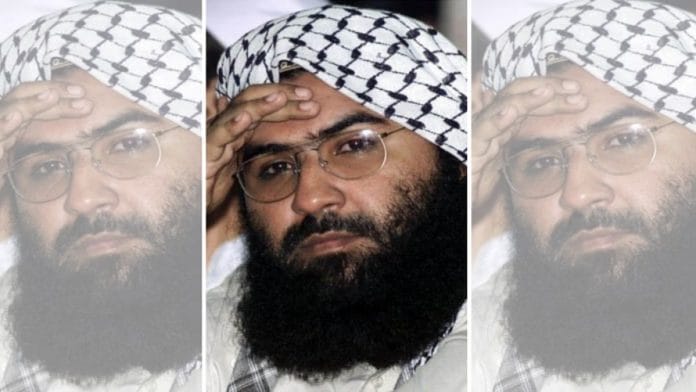
In reality, the ISI diverted radicalized, combat-ready Pakistani fighters to ‘liberate’ Kashmir. It served twin interests—to keep such elements ‘engaged’ elsewhere, and to pit them against India. These fighters would have become a problem for Pakistan. Two Pakistani ideologue-radicalizers, Hafiz Saeed and Masood Azhar, were clearly identified during the Afghan jihad to rabble-rouse against India from Pakistani soil. Saeed assumed the mantle of emir of the LeT and Masood Azhar became chief propagandist of HuM/HuA and later emir of the JeM. The duo, as agents of the ISI, kept hundreds of Pakistani fighters and fresh recruits within their folds and directed them against India and the US, including US-led forces in Afghanistan after 9/11.
Having failed to incite the sentiment of jihad in Kashmir, Pakistani groups began mounting terror campaigns in Kashmir and the mainland to destabilize India. They made efforts to raise support cells amongst a small number of young Muslim men with serious grievances against the Indian state.
 This excerpt from ‘Glocal Terror in South Asia’ by Anju Gupta has been published with permission from Simon and Schuster India.