



Why does one sport attract sponsors while another struggles to get a meeting? In India, the answer usually comes back to cricket. It has the crowds, the television audience and the stars. Fair enough. But take cricket itself. Why does one state association find companies willing to back a new league while another, with much the same local enthusiasm for the game, finds the going difficult?
A brand manager who recommends a sponsorship puts their own judgement on the line. Before taking the proposal to the board, the brand manager needs to trust the organisers to deliver what they have promised and account for the money.
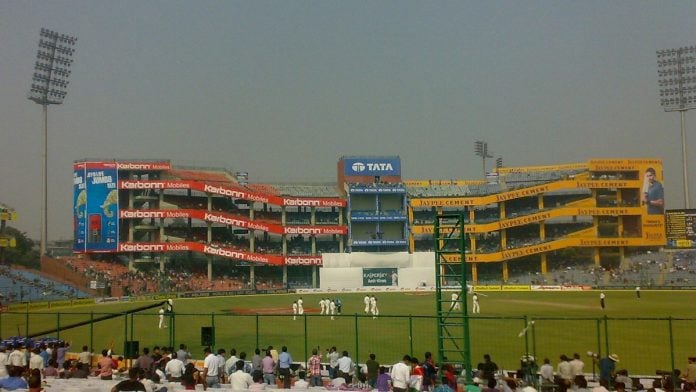
When Arun Jaitley was president of the Delhi and District Cricket Association, he wanted to build a new stadium at the Feroz Shah Kotla. I took the proposal to several companies, including the Tata Group. My friend Romit Chatterjee had it evaluated and brought the brand team on board. When I happened to meet Mr Ratan Tata, I thanked him for the Group’s support. With a straight face, he said, “We supported this because Arun is an honest young man.”
When Sharad Pawar wanted to refurbish the Wankhede Stadium in Mumbai, people readily contributed. They trusted Pawar to put their money to good use and see the work through. In both cities, the decision to back a stadium began with confidence in the person asking.
When sponsors grow talent
In Madras in 1985, the ‘biscuit baron’ Rajan Pillai was prepared to put Britannia’s name and money behind Vijay Amritraj. The Amritraj name meant something to anyone who followed Indian tennis. Pillai trusted Vijay’s judgement about what it would take to develop the next generation of players. So began the Britannia Amritraj Tennis Academy, which Amritraj’s parents, Maggie and Robert, helped run, with Maggie at the helm for two decades.
Among the first boys selected were Leander Paes from Calcutta and Rohit Rajpal from Delhi. Consider the decision their parents faced. Would you send your son to another city and entrust some of his formative years to another family? Maggie and Robert had already guided their own sons through the game. That counted for something with the families who sent their boys. Leander and Rohit both went on to play Davis Cup tennis for India, as did another academy player, Gaurav Natekar.
Two years later, in the same city, Ravi Mammen of MRF saw a shortage of quality fast bowlers in Indian cricket. He turned to Dennis Lillee. MRF funded the Pace Foundation and entrusted the cricketing decisions to one of the great fast bowlers the game had seen. Lillee, in turn, gave the foundation 25 years. Vivek Razdan, an early trainee, made the Indian squad for the 1989 tour of Pakistan. Javagal Srinath, Zaheer Khan and Irfan Pathan were among those who trained there and went on to lead India’s attack.
Mammen knew what Indian cricket lacked and whose judgement he trusted. What he could hardly have known in 1987 was who would one day take the new ball for India. He was prepared to pay for the years it would take to find him.
What of the athlete’s part in all this? We often hear, quite rightly, that Indian athletes need support earlier in their careers. Sania Mirza was around 13 years old when the infrastructure company GVK began backing her. GV Krishna Reddy played tennis himself. As Mirza recalled, the understanding was simple. The support would start modestly and grow as she performed. She wore the GVK name on her sleeve for more than a decade.
Reddy was willing to go first. Mirza kept giving him reasons to stay. It is fair to ask any athlete seeking support what would give a coach or sponsor confidence in them, season after season. Sometimes it is a title. Sometimes it is seeing a player come back after a defeat having worked on the very weakness that cost her the match. A sponsor who recognises that progress can make a difference while the athlete still needs the help.
Nepal in the big league
That question of trust arose in Nepal, where we helped draw up the blueprint for the Nepal Premier League and have since helped manage it. Earlier attempts to establish a league had faltered. Anyone who had seen the crowds on the grassy banks at Kirtipur knew how much Nepalis loved cricket. Could the Cricket Association of Nepal earn the confidence of everyone it needed to turn that enthusiasm into a successful league?
A government being asked to improve a ground wants to know it will be put to good use. A team owner committing money wants to know there will be a league worth coming back to next season. A sponsor wants to know its money will be well spent. The fan who has spent an afternoon on that grassy bank would quite like a seat. By the second season, that fan could sit in the stand and watch a match under lights.
Today, the NPL has 16 sponsors at the league level, and many have already extended their association. The team owners are delighted with their investments. Perhaps the most telling response has come from those who missed out the first time. They are now waiting for the next franchises to become available. They always knew how much Nepal loved cricket. Now they have seen the people running the league keep their word, and they are ready to put their own money behind them.
Lokesh Sharma is the founder and managing director of TCM Sports. Views are personal.
(Edited by Asavari Singh)