








Austerity drives are not new in India. Almost every time the Indian economy stumbles into a crisis, the ruling dispensation of the time has introduced different types of austerity measures in order to prevent a bigger crisis engulfing the country.
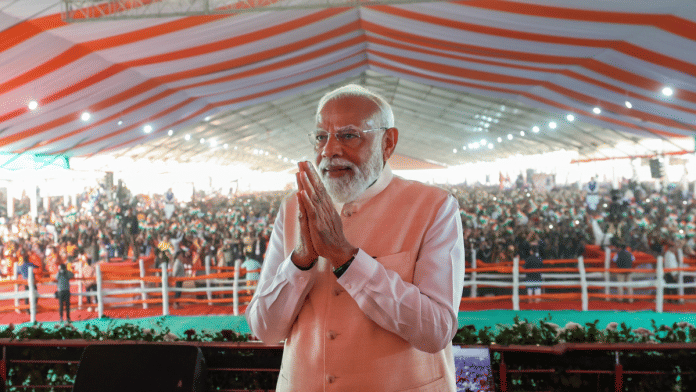
What Prime Minister Narendra Modi announced on Sunday was somewhat similar. He appealed to Indians to revive working from home, increase the use of public transport like the Metro, embrace carpooling to reduce usage of fossil fuel on transportation, buy less gold and limit foreign travel. And he asked farmers to halve fertiliser-use. All these exhortations were aimed at helping the country conserve foreign exchange by curbing the use of fossil fuel, almost 88 per cent of whose demand is met through imports.
Yet, there are crucial differences between the prime minister’s pronouncements — as also his government’s action last week — and the measures that were initiated by many of his predecessors. Examining those differences and recognising the similarities will be highly instructive for policymakers, analysts and students of the Indian economy and its polity.
Shastri and the food crisis
Let this exploration begin with 1965. For about a month-and-a- half in August-September that year, India was embroiled in war with Pakistan. The general level of prices in 1964-65 had already risen by 8.7 per cent and foreign exchange reserves had dipped to ₹250 crore or $524 million, enough to meet just about two months of its merchandise imports. And after the war, the general price level had shot up by 11.4 per cent in the first nine months of 1965-66. India’s foreign exchange reserves improved slightly at ₹298 crore or $626 million, although it was no cause for comfort. However, foodgrain availability posed a difficult challenge. An erratic monsoon had affected foodgrain production, as a result of which imports rose, straining foreign exchange reserves.
How did Prime Minister Lal Bahadur Shastri respond to this food crisis? In an address to the nation, Shastri announced his government’s decision on stricter enforcement of a food rationing system, already in place. In addition, he exhorted all Indians to skip dinner every Monday. Restaurants were asked not to serve food on Monday evenings. That was an unusual austerity move, but the measure was introduced at a time when India did not have adequate foreign exchange reserves and its foodgrain stocks were paltry.
Also Read: Why NITI Aayog and EAC-PM should produce reports on where the Indian economy is headed
Later events
Almost 25 years later, in 1990, the Gulf war between Iraq and Kuwait meant a spike in the price of crude oil and a shortage of its availability. The National Front government in New Delhi, led by Vishwanath Pratap Singh, did not go for any public awareness programme or exhortations. Initially, it enforced restrictions on the sale of petrol and diesel through the retail network of oil marketing companies. Later, it imposed a ‘Gulf surcharge’ of 25 per cent on petroleum products — barring cooking gas, since the Bharatiya Janata Party and a few other political parties had opposed the idea of inflicting the costs of the Gulf war on middle-class Indian households.
It will be a fallacy to assume that governments over the years have talked about enforcing austerity measures only in the face of an oil crisis. Sometime in the middle of 2009, soon after the North Atlantic financial crisis of 2008, the United Progressive Alliance (UPA) government led by Manmohan Singh imposed austerity measures, including a directive that Union ministers should only travel by economy class when flying. A minor controversy erupted when one of the UPA ministers, Shashi Tharoor, made a comment equating the economy class with the cattle class, an informal term often used in a derogatory manner to describe the discomfort associated with cramped and crowded travel. Tharoor’s comment came on a day when the then Congress leader, Sonia Gandhi, had decided to travel by economy class in an Indian airline.
A few years later, the UPA government decided to introduce a few more austerity measures, but this time these were in response to the worsening fiscal balance and macroeconomic environment. In May 2012, finance minister Pranab Mukherjee imposed a mandatory 10 per cent cut on non-Plan expenditure along with a ban on the creation of new posts in the government and purchase of new vehicles. In addition, it restricted foreign travel and holding conferences in five-star hotels.
An office memorandum issued by the finance ministry captured the mindset prevailing at that time. It stated: “In the context of the current fiscal situation where there is a tremendous pressure on government resources, there is an urgent need for rationalisation of expenditure and optimisation of available resources with a view to improving the macroeconomic environment… No re-appropriation of funds to augment the non-Plan heads of expenditure, on which cuts have been imposed, shall be allowed during the current fiscal year.”
Expectedly, however, the coverage of these cuts excluded expenditure on interest payments, debt repayments, defence capital expenditure, salaries, pension and grants to be released to the states as mandated by the Finance Commission.
In a similar move in September 2025, the department of expenditure under finance minister Nirmala Sitharaman issued an austerity directive to all ministries, central public sector enterprises, banks and financial institutions to stop spending on Diwali and other festival gifts. The move was aimed at promoting fiscal discipline, curbing non-essential expenditure and ensuring prudent use of public funds.
Intent vs execution
How different has been the Modi government’s approach to announcing austerity measures? It would appear that governments in the past would not allow a gap between the announcement of the austerity measures and the actual implementation of the decisions they took. It is a little different with the Modi government. Almost a week has passed since Modi’s austerity announcements on May 10, but no specific measure has actually been enforced — except that senior ministers and many chief ministers have begun using fewer cars for their travels. Indeed, what was announced did not strictly constitute austerity measures but exhortation to people to become austere.
Instead, it has taken a few decisions that go beyond austerity. For instance, the government has increased the import duty on gold and silver among other precious metals. These steps were ostensibly aimed at curbing imports in a bid to conserve foreign exchange. About a third of India’s total imports are accounted for by gold, crude oil and edible oil. India’s current account deficit, which was less than 1 per cent of gross domestic product (GDP) in 2025-26, could double in 2026-27 if the current trend in prices of petroleum products, edible oil, fertilisers and gold are any indication and exports growth continues to remain muted.
India’s foreign exchange reserves provided no comfort to the government. They fell to $690 billion at the end of May 1, 2026, down from $728 billion a day before the West Asian conflict erupted on February 28, 2026. In terms of import cover (reserves sufficient to take care of the country’s merchandise import), the decline was from over 11 months to about 10-and-a-half months during this period.
Although India’s external account today is more comfortable than what it was in 1965 or 1990, the rationale of exhorting Indians to conserve foreign exchange through suggested austerity measures this time around is understandable. Experts, however, questioned the logic of increasing the import duty on gold and silver on the grounds that such steps invariably give rise to smuggling and a thriving parallel market in the yellow metal, controlling which becomes a major challenge and an administrative headache.
Also Read: A perfect storm? High energy prices, the West Asia war, and India’s narrowing fiscal space
Missing policy steps
Even more worrying has been the delay in taking the necessary policy steps to send out the necessary market price signals through appropriate increases in retail prices of petrol and diesel. The inevitability of price increases by oil marketing companies and other policy correctives was highlighted by the government’s internal reviews, made public through the April 2026 edition of its Monthly Economic Review. The fiscal burden on the government’s finances because of these delays in passing on the impact of the higher crude oil price can hardly be overemphasised.
Austerity measures do carry a high symbolic value for the people. Leaders who announce these measures may also bask in the glory of being seen as enforcing them at the personal level. But such measures carry greater significance and positive effect on public finance and the country’s external account only when followed up with hard steps — like passing on the impact of higher global prices of commodities like petrol and diesel by raising their retail prices.
AK Bhattacharya is the Editorial Director, Business Standard. He tweets @AshokAkaybee. Views are personal.
The country can save a lot of foreign exchange if young Indians do not study abroad in such large numbers. It is possible to improve the higher education system, including by encouraging more globally renowned institutions to set up campuses here.