





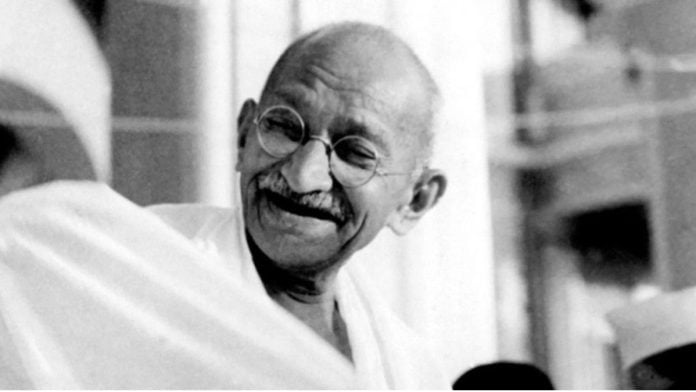

On 12 March 1930, as 78 satyagrahis walked out of Sabarmati Ashram toward the Arabian Sea, a small army marched alongside them — not carrying lathis or spinning wheels, but notebooks, cameras and telegraph dispatches. Journalists from India and abroad had come to witness what many initially dismissed as an eccentric protest over salt. Gandhi welcomed them, but on his terms.
The rules were unusual. Reporters could accompany the march, but they were expected to live by the Ashram’s discipline: simple food, no luxury, and respect for the movement’s ethical code. Gandhi understood something few political leaders of his time did: the struggle for freedom would be fought not only on the streets but also through stories and images.
He carefully managed access, challenged inaccurate reporting, and relied on his own publications, Young India and Navjivan, to ensure that his message reached people without distortion. When colonial authorities censored newsreels and restricted nationalist newspapers, Gandhi responded not by abandoning the press but by creating alternative channels of communication.
Nearly a century later, we live in a world where every citizen carries a camera, every protest can be livestreamed, and every opinion can travel across continents within seconds. The newspapers Gandhi edited have become smartphones; the telegram has become a tweet; the photograph has become a Reel. Yet the central challenge remains remarkably similar: how do we communicate truth in an age overflowing with information?
This Gandhi Jayanti, it is worth imagining Gandhi not as a relic, but as a contemporary communicator. If he were alive today, would he have rejected Instagram, YouTube Shorts and X as distractions? Or would he have recognised them as the most powerful instruments of public mobilisation ever created?
The answer may surprise us.
Gandhi, the editor
Gandhi mastered storytelling long before social media existed. We often remember Gandhi as a political leader, but we forget that he was also one of India’s most influential editors. Through publications like Young India, Navjivan, and later Harijan, he wrote weekly essays, responded to criticism, published opponents’ letters, corrected misinformation, and reflected publicly on his own mistakes.
Journalism, for Gandhi, was never a profession alone; it was an ethical responsibility. He famously argued that a newspaper’s purpose was not to please its readers but to serve truth.
That philosophy shaped the Dandi March itself. The march was visually unforgettable. Gandhi’s white khadi, his walking stick, the endless procession of ordinary Indians, and finally the image of him bending to pick up a handful of salt created one of the most enduring political symbols of the twentieth century. None of this happened accidentally.
Gandhi understood that symbols communicate more effectively than speeches. Salt was chosen precisely because every Indian, rich or poor, used it. It transformed an abstract conversation about colonial taxation into something every household could understand.
If Instagram had existed in 1930, Gandhi would not have needed a marketing agency to explain his campaign. The symbol would have explained itself.
His first Reel might have shown nothing more than footsteps on dusty roads, women drawing water from village wells, children joining the procession, and the rhythm of spinning wheels. There would have been no dramatic soundtrack, no cinematic transitions, and certainly no attempt to manufacture emotion. The content’s power would have rested in its authenticity.
Ironically, that is exactly what today’s audiences crave.
From influencer to influence
“Influencer” has become one of the defining labels of the digital generation. Today, influence is measured through followers, engagement, reach, and virality. While Gandhi possessed influence on a large scale, he would probably have resisted becoming an influencer in the contemporary sense.
Modern platforms encourage personality cultivation. Gandhi consistently redirected attention away from personality and toward principle. His clothing was not fashion; it was politics. His spinning wheel was not branding; it was economic resistance. His fasts were not performances; they were moral arguments.
If Gandhi had accumulated 20 million followers on Instagram, his account would have looked strangely different from those of contemporary public figures. The feed would resemble a living diary of civic action: volunteers cleaning neighbourhoods, women leading local cooperatives, students discussing constitutional values, and communities rebuilding trust after violence. His social media would ask a simple question every day: What have you done for someone other than yourself?
In an era obsessed with visibility, Gandhi might have reminded us that communication is not self-expression alone but collective transformation.
Also Read: Mahatma Gandhi’s 688 handwritten reflections sold for Rs 16.2 crore at Mumbai auction
Making complex ideas simple
Perhaps the greatest misconception about Gandhi is that he communicated through lofty philosophy. In reality, he was practical. He translated complicated political ideas into everyday actions that ordinary people could perform. Instead of explaining imperial economics through dense theory, he asked people to make salt. Instead of delivering endless lectures on self-reliance, he asked them to spin cotton. Instead of speaking abstractly about dignity, he cleaned toilets himself.
This ability to simplify without oversimplifying is precisely what makes short-form video so powerful when used responsibly.
Today, millions of young people learn history, politics, and economics through creators who compress complex ideas into one-minute videos. Gandhi, who spent his life making political philosophy accessible, would probably have understood that medium instinctively. He would not have shortened ideas because young people cannot think deeply; he would have shortened them because clarity is a form of respect.
Gandhi on X
If Instagram represented Gandhi the storyteller, X would have represented Gandhi the editor.
He believed deeply in debate. Newspapers regularly published criticism directed at him, and he often responded with remarkable patience. Disagreement, for Gandhi, was not something to suppress but something to engage. He believed truth emerged through self-examination, not unquestioned certainty.
It is tempting to imagine his timeline. A morning thread explaining why non-violence requires courage rather than weakness. An afternoon clarification correcting a newspaper that misquoted his speech. An evening post acknowledging that a previous statement required revision after listening to affected communities. This habit of public correction feels almost radical today.
Digital culture rewards certainty. Gandhi consistently embraced experimentation. His autobiography was titled The Story of My Experiments with Truth, not ‘The Story of My Truth.’ The difference matters. He presented his ideas as evolving moral inquiries rather than infallible conclusions. Imagine how different online discourse might look if public leaders treated changing one’s mind as integrity rather than weakness.
Gandhi was not above criticism
Any honest discussion of Gandhi in 2026 must acknowledge that he would not have escaped criticism. Nor should he. His views on caste, his early writings on race in South Africa and his later experiments with celibacy have been subject to scholarly criticism and debate.
Gen Z has become increasingly willing to revisit historical figures without placing them on untouchable pedestals, and Gandhi would almost certainly have found himself at the centre of fierce online conversations.
The important point is not to imagine Gandhi as immune to criticism, but to remember that he consistently invited moral scrutiny. Few leaders documented their own contradictions as extensively as he did. He published uncomfortable reflections, admitted errors, and revised positions throughout his life. That willingness to remain publicly accountable may be more valuable to today’s digital culture than any of his inspirational quotes.
The internet often asks whether historical figures deserve cancellation or celebration. Gandhi might have asked a different question altogether: Can criticism lead to greater truth rather than greater hatred?
Who controls the narrative?
Gandhi’s understanding of media power was visible during the Dandi March. The British government recognised it too. As nationalist sentiment grew, colonial authorities imposed restrictions on newspapers, censored films, and attempted to limit the circulation of images documenting civil disobedience. The battle was never simply about salt; it was also about who controlled the narrative of resistance.
Gandhi’s response was neither anti-media nor blindly pro-media. He insisted on responsible journalism while simultaneously defending journalists’ freedom to report. When newspapers faced censorship, he encouraged alternative forms of communication rather than surrendering public conversation altogether. For him, freedom of expression was inseparable from the ethical duty to avoid falsehood.
That lesson feels urgently contemporary.
Today’s threats to public discourse do not arise only from censorship. They also emerge from misinformation, manipulated videos, anonymous propaganda, algorithmic echo chambers, and the relentless speed at which falsehood travels before verification catches up.
Would Gandhi have supported unrestricted virality? Probably not.
Would he have opposed state censorship? Almost certainly.
More importantly, he would have reminded us that press freedom is not merely the freedom to publish — it is the responsibility to pursue truth. In an age where everyone is both a consumer and producer of information, Gandhi’s ethics of communication may matter more than his communication tools.
When the image becomes the story
Every movement today hopes for a viral moment — a photograph, a speech, or a clip that captures public imagination. The Dandi March produced exactly such a moment when Gandhi lifted a handful of salt from the shore. Yet historians have pointed out an intriguing detail: the act’s famous images were carefully recreated because the original scene had not been adequately photographed. The image preserved the truth of the event, but it also reminds us that public memory is shaped through visual representation.
Gandhi understood the importance of imagery without confusing it for reality. That distinction has become blurred today. We edit moments before experiencing them. We optimise activism for aesthetics. We measure compassion through shares.
Gandhi’s politics suggests another possibility: communication should illuminate action, not replace it. A Reel documenting volunteers planting trees is meaningful because trees were planted. A photograph of citizens cleaning a river matters because the river became cleaner. The image documents action, not replacing it.
This Gandhi Jayanti, imagine following Gandhi
Imagine opening your phone on 2 October.
A new notification appears.
@MKGandhi has posted.
No motivational graphic carries a quote he never said. Instead, a simple video from a government school shows children reading the Constitution together. The caption is brief:
“Freedom survives only when citizens practise it daily.”
No hashtags. No merchandise. No sponsored content.
Perhaps that is the most meaningful way to remember Gandhi — not as a statue wrapped in marigolds, nor as a portrait circulating through WhatsApp forwards, but as a communicator who understood that every medium carries a moral choice.
Technology changes. Human attention changes. Platforms rise and disappear. Yet the fundamental question remains unchanged: Do our words bring us closer to truth, or merely closer to noise?
If Gandhi were among us today, he would probably use Instagram, Shorts, and X with remarkable skill. But he would also insist that the measure of communication is not how many people watch — it is how many people choose to act.
Perhaps that is the challenge he would leave for Gen Z this Gandhi Jayanti: don’t just go viral, go meaningful.
Dinesh Singh is the former Vice Chancellor of the University of Delhi and adjunct professor of mathematics at the University of Houston, Texas, USA. He tweets @DineshSinghEDU. Views are personal.
Krishangi Sinha is a researcher at Lokniti CSDS.
Edited by Maryam Hassan
An excellent read… Gandhiji changed the paradigm of freedom struggle, he was a disruptor, I am sure he would have used social media but in his own unique way…..
Much respect Professor.
But to put it very bluntly – GenZ is least bothered about what MK Gandhi or Babasaheb did or did not do.
In fact, some of them might even have serious difficulty in differentiating between the two.
M K Gandhi would apologise for making India suffer with socialism on Instagram, YouTube, and X.