






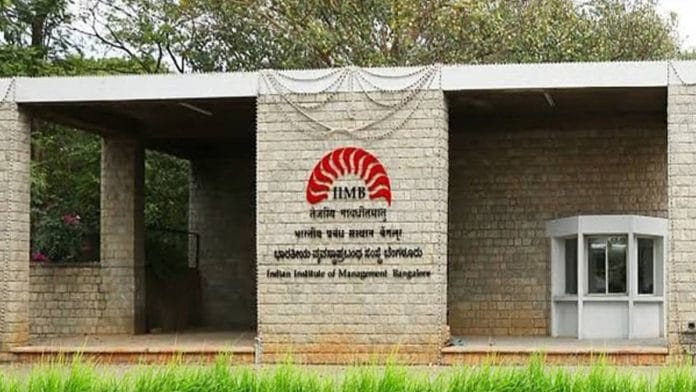


On the morning of May 4, on the residential campus of the prestigious Indian Institute of Management Bangalore, N walked out of one faculty apartment and knocked on the door of another. The 23-year-old Kuki woman from Churachandpur, Manipur, said she had not eaten in 24 hours and was in unbearable pain from kidney stones. The household she had just left belonged to Amar Sapra, a professor of Production and Operations Management, and his wife Anshu, who runs a nursery franchise on the same campus.
N had been employed there as a nanny since she was 17. The previous evening, when she had complained of the pain, her employer had allegedly told her she was “doing drama” and locked her in.
This was, by her account, par for the course for the six years she had been with them. Beatings even when she was ill, and no way to reach her family or friends without a phone that had been confiscated. The last time she met them was over a year ago, when she visited home for her father’s funeral. Her employers, she stated in the FIR she later filed, worked her from before dawn to past midnight. For this, her contracted wages were Rs 18,000 a month, of which only Rs 10,000 was paid in April – the shortfall reflected the insufficient number of hours she had put in.
An IIM faculty residence is not — at least by reputation — where this sort of thing is supposed to happen. The IIM is, after all, a wonderful argument that ability and the accident of birth are not correlated. The entrance exam does not know your surname, it does not care about your father’s caste, and it does not ask which school you went to. In theory, the promise is that a child from a small town can, on the strength of their CAT percentile, beat another from a posh Delhi private school.
Graduates of elite institutions such as the IIMs and IITs — the Sundar Pichais, Satya Nadellas, and the many Indians who run American tech companies — are held up as proof that they earned their place in the ether via this trial by fire. This is how any argument against reservations goes. If the exam is identity-blind to begin with, then any correction by identity must be a corruption of the fair rules.
The trouble is that on closer inspection, the rule is not really a rule. It’s a blind belief in the idea of a meritocracy, stripped of any understanding of Indian society. But left to its own devices, all that the meritocracy does is reproduce the same systems of exploitation and abuse.
Also Read: Casteism didn’t disappear in Indian cities. It just learned English
The caste in merit
The anthropologist Ajantha Subramanian, who teaches at Harvard, has spent the better part of a decade looking into where India’s most coveted credential actually comes from. Her 2019 book, The Caste of Merit: Engineering Education in India, follows the IITs from their pre-independence origins to the present and arrives at a conclusion that is hard to dispute. What we so casually label “merit” in India — a kind of innate talent uncontaminated by circumstance — is cut from the same cloth as inherited privilege.
Upper-caste families have, over generations, accumulated the things that make an exam easier to clear — the access to English-medium schools, the older cousin already in the system, the household assumption that places like the IITs are where people like us belong. By the time a student graduates from these tough institutions, it appears as if the degree was wrested from nothing. Subramanian calls this process the conversion of caste capital into merit.
Sociologist Satish Deshpande has argued that the Indian Constitution can name caste only as a source of disadvantage — never as a source of privilege. The “general category” is not, as it pretends, a casteless space. It is a space where caste has acquired enough and so no longer needs to announce itself. Caste is only a liability, because when it is an asset, it is called merit.
And so, it is worth asking what elite degrees actually produce.
Also Read: From Joshimath to Zojila—how Indians are loving the Himalayas to death. Literally
When the mask of merit slips
At IIM Bangalore itself, the institution’s former director, Rishikesha T Krishnan, was booked in 2024 under the SC/ST Prevention of Atrocities Act after Dalit colleague Dr Gopal Das alleged caste discrimination, including the public disclosure of his caste identity in a mass email. Das is an IIT Kharagpur graduate who has appeared on Stanford University’s list of the top 2 per cent of researchers globally for five consecutive years. He says he has been denied promotion since 2022.
The FIR against the director was lodged at the same police station as the one in the nanny’s case. Incidentally, the institution’s response to the latter was to clarify that she was “not employed through institute contractors”. In other words, the legal equivalent of a “private matter” that ensures the campus remains blameless. These are the standards a meritocracy protects.
In Gurgaon in 2023, a white-collar couple employed at an insurance company and a PR firm, were found to have hired a 14-year-old girl from Jharkhand to care for their infant. Over five months, the child was physically and mentally tortured: She was burned with hot metal tongs, slashed with blades, forced to eat from the dustbin, and locked in a cupboard. The couple was sacked by their companies with immediate effect, but has that stopped several educated professionals from employing young children to “play” with their kids?
And then there is Dr Payal Tadvi, an Adivasi postgraduate medical student at BYL Nair Hospital in Mumbai. Three senior doctors subjected her to relentless caste-based harassment and told her she didn’t deserve to be there because she held a reservation seat. She died by suicide in May 2019. Six years later, the trial is yet to begin. The meritocracy, in this case, conferred immunity from scrutiny and accountability.
The reservation-merit debate in India has always been about entry. Who deserves a seat, who earned it, who got in on their own steam. Sadly, the rigour of a competitive exam is where the scrutiny is at its most intense.
Nothing that comes after — what a credential holder does with their authority, how they treat the people who work in their homes, and whether the law moves at all when they are accused — receives a fraction of that attention. That’s none of our business.
Karanjeet Kaur is a journalist, former editor of Arré, and a partner at TWO Design. She tweets @Kaju_Katri. Views are personal.
(Edited by Asavari Singh)
A very poor analysis by the author. Such subpar and flawed analysis hurts the cause of caste oppression.
A dispute between a kuki girl and a punjabi professor is converted in to caste dispute by very clever karanjeet kaur and I suspect it is aligned with Deep State focus on enhancing caste fault line. Most probably funds have come from west for this article.
A punjabi will not know castes in tamilnadu or manipur. How is gopal das connected here or payal tadvi. Conversion is the look out word.
You brought to light very important issue. I too have seen such cases in my life. It is very common problem in houses of such people of merit but overlooked till date. Now it is not going to remain same for sure.
Dragging a non-issue and subject like caste shows the sick state of mind of this blogger. She indeed belongs to this place
Both upper and lower castes can indulge in illegal and immoral activities. People can change when they are in positions of authority. A person from lower caste but in a position of authority was found indulging in sexual harassment of female staff and physically assaulting male students. Caste can just be a happenstance. What matters is the moral integrity. Intelligence plays an important role in academics and careers. A high caste-person with low IQ may not be able to grasp the concepts in certain subjects despite trying hard; he or she will unlikely be a quick learner in their jobs and move up the ladder. Here, caste has nothing to do with it. Not everything can be attributed to caste. A high-caste IITian can drink and drive, just as a low-caste person can refuse to vacate reserved seats in a train saying he has ‘reservation’ all over India. Genuine caste discrimination exists as well as skill and intelligence discrimination. Kejriwal and Ola scooter’s Bhavish Aggarwal are good examples of defective IITians.
Tough action should be taken against such highly educated but lacking sensitivity and showing such inhumane behavior.
A) IIM don’t select from cat alone, there is heavy weightage of interview ( read social class or caste )