








Mayday, mayday, mayday—you have likely heard this dramatised phrase in aviation and nautical disaster movies, delivered with urgency and a sense of impending catastrophe. The term originated from the French m’aidez (“help me”) and is used by pilots and sailors when things go terribly wrong. Think not of “minor inconvenience” but more “we absolutely need to get out of here right now!”
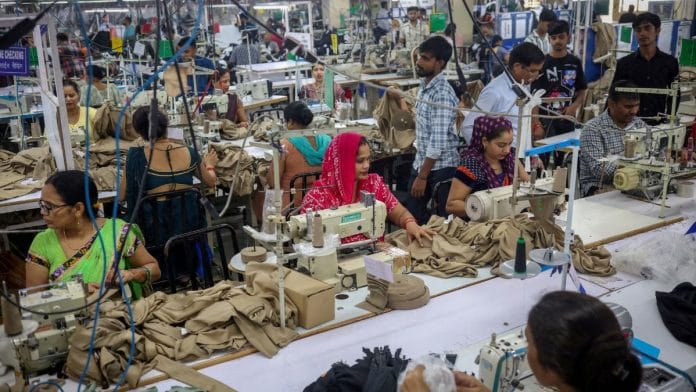
May Day is also observed on 1 May every year as International Labour Day. Originally a celebration marking the arrival of spring in Europe, the date was later designated as Labour Day by the American Federation of Labor to commemorate a general strike in the United States in favour of an eight-hour workday. The movement culminated in the Haymarket Affair on 4 May 1886. There was a violent clash between the labour protesters and police, resulting in many deaths.
The first day of May this year was significant for Buddhists and Hindus alike. The auspicious Buddh Purnima fell on this day, commemorating the birth of Lord Gautam Buddha, who is also believed to have attained enlightenment under the Bodh Tree and achieved moksha on the same day, albeit in different years.
This year, 1 May was auspicious for another reason: Vaishakh Purnima. It marks Kurma Jayanti, a deeply spiritual and symbolic festival dedicated to Lord Vishnu’s second incarnation, the Kurma or giant tortoise.
It is pertinent to note that this full moon was the convergence of the birth dates of two avatars of Vishnu, as many believe that Gautam Buddha was the ninth avatar of the preserver.
On the face of it, Labour Day, Buddha Purnima, and the Kurma Jayanti may have nothing in common. But it is said that there are no coincidences and there is always a deeper meaning attached to life’s events. The three events on 1 May represent a certain spiritual meaning and alignment of thought to the seekers. As we all live in the material world, yet dharma or righteous path defines our existence.
We keep seeking liberation from economic or social burdens. Let us renew this very quest. Justice, peace and prosperity are achievable through compassionate living. We must remember that memories are inherited and ideas are eternal and thus travel from generation to generation.
The righteous path of dharma
In Hindu philosophy, the divine trinity of Brahma, Vishnu, and Mahesh embodies the cosmic cycle of creation, preservation, and dissolution. Together, they reflect the eternal rhythm through which the universe is formed, sustained, and evolved.
Vishnu is believed to be the eternal preserver, responsible for maintaining the cosmic order (dharma), and he intervenes when the balance is threatened. To restore order, he descends in various avatars or dharmic reincarnations; each tailored to overcome a specific crisis and re-establish righteousness.
We all know about the famous incarnations of Narayana, Ram and Krishna, while his other avatars remain less widely discussed. In his second avatar, Vishnu appeared as a giant tortoise, Kurma, who played a pivotal role in the Samudra Manthan—the cosmic episode where gods and demons went seeking the nectar of immortality.
When Mount Mandara, used as a pole to churn the Indian Ocean, began to sink, Vishnu assumed the form of Kurma and supported it on his back, acting as a fulcrum for the churning. Thus, balance was restored in the universe. This is often interpreted as a metaphor for stability amid chaos and for divine intervention in times of crisis.
Vishnu’s assumption of this ignominious avatar serves as a lesson: balance is essential in the universe. It can be extended to signify that the rightful distribution of wealth is an extremely important principle of governance in the presence of good and evil. And this is the lesson that we derive from Kurma: to discern who gets what and how to follow the rightful path. Mahadev destroys evil and restores order to the universe, and by consuming the poison, he ensures that the righteous path of dharma is preserved for eternity.
This year, Kurma Jayanti coincided with International Labour Day. The lessons drawn from Kurma—about balance, justice and rightful distribution—resonate with the ideals of equality and fraternity enshrined in the Constitution, drafted under the leadership of BR Ambedkar, who also embraced Buddhism. We cannot forget that without labour, there will be no industry, no manufacturing, no technology, and therefore, no economy.
The Buddhist philosophy
It was a radiant moon that glowed bright and bold on the full moon night of Buddha Purnima 2026, venerating the enlightenment of the Buddha, much like the radiance reflecting his holy persona. It is worth introspecting not only on spiritual awakening but also on the moral foundations of our public life.
The ideals enshrined in the Constitution echo the ethical vision of the Buddha and find resonance in the thought of Ambedkar. The dharma was not a ritualistic doctrine for Ambedkar; rather, a framework for building a humane and equitable society.
If dharma and its tenets are followed by society at large, no one can disenfranchise anyone. Gautama Buddha led from the front and brought in the changes in a system that was outdated and immersed in tired dogma and rigid ideology. His message was rooted in equality, reminding us that enduring change begins within, even as it shapes the structures around us.
Empires and institutions derive their strength from ideas rooted in ethical reflection and dharma. India and its Constitution bear the stamp of equality, as is symbolised by the Ashoka Chakra on the national flag, derived from Ashok’s Pillar (he also embraced Buddhism). Principles of good governance, therefore, are clearly and obviously derived from Buddhist philosophy.
Also read: India is losing out from the glamour around English. Cultivate multilingual workplaces
Focus on the labour force
International Labour Day 2026 has special significance, as it is the first May Day occurring after the full rollout of India’s new labour architecture under the new Labour Codes. For decades, India’s labour market was governed by outdated central laws dating back to the colonial era and the early days of industrialisation. Over two dozen central laws and hundreds of state-level regulations coexisted, often proving both complex and archaic.
As I wrote in my earlier article, these frameworks led to compliance issues for employers, while cumbersome job creation left many workers disenfranchised and outside the scope of meaningful protection. Definitions of wages across statutes were different, dispute resolutions were slow, and enforcement tended to be selective rather than systemic.
Contrastingly, the new labour codes seek to consolidate and simplify this framework by creating standards across industries and also creating space for the new type of workers, such as gig workers, contract workers, etc. Standardising definitions, creating digital compliance, and extending provisions like social security to gig and platform workers, the reforms aim to bring clarity and inclusivity to a previously disenfranchised section of the labour force. After nearly 40 years, there is an attempt to align India’s labour ecosystem with the realities of a modern, formalising economy.
Exploitation of the disenfranchised was never a part of our ancient value systems. Other civilizations, including the conquering forces, have exploited human beings and continue to damage those relationships. This May Day gave a great opportunity to right the historical wrongs and observe the confluence of Vedic, Buddhist, and modern Indian philosophy.
In the rising age of AI, many entry-level jobs face risk. We must be mindful of what direction this AI onslaught is likely to take. Basic, entry-level jobs at the highest risk of automation are also held by women—if this issue isn’t addressed, the gender divide will widen. Thus, immediate work needs to be done on skilling and upskilling of the female workforce alongside the development of sustainable Net Zero, off-grid data centres, before the ill impact is faced by the country at large. The May Day call is serious about preserving the ethical cultural values and building inclusive communities to tackle the challenges of the present.
Meenakshi Lekhi is a BJP leader, lawyer and social activist. Her X handle is @M_Lekhi. Views are personal.
(Edited by Ratan Priya)