






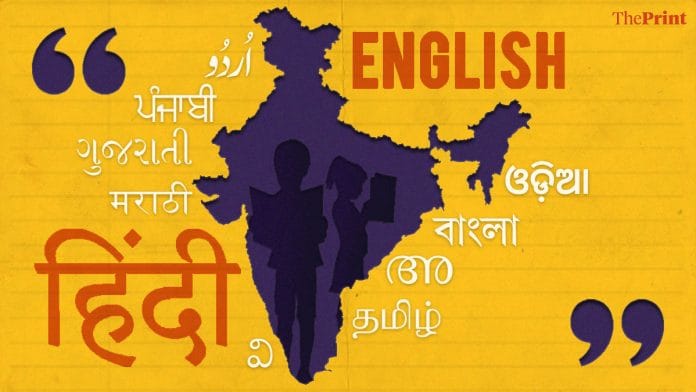

In India, few beliefs have travelled as far, or lodged as deeply, as the belief that English is the master key to success. It is treated as a marker of intelligence, a passport to employability, and now, in the age of artificial intelligence, as a necessity. Parents have nurtured that belief, and students have internalised it. Employers have repeated it. English has utility in global business, research, and some digital systems. A significant part of the scientific literature is generally available in English-language journals. It is therefore easy to make a sweeping conclusion that English fluency is now essential for communication, collaboration, scholarship, career advancement and national progress. That is precisely why the argument for English has become so influential. But the real question is not if English is valuable. Its utility should not be confused with inevitability. The larger issue is whether India must continue to shape aspiration and opportunity around English dependence to emerge as a productive, innovative and globally powerful nation.
Many people equate English proficiency with professionalism. That is a mistake. Professionalism means clarity, judgement, discipline, reliability and domain competence. It does not come automatically from accent, spoken competence or verbal polish. A workplace can be full of fluent English speakers and still be badly managed. Another workplace can operate in multiple languages while being highly efficient. Empirical work on multinational firms is instructive. It shows that language barriers can impede knowledge transfer, but the remedy is not always more English for everyone. What the workplace needs is better task-specific translation support, clearer terminology, bilingual managers and mediated communication.
The deeper problem is the assumption that English automatically raises productivity. Evidence does not support such a simple claim. Language matters in the workplace, but not in a simple English-fits-all way. A comparative study by Anne-Wil Harzing and Markus Pudelko from Middlesex University and the University of Tübingen, based on more than 800 multinational firms across 13 countries, found wide variation in language competencies, policies and practices. They found that successful firms do not all converge on one rigid formula for language. They adapt language in the workplace based on task, geography, managerial structure and workforce composition.
Language at work is not just a medium of exchange. It is also a carrier of culture, confidence and voice. Jérôme Saulière’s study at Université Paris-Dauphine on imposed anglicisation found that when teams changed their working language to English, their accuracy and verbal use suffered. Their willingness to speak with each other declined. In other words, people work better when the social penalty for imperfect English is low, and their communication quality is higher when they feel free to think aloud in their own language. If workers hesitate to speak and give feedback because they fear making mistakes in English, that is a clear institutional loss due to the glamour around English.
That is why Heejin Kim’s review published in Annals of Business Administrative Science is so important. It argues for a language strategy beyond Englishisation. In other words, English may be one tool, but it is not the only valid operating principle for an organisation. Firms often do better when they match language to task by using local languages for local operations, a shared lingua franca where genuinely required, and translation or bilingual mediation where precision matters.
Also read: English language gained in power in India only after the British left
Use AI for multilingualism
The newest case for English comes from AI. Since many AI tools first appeared in English, some assume that strong English ability will now become even more indispensable.
That claim was easier to defend when major digital systems were overwhelmingly English-first. It is harder now.
Research on multilingual large language models shows growing cross-lingual transfer and expanding multilingual capability. Surveys of multilingual LLMs describe rapid advances in models that can process and generate content across many languages.
India’s own public digital infrastructure is moving in that direction. The government-backed BharatGen platform supports 22 Indian languages, and BHASHINI reports support for more than 36 languages with large-scale language services integrated into public platforms. It suggests that AI can reduce linguistic gatekeeping rather than deepen it.
Then why should India anchor its future as if English were the only serious language of work, knowledge and progress? India now has a chance to build its education, digital services and workplace coordination on a broader language base. Let us not make a strategic mistake by ignoring that historic opportunity.
India is a vast and diverse economy, with deep internal markets, large regional labour pools and major local-language-led public spheres. Its linguistic diversity is not a weakness. It is a national resource. That raises a larger point. Should we build our country’s workforce strategy around English proficiency alone? Or should it seek to mobilise the full intelligence of the population? If entry into aspiration depends too heavily on English fluency, then millions will be filtered out despite their talent, effort and imagination. That is linguistic gatekeeping.
The real issue is not whether some Indians will still need English. They will. English should be taught well, and access to it should remain open. But we should not take English as inevitable. Our nation does not require a workforce that is uniformly dependent on English. It needs one that is multilingual, confident, technically capable and supported by institutions that do not mistake the use of English with intelligence itself. The current policy direction is clear—focus on stronger Indian-language schooling, technical vocabulary in Indian languages, translation ecosystems, bilingual interfaces, and AI tools that work seamlessly across Indian languages. This route is inclusive and realistic. It gives India a chance to free itself from an old dependency imposed by history and later defended by habit.
Mamidala Jagadesh Kumar, Chairman, Review Committee for NEP 2020, Ministry of Education, formerly Chairman, UGC and Vice-Chancellor, JNU. Views are personal
(Edited by Theres Sudeep)
My view is a little different. Our Editor jokingly refers to himself as a Hindi medium type. That has never stood in the way of his stellar career in journalism. No question that English opens up many pathways to success in a globalised world for the average Indian child. It should be available from the start. I always think of airline crew, others working in the hospitality industry, whom a little grooming in language and etiquette gives the poise and confidence to make a success of their careers.