





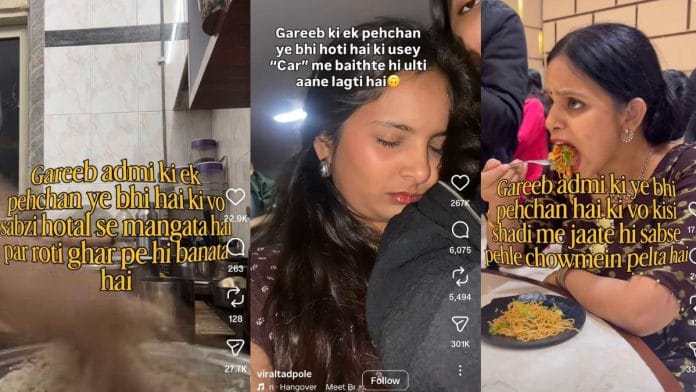


In the absence of official poverty estimates—India hasn’t produced any in a decade—Instagram’s meme economy has come up with its own definitions. A new trend has taken the app by storm, where creators post “telltale signs of poverty”.
“Gareeb ki 7vi pehchan ye bhi hoti hai ki ye cooler ko khud repair kar leta hai (The seventh mark of a poor person is that they repair the cooler themselves),” read the text on a recent reel by the handle @mohit_86_m.
“This is relatable,” wrote a commenter in Hindi. “Etna sach kaise bol leta hai koi (How does one tell so much truth),” said another. A stray comment even talked about the value of hard work and effort.
The format that first appeared around April is now in full swing. But along the way, it has become just another engagement magnet in the hands of content-hungry influencers.
“A poor person’s telltale sign is that they know everything about every single line of the Delhi Metro,” read the Hindi text on a recent reel by Paritosh Nagar.
Nagar is a football analyst and scout for EE Guineueta and lives in Barcelona. He is one among many content creators cosplaying poverty.
In the bizarre Viral Spiral that is North India’s “gareeb ki pehchan” reels, enjoying coffee, dreaming of studying in Germany, and owning an iPhone 13 are all markers of poverty. The reels feature large text set against videos of people going about their day, and some boppy Bollywood song that adds to the supposedly comic effect.
“A poor person’s other identifying trait is that they are very eager to use their sisters’ things,” read the text on a reel posted by influencer Anjali Chauhan on Thursday. The video featured her brother rifling through her skincare cabinet.
Chauhan’s videos usually garner thousands of views. But this one amassed 17 lakh views.
Also read: What the meme economy is doing to Modi’s gold, oil, WFH appeal
Playing poor
While the middle class has always enjoyed a good laugh about its own lack of means, the humour this time around hinges on the word “gareeb”. Like much humour, this is not entirely innocent.
“Gareeb admi ki ye bhi pehchan hai ki vo kisi ki shadi me jaate hi sabse pehle chowmein pelta hai (A poor person’s telltale sign is also that, whenever they go to someone’s wedding, they head straight to chowmein),” read the text on Natasha Rastogi’s reel. The influencer is famous for her “nanand ke bachche” (husband’s sister’s kids) videos, where her affluent sister-in-law keeps showing her up.
A kinder reading would be to say that an aspirational middle class is confusing its middling station with poverty. And what passes for being poor is rotis being made at home while the rest of the dinner is ordered from a hotel, using way too many tissues at restaurants, and unending dreams of starting a business.
Influencers aren’t alone in their confusion. Over decades, India’s top economists have failed to arrive at a conclusive poverty line for the country. And Instagram may be utterly ignorant of poverty, but at least it has an answer for who in the country is truly wealthy.
“Ameer Insaan ki pehchan yeh bhi hai ke woh Iphone ke sath android bhi chalata hai (A rich person is someone who uses both an iPhone and an Android),” said a recent reel by influencer Tanya.
And judging by my cousins who carry two phones, I must say that Tanya may have the right of it.
Views are personal.