






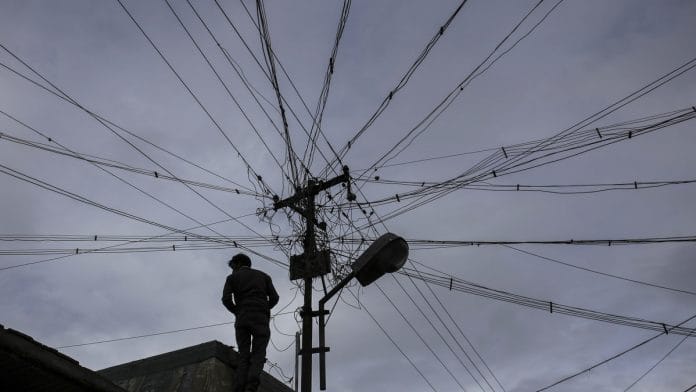

In October, the state electricity distribution utility in Tamil Nadu entered the short-term market to buy power. It contracted 1,500 MW of round-the-clock supply at Rs 31.99 to Rs 34.49 per unit, and 2,000 MW of evening peak power at up to Rs 37 per unit. By holding consumer tariffs unchanged, the utility risks adding to the fiscal stress of a power sector carrying debt of more than Rs 2.4 lakh crore.
Amazingly enough, in India today, we can buy daytime solar power at Rs 2.5 per unit and firm solar power at Rs. 5.6 per unit. Why did Tamil Nadu end up paying Rs. 37 per unit for electricity, and what can it do differently? The answer lies in a deeper reform of the state’s electricity system.
Electricity in Tamil Nadu
The immediate cause of the current purchase was that the utility ran out of coal, and had to turn to costly gas-based generators to meet the evening consumption peak between 6 pm and midnight. The shortages were not unique to Tamil Nadu. Coal plants across the country were running low on coal: the Central Electricity Authority estimated in early October that overall coal stocks amounted to about 6.6 days of consumption, against a norm of 20 days. At the same time, weak monsoon rainfall slashed hydropower output nationwide by 20 per cent in July–September 2026 (Q2) compared to the same period last year. Mistakes were most likely made in planning and procurement. But a state with over 12 GW of wind power capacity and fast-growing solar capacity did not need to be so exposed to such supply shocks. The missing piece was storage to shift cheap daytime power into the evening.
A deeper reason for the utility’s inability to deal with shortages is the power sector’s financial condition. Subsidised electricity has left the distribution utility starved of capital. The power sector’s unpaid debt stood at Rs. 2.5 lakh crore. Moreover, just between 2021 and 2026, the Tamil Nadu Power Distribution Corporation Limited spent Rs 34,447 crore more to supply electricity than it actually collected from power bills. A cash-strapped utility struggles to hold buffer stocks, maintain plants, or sign long-term contracts in advance. But more importantly, financial stress has meant late payments to power producers, especially renewable energy developers, who have shifted investment to states that pay on time. The same weakness stalled grid investment. When the transmission company cannot earn a reasonable return, investments in transmission are delayed, system managers grow reluctant to absorb more renewables, and wind output is curtailed even in peak seasons. Storage does not get built at scale.
The instinctive response may be greater investments in thermal power. Tamil Nadu would do better to weigh all the alternatives and craft a comprehensive policy response.
Also read: What’s the true cost of free electricity to states? Just look at Tamil Nadu
What is to be done?
A six-part action programme is required.
First, Tamil Nadu should avoid locking itself into expensive new thermal power plants. This is central to the financial viability of the electricity system: power purchases account for roughly three-quarters of a distribution utility’s total cost of supply. Recent thermal power contracts have been signed at around Rs 5.5–6 per unit, with fuel costs subject to escalation. In contrast, SECI’s recent thermal-mimic auction secured reliable power following a thermal-like supply profile at Rs 5.25–5.26 per unit, fixed for 25 years—equivalent to an average inflation-adjusted price of just Rs 3.8 per unit, assuming 3 per cent annual inflation. Tamil Nadu should adopt technology-neutral resource procurement—specifying when power is needed and the reliability required, rather than prescribing the technology. Let all resources compete on equal terms, considering their full lifetime costs.
Second, the financial health of the electricity system must be restored. When electricity is supplied below cost, it starves the grid of capital. This means electricity user charges need to increase, while agricultural and domestic subsidies should be better targeted and transparently funded. Maharashtra’s agricultural feeder solarisation programme offers a promising model for reducing subsidy burdens and improving utility finances while meeting important social and political objectives.
Third, this restoration of financial viability must translate into timely payments to power developers, especially renewable energy (RE) developers. Higher user charges should be accompanied by a clear commitment to settling outstanding dues. The state could also consider establishing a payment guarantee fund to protect power developers against payment delays. Tamil Nadu should aspire to earn the same reputation as Gujarat among private firms for paying renewable energy suppliers on time. This is essential for unlocking private investment in RE in the state.
Fourth, this restoration of financial viability should kick off a major wave of investment in transmission. Transmission lines are as fundamental as highways. Tamil Nadu is now a laggard by Indian standards in providing abundant access to this essential infrastructure. Once Tantransco is earning a reasonable rate of return on capital, it will be in a position to restart large-scale investment in transmission. This only needs effective contracting and timely payments; private capital can do the rest.
Fifth, the current approach to managing the electricity grid is not working, as evidenced by power cuts and peak prices as high as Rs 37 per unit. The better solution is a market for electricity where prices fluctuate and buyers and sellers constantly respond to one another’s needs. Large commercial and industrial users need to be placed in a market-based arrangement in which supply and demand determine prices. When private investors see that they can sell power directly to private buyers who pay on time, there will be a substantial increase in investment in renewables and batteries in Tamil Nadu.
Sixth, Tamil Nadu should progressively move toward full retail competition by separating the regulated wires business from electricity supply. A practical first step is to allow large industrial and commercial consumers to arrange their own power supply through open access and group-captive arrangements, building on India’s existing regulatory framework. Utilities would retain their regulated networks, continue supplying smaller consumers, and act as suppliers of last resort, supported by appropriate backup and hedging arrangements. This could free up some existing utility-contracted power for smaller consumers while attracting private investment in new renewable generation and storage. Such reforms can improve reliability, lower industrial electricity costs, and strengthen utility finances without requiring privatisation of distribution infrastructure.
The Tamil Nadu economy is a miracle by Indian standards. It has energy-intensive economic activities in manufacturing. Energy availability is as central as highways or ports. To make mistakes in this area would be a tragedy for Tamil Nadu’s overall economic growth. The good news is that the new government has enough time to begin these reforms and reap the fruits over the electoral cycle.
Renuka V Sane is managing director at TrustBridge, which works on improving the rule of law for better economic outcomes for India. She tweets @resanering. Views are personal.
Nikit Abhyankar and Amol Phadke are faculties at the University of California, Berkeley and faculty directors of the India Energy and Climate Center.
(Edited by Prashant Dixit)