





Let him that shall be cut sit against a good fire and make him drink thereof until he fall asleep,” read the instructions for surgeons in a medieval manual. The draught: three spoonfuls of bile from a pig’s gall bladder, and three each of hemlock juice, wild bryony, opium, and henbane, all mixed in wine. Long tormented by the pain in her legs, Isabella Plomet lay in her surgeon’s clinic in Ross-on-Wye, surrendering to the gentle disorientation he had promised would lead to complete tranquillity. Left immobile by the narcotic, she would later say in a legal pleading, she was raped by the surgeon.
“A drukin c**t hes na dure bar,” goes one old Scots proverb, as the scholar Carissa Harris has noted: A woman who allowed herself to get drunk was inviting sexual assault.
The case Plomet brought to the Eyre of 1292 CE had an unexpected ending. Even through the gender prism of late-medieval England, 12 men on the jury and four judges understood that a wrong had been done. The question was how grave a wrong it was. The surgeon, Ralph de Worgan, was ordered jailed—but only until he could pay a fine of 13 shillings and 4 pence, along with 44 pence in legal costs.
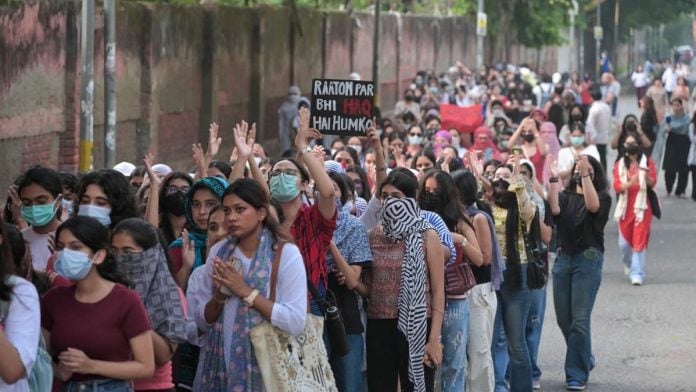
Angered by growing evidence that decades of struggle against sexual violence have changed too little, women have protested across the world in recent weeks. This includes demonstrations against the district attorney who declined to prosecute the alleged gang rape of a Cornell University student without troubling himself to investigate the evidence, and reopened the case only after public outrage. In Delhi, women are marching against authorities who, unable to convict rapists, are seeking to evict women from the city’s public spaces.
That medieval trial holds important clues about the real problem. The institutions of patriarchy—and the women and men who run them—have long understood that consent is at the heart of sexual crimes. That’s why Plomet was awarded compensation—equivalent to the cost of a cow, or perhaps two dozen kilograms of wool. The reason so little gets done about rape is that men don’t think it matters that much.
Fine words
Fourteen years after a barbaric rape and murder convulsed India, the doors to justice remain barred to survivors of sexual assault. Laws passed in 2013 mandated tougher sentences for rapists, but the number of successful prosecutions has barely changed. As in 2012, less than a quarter of prosecutions end in conviction.
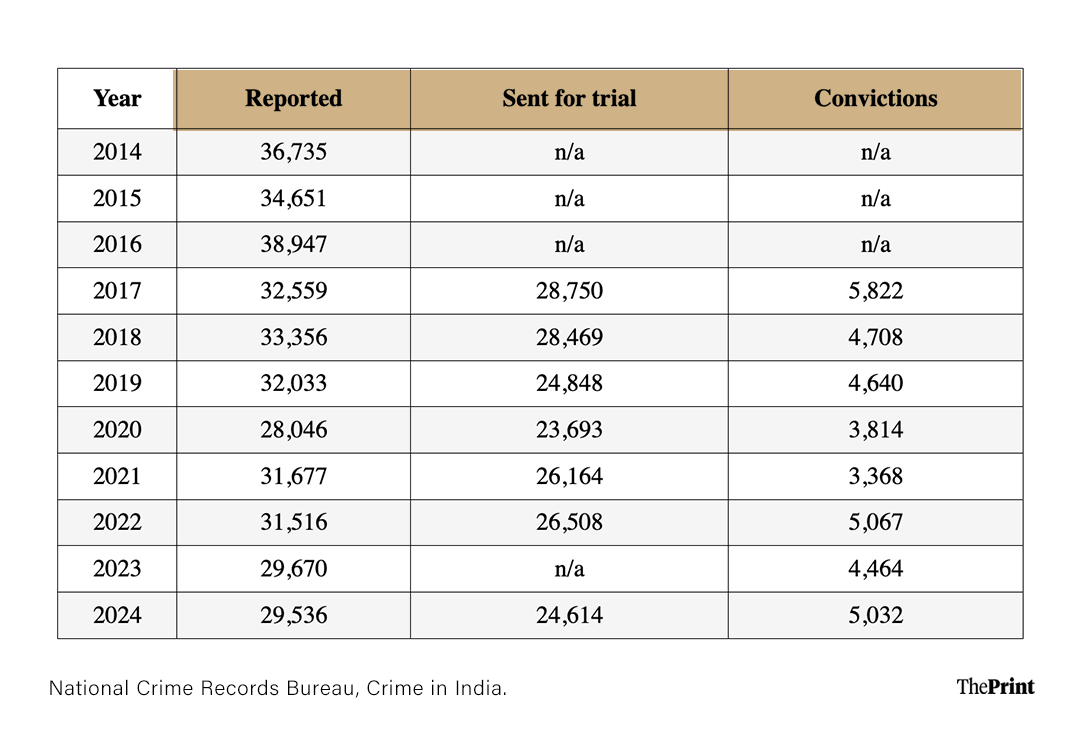
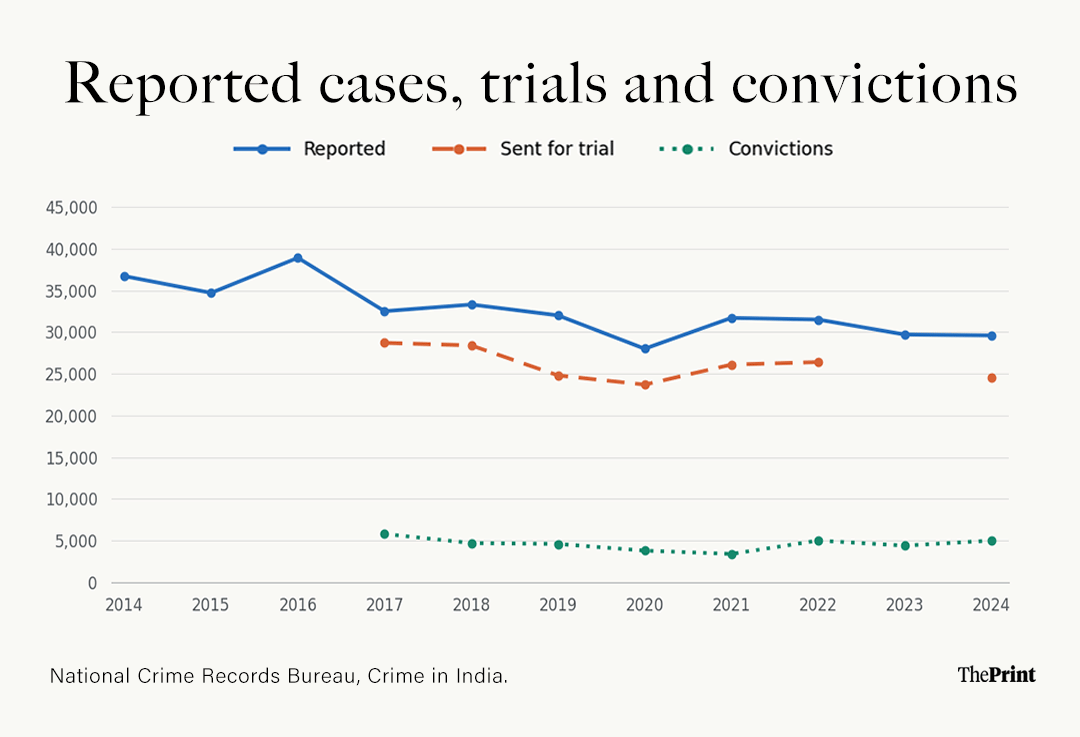
Fast-track courts deliver judgments more quickly than conventional ones, but their conviction rates are even lower. The number of cases recorded by police has declined through the period—suggesting either that police are reluctant to register First Information Reports, or that women are losing faith in the criminal justice system.
The likelihood of getting caught, a massive body of criminology has shown, establishes deterrence against a crime—not the severity of punishment. Canada abolished the death penalty in 1976, yet the country’s homicide rate has paralleled trends in the United States, where capital punishment largely endures.
Little imagination is needed to see why prosecution rates are so poor. First, the crime usually occurs within the survivor’s own circle: the overwhelming majority of perpetrators are kin, friends, and colleagues. This puts enormous pressure on women not to prosecute; when they do, forensic evidence or corroborating testimony can be unavailable. Few police officers receive training in investigating sexual violence. The Bureau of Police Research and Development offers a basic 10-day course, but there is no centre of advanced learning and research.
Then there is haste: a staggering two-thirds of rape cases led to arrests within two weeks of the survivor’s complaint, which does not allow time for serious investigation backed by forensics. The infamous case of Kamal Lodha demonstrated the outcome: the labourer is serving a life sentence for rape and murder even though he was exonerated by forensic tests.
Women in India know all this, and rightly blame it on the rape culture that surrounds them. Each time a convicted rapist such as Gurmeet Ram Rahim Singh Insan is freed on parole, rapists are reassured that their privilege as men will be protected. Yet it is clear that the malaise runs much deeper than Indian culture or Indian men.
Also read: Russia-Ukraine war is hitting India’s food and fertiliser security. Delhi has a role to play
‘The deserving victim’
From the English judge and clergyman Henry de Bracton’s tome, De legibus et consuetudinibus Angliae, likely written in the 13th century, we know rape inspired horror. The rapist was to have his eyes torn out, so he could no longer be seduced by the sight of a beautiful woman, and to be castrated—unless he married the survivor, in which case his new wife could claim his testicles “as her own property”. The laws of the Romans, the Franks, and the English, Bracton declaimed, even demanded that the perpetrator’s horse or dog, if he had one, have its tail cut off; the man’s hawk lose its beak, claws, and tail.
There were, however, some terms and conditions that women had to meet to be considered deserving of justice. The woman had to be a virgin; she had to have raised a hue and cry while being raped; and she had to have shown her injuries to men of good repute, as well as to the reeve of the hundred and the local sheriff.
From the testimony of the student at Cornell, it’s clear she would not have met the harsh gaze of Bracton—or, for that matter, of modern American prosecutors. The student had 10 drinks before staggering to a campus fraternity. There, she said, she agreed to take the dissociative anaesthetic ketamine and have consensual sex with two men. As the student’s lawyer has pointed out, she was almost certainly in no position to give consent. Survivors of assault, however, often seek to minimise their trauma by casting violent behaviour by friends and loved ones as somehow normal.
Even if police and prosecutors did not put their reasoning in writing, their disinterest in the case suggests they saw her doubtful consent as placing her outside the norms required of victims: she had referred to herself as sexually promiscuous in a conversation with a friend, using a slur that demonstrated the raw force of shame.
The same attitudes run through Indian discourse: the trial judge hearing the case of Tarun Tejpal’s accuser assailed her past sexual conduct; a survivor of gangrape was cast as promiscuous by the Punjab and Haryana High Court; and a judge hearing an allegation of rape against filmmaker Mahmood Farooqui wrote that a woman’s “feeble no may mean yes”.
From cases across the world, we know large numbers of men believe they are entitled to rape. There is no other way to explain how dozens of men in a random 50-kilometre radius signed up to rape Gisèle Pelicot—and hers is not the only case of its kind. There was the German Telegram network where students from China discussed how to drug and gang rape their partners and friends, and the London ring that shared videos of drug-facilitated rape with members worldwide.
One in four undergraduate women in America experiences sexual violence as a student, but administrators have been reluctant to act against White male perpetrators from affluent backgrounds.
Also read: India is producing more PhDs than ever. Its best researchers keep leaving
An endless struggle
Few women in medieval England would have harboured illusions about what awaited them in the Eyre: “A woman can only appeal about the rape of her virginity and the death of her husband in her arms,” one judgment recorded in 1244. Women who brought cases that did not succeed could—and did—face punishment. Even where women’s accounts checked all the boxes, the work of the scholar Mariah Cooper shows, they were invariably dismissed. In 1274, a jury held that two men had raped Margery Le Fever, but concluded that the man tried before them was the second—and thus not culpable for the loss of her virginity.
Courts offered women some small opportunity for financial redress for other wrongs. For example, the widow Christian Prudhomme sought damages from a goldsmith in Bridgnorth who had accused her of theft and then strip-searched her.
More than 700 years after Plomet’s case, a first-year undergraduate sat drinking with a friend at Washington University in St Louis. The friend made her drinks as they both sang along to Pink Floyd.
“At some point, I realized that I could not move or hold up my head,” the student wrote. “As he began to assault me, I was filled with a cold, sick rush of bewildered horror.”
The undergraduate was Harris, the literary scholar who has done path-breaking work on Plomet’s case. Like many other women, she complained to the university, only to be punished for drinking on campus.
“I carried the guilt and shame around with me like a bag of stones that I could not put down. I still do, in spite of everything.”
Praveen Swami is a Contributing Editor at ThePrint. His X handle is @praveenswami. Views are personal.
(Edited by Prasanna Bachchhav)