








To most people, the prize that diplomat Hooker Doolittle was urging his masters to seize might have seemed a meagre one: “We typed not only our notes to them,” a colleague at the American consulate remembered of Karachi in August 1947, “but their reply to us as well on our typewriters because they didn’t have any.” For months, consul-general Doolittle—famous for having survived being bitten by a rabid dog when he was serving in Kolkata—had been urging an alliance with a new nation that had risen around him. The Muslims, so the consul-general wrote, were “retrograde, uninformed, [and] venal.” Yet, he argued, Pakistan was America’s best bet as the Cold War dawned: “Its strategic position and facilities make it the eastern bastion of the weak but immensely important belt of Islamic countries, as Turkey is the western anchor. We cannot afford to lose it.”
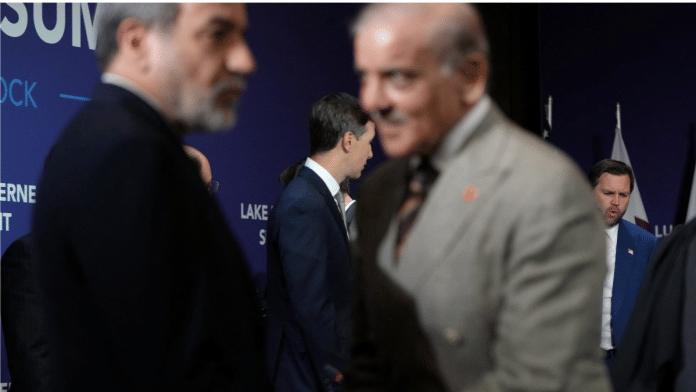
Last week, Turkey, Pakistan and Saudi Arabia signed the Mecca Joint Defence Agreement, which many commentators have claimed will reorder Middle Eastern geopolitics. The text of the treaty has not been released, but informed accounts suggest it is underwhelming: there is no detailed commitment on how the three countries would respond to aggression, or even to maintain joint forces. The three countries obviously do not need a treaty to buy or sell defence technology. Islamabad signed a similar agreement with Saudi Arabia last year, and has maintained troops in the kingdom for decades.
The Mecca agreement isn’t the beginning of a new order, but the latest iteration of plans brewed by men like Doolittle in the dying months of the Raj, from imperial hubris and Cold War paranoia. Enmeshed in the war in Korea, and committed to the defence of Western Europe, American generals concluded they needed a Middle East Defence Organisation, or MEDO, to protect against a Soviet attack on oil the West depended on. The Middle East powers America sought to protect, though, did not want to work with it. Flailing, the United States turned to Pakistan—but though it destroyed its relationship with India, it never got the troops it hoped for.
Little imagination is needed to see the striking similarities: an overstretched America seeking partners to share its imperial burden; an imaginary existential threat; a solution that has no bearing on the problem.
Imperial fantasies
Following the end of the Second World War, British India’s Foreign Secretary, Olaf Caroe, had assembled an informal group to discuss post-Independence defence. The group brought together some of the most fascinating characters of the late years of Raj: Francis Tuker, a friend of the diplomat KN Panikkar as well as of the artists Amrita Sher Gil and Jamini Roy, and chief of the Army’s Eastern Command; the spy Peter Fleming; and Walter Cawthorne, the Director of Military Intelligence. Tuker and Caroe threw out a series of bizarre proposals—among them a ring of British-controlled statelets running from Balochistan to Assam, from where an army “impartially controlled” by British officers could defend what had been the Raj’s borders.
Claude Auchinleck, the British Indian Army’s last commander-in-chief, dismissed Tuker as “a very strange man” after being briefed on his ideas. The British Army leadership, though, supported the idea that the two new nations would have one single army. This, Tuker claimed, would help India, since it would create “this vast cushion of Islam between herself and danger.”
Among the ideas that never crossed the minds of the group, historian Raymond Callahan has observed, is “what was happening under their noses… [which was] Britain’s impending bankruptcy and its electorate’s weariness with empire.” The Raj had begun to implode—and a new imperial power had begun to embrace its role.
For many years, Caroe had warned of the “shadow from the north”: the Soviet Union, he claimed, was poised to drive south into Asia, seizing the oilfields of Persia on its path to the ocean. These ideas had enormous intellectual influence: American Cold War strategists, as well as Indians like Panikkar, built their worldview from Caroe’s words.
The truth, though, was that a Soviet Union eviscerated by war had no grand imperial designs: even holding on to its new East European vassals was proving hard. The Soviet leader, Joseph Stalin, allowed the communist insurgency in Greece to be crushed, withdrew his troops from Iran, and turned away from the Turkish straits. Vyacheslav Molotov, the Soviet commissioner for foreign affairs complained in 1946: “There is no corner of the world in which the USA cannot be seen. The US has air bases everywhere: in Iceland, Greece, Italy, Turkey, China, Indonesia and other places and an even greater number of air and naval bases in the Pacific Ocean.”
There would be no Soviet push to seize the oilfields of Persia: the USSR did not have the military power or the wealth.
Also read: Chinese commentary frames the Mecca pact as a ‘money, gun and nuclear’ combination
A dismal alliance
Late in 1947, Feroz Khan Noon—later Prime Minister of Pakistan—laid out three principles he argued should guide American decision-making. First, the American belief that Pakistan would collapse was wrong. Second, Pakistan would never embrace communism. Third, Pakistan was “the Eastern bastion against communism as Turkey is the Western bastion. It is in the interest therefore of the US to give military and economic support to Pakistan as well as to Turkey.” This argument was persuasive to American diplomats in Karachi. To back Pakistan, Doolittle conceded, would incense the “tortuous Hindu who despises as he grovels before, or politely infuriates by obfuscation, the unclean European.” “So what?”
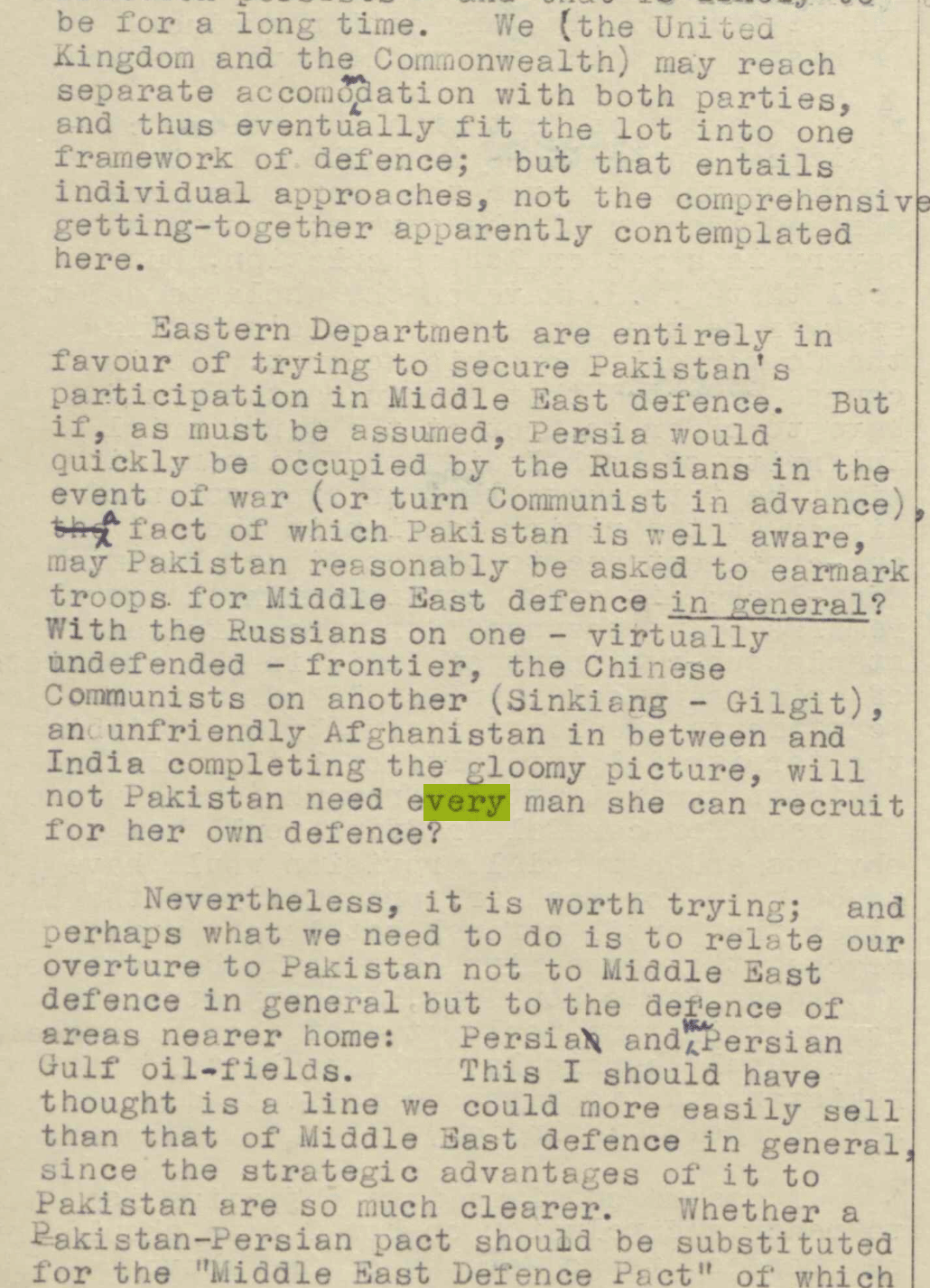
From 1951 onwards, the United States began to revisit these arguments. American military commanders argued they needed Pakistani troops to secure the Middle East. Foreign Office bureaucrats in London found the idea worth exploring, but were uncertain about its viability. Allied planning showed Iran would be rapidly overwhelmed in the event of a war. That meant Pakistan would potentially end up confronting the USSR on its western border, and China, Afghanistan and India on the east. This was, clearly, uninviting. In any case, Pakistan was certain to ask for a price, such as support on Kashmir, that London did not think it wise to pay.
The Middle East, meanwhile, showed little interest in joining the Middle East Defence Organisation. Iraq did not wish to be seen as allying with America; Iran worried about provoking the USSR. Syria said it could join only after the Palestine problem was resolved. The King of Jordan feared public reaction. Egypt’s Gamal Abdul Nasser was blunt: “The Soviets are five thousand miles away,” he said. The British, on the other hand, occupied Egyptian land. “How can I go to my people,” Nasser asked, “and tell them I am disregarding a killer with a pistol 60 miles from me at the Suez Canal to worry about somebody who is holding a knife five thousand miles away”?
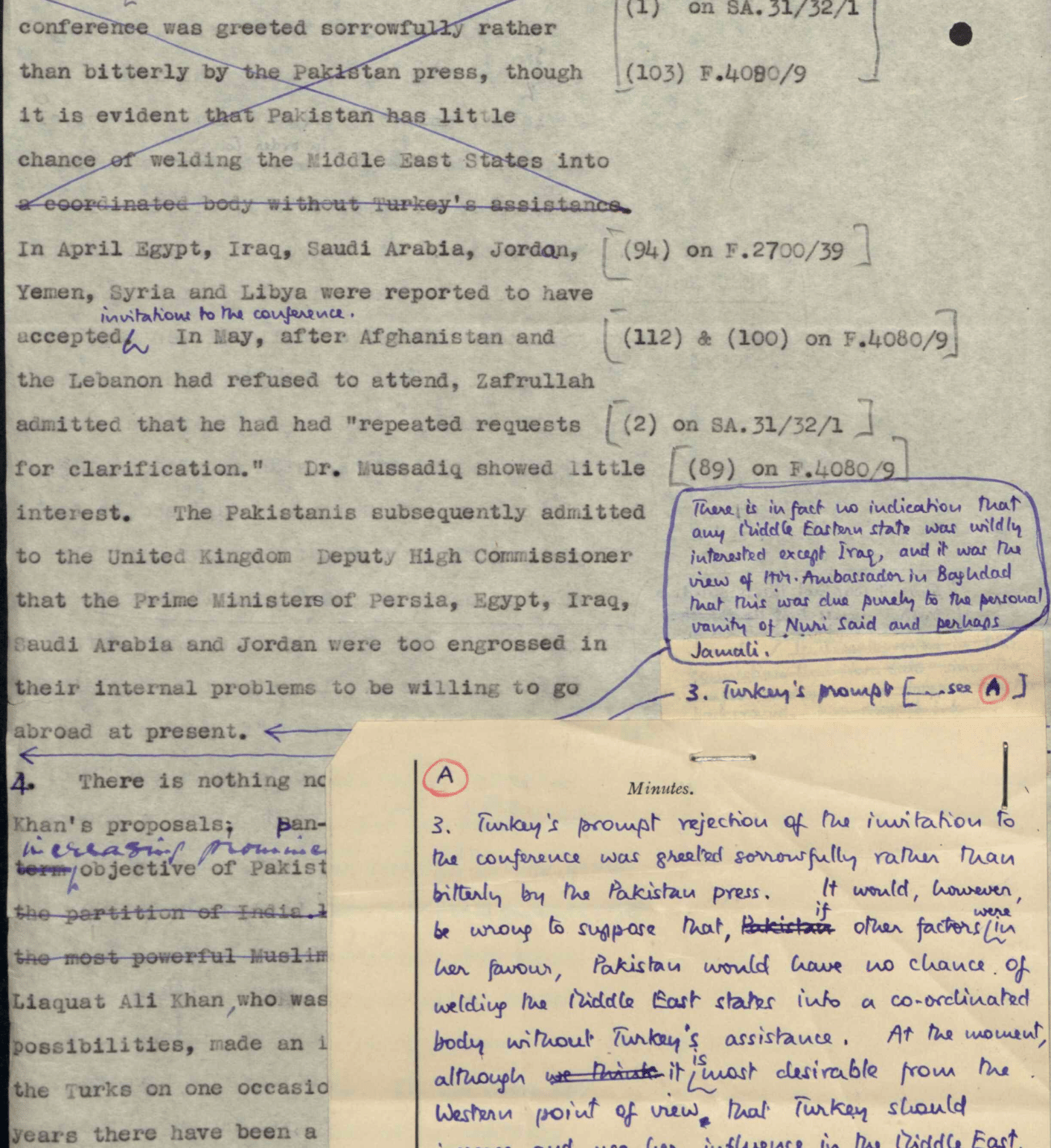
As the MEDO plan disintegrated, Karachi invited the foreign ministers of 12 Islamic nations to consultations on the security of the Middle East. The invitees dropped out one by one. Islamic solidarity was a powerful slogan, a Foreign Office paper noted, but each leader had pressing problems at home.
Also read: Three countries, no common enemy—why the Mecca defence pact is weaker than it looks
The Turkish fig-leaf
London’s languid pace on MEDO began irking the United States by 1953. The State Department chose to push forward independently to secure the Pakistani troops it desperately needed. Knowing that military aid to Pakistan would anger India, America decided to craft a Turkey-Pakistan pact. This agreement was meant to allow America to claim that its military aid was purely for the defence of the Middle East.
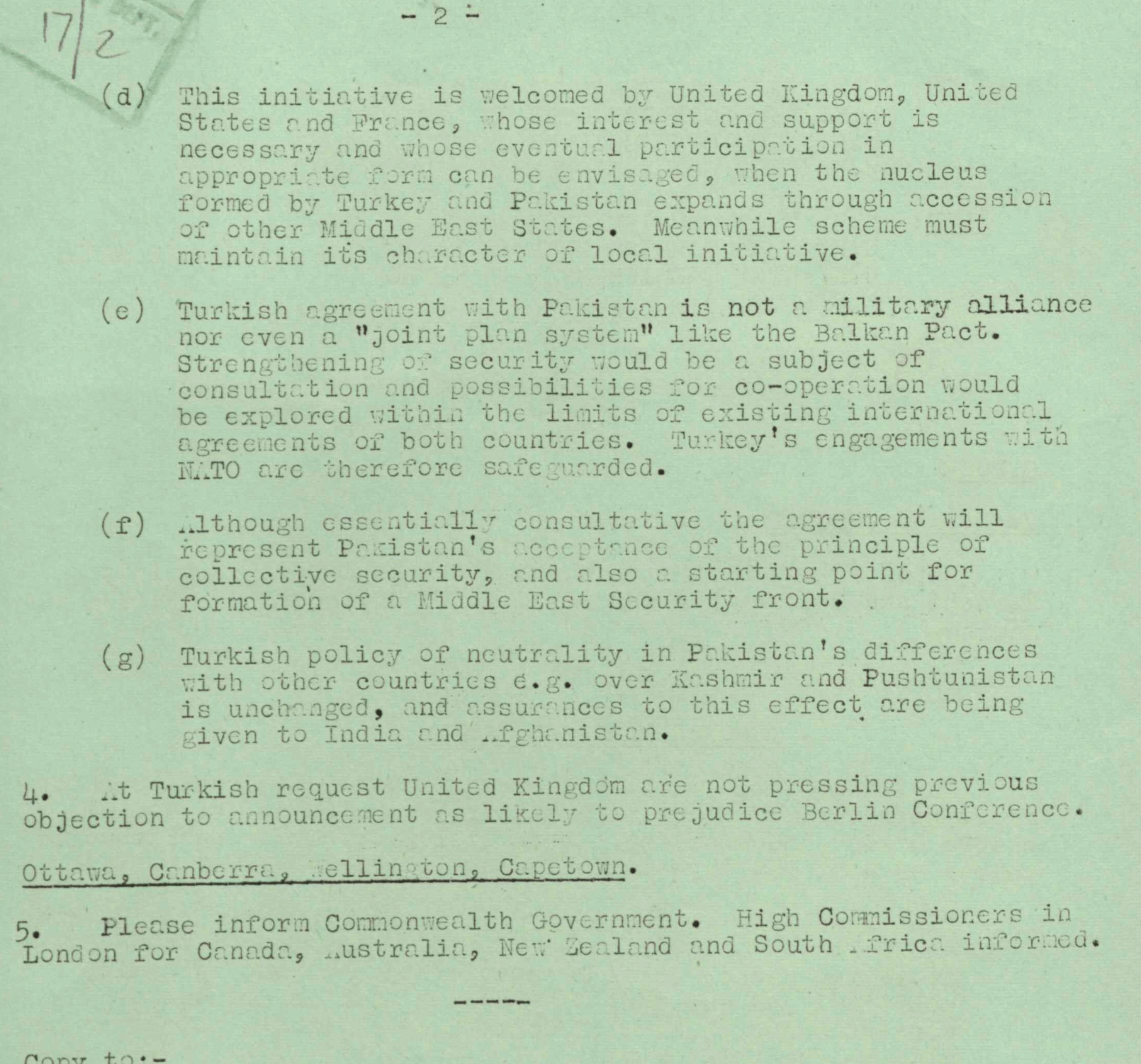
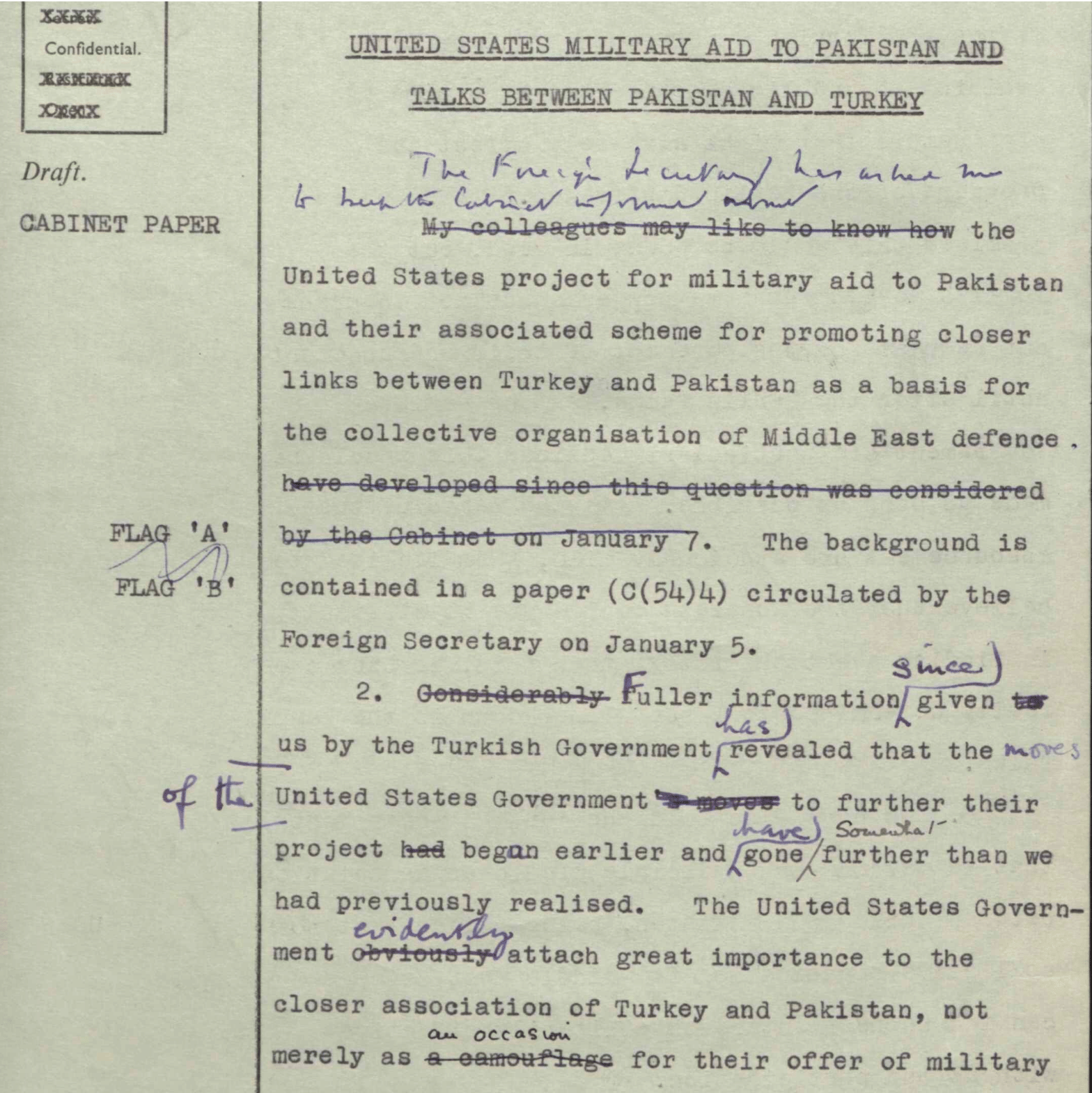
The fig leaf covered little. The first draft of the paper presented by the Foreign Office to the British cabinet on the treaty read: “The United States Government evidently attach great importance to the closer association of Turkey and Pakistan, not merely as a camouflage for their offer of military aid to Pakistan, but for its own sake.” The words “a camouflage” were crossed out by hand, and replaced with “an occasion.”
The path to stability in the Middle East does not run through military alliances, any more than it did in 1951. Iran needs to be reintegrated into the regional and global order. The proxy wars that have torn apart Yemen and Lebanon have to be ended. The problem of Palestine needs to be resolved. These are political problems, not military threats.
America’s ill-advised efforts helped no one—not Pakistan, not the Middle East, and not itself. The Turkey-Pakistan pact was replaced by the five-nation Baghdad Pact—later renamed the Central Treaty Organisation, or CENTO—in 1955. The members, though, never could agree on a joint military command structure, nor joint forces. A revolution in Iraq, Egypt’s war in Suez, civil war in Lebanon: CENTO was unable to deal with a single regional problem before the 1979 revolution in Iran delivered it the coup de grace.
General Ayub Khan, Pakistan’s ruler, did not get the CENTO support he hoped for on Kashmir, either. Turkey flatly declined to side with Pakistan over India. And in 1971, CENTO did little to help Pakistan as it was cut apart by India. America did not get a single Pakistani soldier. The relationship between the United States and India would take decades more to recover.
All this to protect the Middle East from a threat that did not exist.
Praveen Swami is Contributing Editor at ThePrint. His X handle is @praveenswami. Views are personal.
(Edited by Prashant Dixit)