






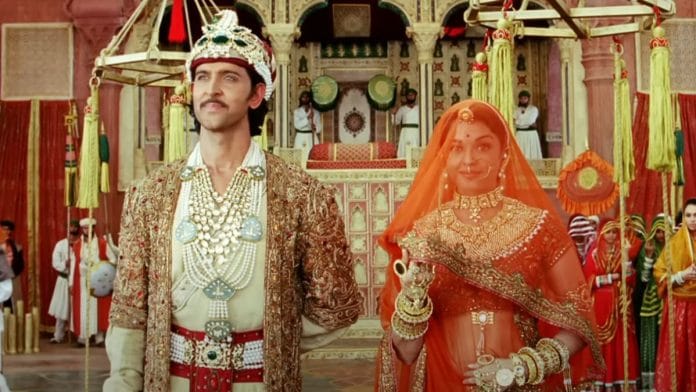


Among contemporary historians, there is an impulse to look at Mughal history not merely through emperors and military campaigns, but also through the wives and daughters of the imperial household. This lens, which focuses especially on the Rajput women who married into the Mughal dynasty, seeks to establish the Indianness of Mughals through these marriages.
While recovering the agency of women in history is undoubtedly a worthwhile endeavour, the framework is both incomplete and problematic. It obscures the much broader social, political, and administrative networks through which the Mughals were integrated into Indian society.
First, such narratives often fail to appreciate the contemporary implications of selectively highlighting Rajputs in the Mughal context.
It would be sociopolitical myopia to assume that only the Mughals and Muslims are subjected to vilification by the Hindu Right, while ignoring the derogatory rhetoric directed at Rajputs and the misogynistic abuse often aimed at Rajput women. Any discussion of Mughal-Rajput relations that overlooks this contemporary reality risks lacking both historical nuance and social sensitivity.
The matrimonial alliances with the Mughals were restricted largely to the royalty and aristocratic elites of a few kingdoms. Naturally, they didn’t involve the wider Rajput community, the overwhelming majority of which historically consisted of peasants, soldiers, and agrarian populations.
Second, the framework unintentionally reproduces the very communal simplifications it seeks to challenge. The selective emphasis on Rajputs often ends up portraying the community as uniquely responsible for legitimising Mughal rule. It also obscures the fact that the Mughal Empire was embedded in a much broader web of relationships with Brahmins, Banias, Jats, Marathas, Gujjars, Kayasthas, and numerous other Hindu communities.
Brahmins, Khatris, and Banias in the Mughal Empire
The Mughal Empire was integrated through a vast network of administrators, financiers, military commanders, revenue officials, merchants, zamindars, and local elites drawn from numerous communities.
Consider the role of Brahmins and Khatris. Raja Todar Mal, a Khatri, was perhaps the most influential revenue administrator of the Mughal Empire, and was instrumental in creating the fiscal structure that sustained Mughal rule. His revenue reforms became the foundation of imperial administration. Similarly, Birbal, a Brahmin, occupied a privileged place in Akbar’s court and was among the emperor’s closest advisers. Tansen, originally Ramtanu Pandey, was one of the most celebrated musicians under Mughal patronage. Beyond these famous figures, countless Brahmin and Kayastha officials served as local administrators, record keepers, revenue collectors, and scholars throughout the empire.
Kayastha and Khatri writers such as Mahdo Ram, Sojan Rai, Malekzada, Anand Ram Mokhles, and Bendraban Khwosqu, made splendid contributions to Persian language at the Mughal court.
The same selective treatment is evident in discussions of Mughal relations with mercantile communities. The Mughal state depended heavily on Bania financiers, traders, and bankers. Revenue collection, credit networks, and commercial transactions could not function without the participation of merchant castes. Jain merchants such as Banarsidas, Virji Vora, Shantidas Zaveri, and Kashi Veranna played an important role in Mughal history. Yet, these communities are rarely singled out as evidence of Mughal integration the way Rajputs are.
Also read: A Jain merchant’s diary of daily life under Mughal rulers Akbar, Jahangir & Shah Jahan
Mughal Empire and the rise of Jats as ‘Chaudharis’
The omission becomes even more striking when one examines Mughal relations with Jats. Popular discourse often presents Rajputs as uniquely associated with the Mughal state, but the historical record reveals a far more complex picture. Jat chiefs, zamindars, and lineages interacted with Mughal authority in multiple ways, ranging from resistance to cooperation.
Several prominent Jat lineages received recognition, privileges, and authority under Mughal rule. The rise of the Phulkian Jats, who would later establish major princely states such as Patiala, was linked to political developments that unfolded within the Mughal imperial framework. Jat history, like Rajput history, contains episodes of both accommodation and resistance. For instance, Barbara Ramusack writes that the common ancestor of the Jat Phulkian states, Bariam, received chaudhriyat in return for helping Babur in the first battle of Panipat (Barbara Ramusack, The Indian Princes and their States, p. 38, 2003)
Historical traditions from Punjab record matrimonial alliances involving Jat elites and the Mughal court. In the Sikh Lion of Lahore (p. 526, 1991), Hari Ram Gupta notes that the three Jat clans—Bains, Sahotas, and Khungas—were reputed as Akbari Jats for their matrimonial alliances to the Mughal household, and thus viewed as superior to the other Jats. One account mentions a Jat named Mehar Mitha offering his daughter in marriage to Emperor Akbar, with the wedding reportedly attended by both Jat and Rajput villages. Similarly, there were Jahangiri Jats, Shah Jahani Jats, and Darbari Jats, who became zamindars under Mughal rule at different times. The family of Maharaja Ranjit Singh Sandhawalia also saw its ascent under Emperor Shah Jahan.
There are many recorded instances, across Haryana, Punjab, Rajasthan, and western Uttar Pradesh, showing Jats turning into chaudharis and rajas under the Mughal administration. In 1710, Chaudhary Churaman and Mir Khan led an army of Jats and Mughals against Gaj Singh Naruka, a Kachhwaha chief at Javli. (Jadunath Sarkar, A History of Jaipur: C. 1503-1938, p. 162, 1935)
Ahirs and Gujjars: Intermediaries and companions
Humayun granted Afariya Ahirs the zamindari of Tijara after defeating the Yaduvanshi Rajput Khanzadas. Similarly, an Ahir aristocrat of Rewari was granted governorship of the region by Jahangir in the 17th century (Haryana: Ancient and Medieval, p. 173, 1990). In 1775, Rao Mitrasen Ahir led a Mughal contingent against the Shekhawats, a branch of Kachhwaha rajputs at Mandan.
The same complexity characterises Mughal relations with Gujjars. Popular narratives often overlook the extensive interaction between Mughal authorities and Gujjar communities. Gujjar chiefs served as local intermediaries, revenue collectors, and military auxiliaries in different regions. Contemporary and later accounts note the recruitment of Gujjars into policing and administrative roles around Mughal Delhi. Gujjar women also entered elite households, and some sources describe Gujjar companions and concubines within Mughal aristocratic circles. In The Last Mughal (2006), William Dalrymple notes that Hindu Gujjars were often recruited as watchmen and nurses by the Mughal administration.
Also read: How pragmatic calculations shaped Mughal rule in medieval West Bengal and Tamil Nadu
Marathas as Mughal mansabdars
Maratha history provides another revealing example. In contemporary political discourse, a false binary is often created between Rajputs and Marathas, with one being portrayed as unanimous collaborators and the other as uncompromising resisters. The historical reality is far more nuanced.
Maratha-Mughal relations were far more complex than the simplistic narrative of perpetual resistance. Chhatrapati Shivaji’s maternal grandfather, Lakhuji Jadhavrao, entered Mughal service in 1621 after leaving Malik Ambar, and his family continued to serve the Mughal state under both Shah Jahan and Aurangzeb. Even Shivaji briefly cooperated with the Mughals after the Treaty of Purandar, assisting their campaign in 1665 with a force of around 2,000 cavalry and 7,000 infantry.
Moreover, Maratha participation in the Mughal nobility was extensive. Historian M Athar Ali notes that under Aurangzeb, the Mughal court has 96 Maratha mansabdars and 72 Rajput mansabdars. It shows that Marathas, like Rajputs and many other communities, were integrated into the Mughal imperial structure through a combination of service, alliance, and conflict.
At the Battle of Bhupalgarh (1679), which the Mughals had won, Sambhaji served Diler Khan against his own father Shivaji.
Rajput women deserve better than symbolism
Finally, there is a danger in reducing Rajput women to evidence of Mughal “Indianness”. The history of Rajput women must not be reduced to the political binary of jauhar/Mughal empress. The history of Rajput women also includes Durgavati Chandel of Garh-Katanga, Nayakadevi Chandel of the Chaulukyan empire, Karnavati of Garhwal, Ajabde Panwar, and Subhadra Kumari Chauhan.
The Mughals were undoubtedly an Indian dynasty, but their Indianness was shaped through interactions with numerous communities—Brahmins, Banias, Jats, Marathas, Gujjars, Kayasthas and others—not Rajputs alone.
Dr Yadu Singh is a cardiologist based in Sydney, Australia. Views are personal.
(Edited by Prasanna Bachchhav)
The Jats did not maintain matrimonial relations with the Mughals. Hari Ram Gupta did not cite any primary sources. Akbari Jats were those who were included in the Mughal noble class during the reign of Akbar. Similarly, Angrezi Jats were those were included in the British noble rank during the Raj. You are a Rajput, you are coping with an inferiority complex but falsely projecting your ancestors’ sins on other communities.
The Jats did not give their daughters: this has been clarified by Denzil Ibbeston himself.
What an absolute garbage piece, written by a person who is not even a historian or doesn’t have basic historical training. The Print’s editorial standards have fallen off a cliff, and it seriously shows. This wouldn’t pass even as an end-semester presentation for a B.A. course at a half-decent undergraduate programme.
Now, obviously, blaming the Rajputs or any single community for any historical event, or blaming or questioning Rajput women, is condemnable, no doubt, but the absolute lack of scholarship in this article is still baffling.
Hardly any sources are given, and the sources that are given do not match the claims they are made to substantiate. For example, the claim that Gurjar women entered the Mughal aristocracy as concubines is not substantiated at all, and the book used to support the claim that Gurjars worked as watchmen mentions it only in a footnote (Dalrymple, The Last Mughal)