






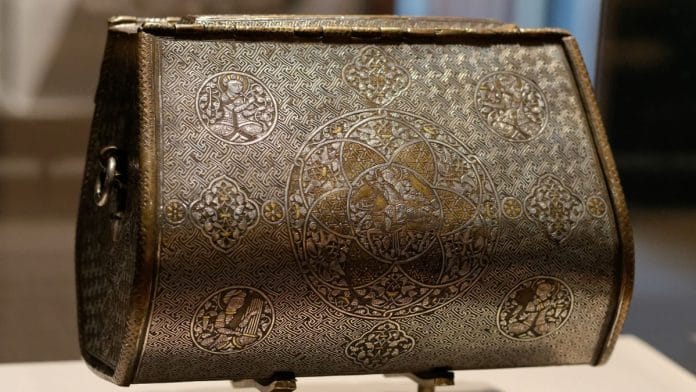


Few everyday objects attract as much interpretation as the women’s handbag. It is a place to put things, but also a way of reading the person who carries them. There is so much to store in them, and so much to say about what that storage means.
At the end of May, The New York Times gave that old fascination a new provocation: Is the women’s handbag over?
Vanessa Friedman’s piece ‘Is the Handbag Over?’ did not quite write the handbag’s obituary. Fashion, she argued, rarely works that neatly. But she did point to a shift. According to Lyst data cited in the column, demand for women’s handbags was down 5.5 per cent in April 2026 compared with April 2025. Searches for briefcases were up 14 per cent, and searches for clothes with pockets rose 542 per cent between January and April. Friedman’s conclusion was not that the bag had disappeared. It was that the old ‘era of dominance’ may be ending.
Two decades after Sex and the City turned Carrie Bradshaw’s shoes and bags into aspiration, the same collection suddenly looks like excess. The question is no longer only which bag a woman wants. It is whether she should have to carry one at all.
Also read: Capris were never the problem. The styling combos were
Hunters versus gatherers
Author Ursula K Le Guin gives the handbag debate a frame larger than fashion. In ‘The Carrier Bag Theory of Fiction’, she writes against the old heroic story of the hunter: The spear, the weapon, the conquest. Instead, she asks us to look at the gatherer’s object: The bag, basket, sling or net that allows people to collect food, bring it home and keep life going. Le Guin was not writing about handbags. She was asking why cultures glorify the tool that wounds and overlook the container that sustains. The hunter becomes myth. The gatherer becomes background. It creates a gendered politics of carrying.
The bag belongs to the work most easily made invisible: Preparation, care, maintenance, getting through the day. So the current fashion debate cannot only be about whether a status accessory has lost its shine. It is also about who is expected to carry, and who gets to move through the world unencumbered.
Letty Cottin Pogrebin made the gendered part of this argument bluntly in the 1983 New York Times column ‘HERS’. She began with the anecdote of a business and professional club rejecting a canvas bag as a gift for new members because ‘men won’t carry it’. Pogrebin wrote that women were not only, in Simone de Beauvoir’s phrase, ‘the second sex’, but also ‘the schlepper sex’.
Her argument still lands because it was concrete. Women carried handbags partly because women’s garments had ‘skimpy pockets, if any’, while men’s clothing had pockets for essentials. When men carried things, she wrote, those things were usually linked to work or leisure. Women carried those too, but also ‘loads of things that maintain and enhance the lives of others’. In one street-corner count, Pogrebin saw 22 unencumbered men in a minute and only one female carrying nothing, a child of about six.
The container sustains life, but the person carrying it is treated as secondary. The bag isn’t fashion. It isn’t just function either. It is about how gender roles have evolved across cultures, and how much of women’s work has been organised around remembering, preparing and carrying.
Also read: Mamata Banerjee and the downfall of her symbolic feminism
The empty hands of power
Empty hands are never neutral. Pogrebin wrote that it is “a measure of power and privilege to have others shoulder such burdens”. In public life, that becomes a visual language. The more powerful the person, the less likely she is to be seen managing her own things.
In Friedman’s later New York Times piece, ‘The Most Impactful Political Handbag Since Mrs. Thatcher’s’, stylist Karla Welch, who worked with Kamala Harris, put it plainly: ‘They all have bags. It’s just an aide carrying it.’
That is why the woman politician and her bag is always a thing that generates eyeballs. Japan’s Prime Minister Sanae Takaichi became associated with a black Hamano tote, officially called the Grace Delight Tote. Associated Press reported that the bag, dubbed the ‘Sanae Bag’, became part of a wider fascination with her workwear and was selling at its best pace since its debut 30 years ago.
Nirmala Sitharaman’s red bahi-khata was not an everyday bag. It was a state symbol, used to replace the colonial-style Budget briefcase in 2019.
Priyanka Gandhi’s December 2024 Parliament bag with ‘Palestine’ written on it was read as protest, not an accessory; the next day she arrived with another bag that read, ‘We stand with the Hindus and Christians of Bangladesh’. Kangana Ranaut’s Hermès bag in the same venue became fashion news precisely because it brought celebrity-style luxury into a space where women politicians usually appear bagless or institutionally accessorised.
However, India’s most political handbag was not carried into Parliament at all. It was carved into stone. Mayawati’s handbag makes that politics unusually literal. In her essay ‘The Handbag That Exploded: Mayawati’s Monuments and the Aesthetics of Democracy in Post-Reform India’, art historian Kajri Jain argues that the handbags and chappals in Mayawati’s statues were not incidental details but symbols of Dalit assertion, mobility and economic self-possession after liberalisation. The luxury bag indicates feminine excess, but who owns it changes the paradigm.
In 2011, when Pakistan’s then foreign minister, Hina Rabbani Khar, arrived in India for talks, Indian media and commentary were consumed not only by diplomacy but by her pearls, Cavalli sunglasses and Hermès Birkin. The Guardian described a ‘media frenzy’ around her style, India Today ran photo coverage of the bags and their reported prices. A diplomatic visit became, in part, a handbag event.
Indira Gandhi’s handbag is quieter. In public photographs, she is not always bagless; she can be seen carrying small structured purses, the kind of object that could easily have been read as feminine domesticity in another setting. But Indira Gandhi’s authority pushes the bag into the background. That disappearance is also a kind of power: the handbag is present, but it is not allowed to define the woman carrying it.
A bag in public life, then, can mean very different things. Sometimes it says you are carrying your own load. Sometimes it says you do not need to. Sometimes it becomes a prop, a protest, a monument or a headline. But it rarely means nothing.
The Indian idiom
For most women, the no-bag fantasy does not survive the Indian day. A woman leaving home in an Indian city is often preparing for work, commute, care and contingency. The bag carries the laptop, but also the charger, medicine, sanitary pad and lunch box. It carries what she needs, and often what someone else may need from her. The bag is not proof of excess. It is how the day is made portable.
The jhola, India’s version of a tote, gives this argument a modern idiom. In ‘The jholawala syndrome’, published in India Today in 1989, Simran Bhargava and Chidanand Rajghatta described the ‘jholawala’ through the trademarks of ‘khadi kurta, broken chappals and a faded jhola’. For him, the jhola was a ‘purely physical need’: anything would do as long as it could hang from the shoulder, leaving the hands free for buses or protest marches.
That line strips the bag back to its first job. Before branding, aspiration or taste, there is the need to carry what the body cannot. The jhola carried books and politics. The office tote carries work. The potli carries occasion. The luxury bag carries status. The form changes, but the need stays.
Older Indian carrying objects show the same practical-and-symbolic mix. The British Museum collection includes a drawstring bag made of printed cotton and acquired in India. The Metropolitan Museum of Art’s ‘Powder Flask’ describes an 18th-century Indian barutdan as a firearm accessory, while the Walters Art Museum describes another Indian powder flask as an essential accessory in royal hunts, its animal decoration pointing back to its function.
These are not modern handbags. But they make the larger point: Containers are rarely only containers. They carry use, status and the image of the person who carries them.
Also read: Mahua Moitra’s bagwati moment. She’s fighting back with not one but 3 handbags
Hands-free or hands-first?
The latest version of this conversation is the ‘claw grip’. In ‘The Claw Grip’: Why Are Women Always Holding Things?’ published in The New York Times, Alisha Haridasani Gupta described women gripping phones, wallets and water bottles without the help of either a purse or functional pockets. That does not mean the bag is finished. It means the bag is no longer enough.
The phone stays in the hand for UPI, WhatsApp, maps and cab OTPs. The water bottle has to be reachable. The office ID or metro card has to be tapped. The urgent layer moves into the hand. The rest of the day stays in the bag.
Indian women carry for work, care, weather and safety. They also carry for pleasure: The order of a well-packed bag, the reassurance of being prepared, the satisfaction of choosing the right one for the day.
The bag is not disappearing because the need to carry has not disappeared. Its form will keep changing with fashion, technology and work. But until the day asks for less, the bag will remain. Not because women are attached to clutter. Because the day is long, and someone still has to carry it.
Views are personal.
(Edited by Theres Sudeep)