





Sony Pictures’ latest Spider-Man film, Brand New Day, opens with a narrator calling the superhero, “The pride of the city, the hero every grown-up relies on, and every kid wants to be.” Wholesome, and even true to a point. But not exactly the kind of line you’d expect right before a hero starts spying on eight million people. Right?
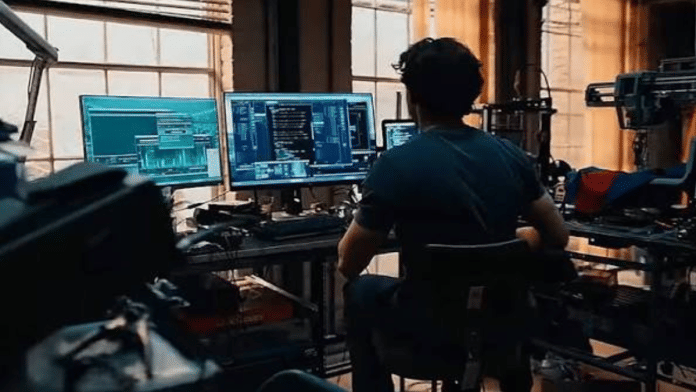
But that’s what happens next. While hunting for the classic Spider-Man villain, Scorpion, Peter Parker tells a cop that he has every camera in the city running a facial recognition scan for him. The cop’s reply basically portrays the film’s entire ethics department: “That sounds illegal. I’m going to pretend I didn’t hear that.”
The facial recognition system is addressed only once more, when Parker’s friend, Frank, casually mentions it as part of their banter: “What do you expect me to do till then—just gonna hope that your facial tracking program works,” treating the system as a purely practical tool, with no room left for the moral principles that surround it.
It is deeply unsettling to watch these scenes play out so casually, only weeks after student protesters at Delhi’s Jantar Mantar were tracked, identified, and publicly shamed through facial-recognition systems and AI tools deployed by the Delhi Police and amplified by online vigilantes.
However, the friendly neighbourhood superhero has done this before. In the 2019 film, Far From Home, Tony Stark gifts Parker a pair of glasses, called “Even Dead, I’m the Hero” or EDITH. These augmented reality glasses give Parker access to global surveillance networks, drones, and target identification on command. The danger of the glasses is shown through the villain, Mysterio, who weaponises them to cause real destruction. At the end, Peter still walks off with the glasses around his neck. The technology is vindicated once the “right” user is in control. In 2021, No Way Home finally takes them away. However, the latest film once again brings back facial recognition and mass surveillance.
But it seems that as long as our beloved Spider-Man is the one behind the computer screen, mass surveillance is no biggie. This kind of normalisation is particularly effective because he is a Gen Z hero—funny, broke, and relatable. When he says he has every camera in the city running facial recognition, it plays as competence, not menace.
Batman felt guilty. Spider-Man doesn’t
In Christopher Nolan’s The Dark Knight, Batman built a similar sonar-mapping mass-surveillance system to find the Joker. However, Lucius Fox, Batman’s business manager, warns him that this is too much power for one man. The system is used once under pressure, and then it is destroyed. The film highlights that mass surveillance may occasionally feel necessary, but it should never feel comfortable. That was 17 years ago; today, the world tells a different story.
Peter Parker skips the moral discomfort entirely. He does not build a surveillance network. It already exists, operating in a city he has vowed to protect, accessible through his AI companion, EV, and New York’s own camera grid, which he easily taps into. When the hunt later turns to the film’s primary villain, Jean Grey, the same facial-recognition machinery becomes an essential plot device, playing against a cool montage and upbeat music. The film knows the move is legally dicey. It says so out loud, but only through the detective’s two-second dismissive remark.
Batman’s version was frightening because he was portrayed as the man in the shadows, watching everyone. Spider-Man is the opposite of that—he’s your friendly neighbourhood superhero, and that’s exactly why he should scare us more.
Also Read: Delhi police facial recognition gear vs protesters and their phones. Who was more powerful
How Hollywood made watching feel ordinary
Hollywood has been softening audiences to this idea for years, naturalising the audience to the idea that people’s movements and locations are routinely visible to others whose motives we cannot fully know. Action, spy, and superhero films treat CCTV grids, facial recognition, and satellite feeds as efficient tools. Heroes and agencies pull up camera networks the way they reload a weapon; efficiently, without any debate about the people being watched.
In the 2015 film, Furious 7, the “God’s Eye”, an all-seeing surveillance program hijacks every camera and device on the planet, but it is presented as a tool that is dangerous only depending on who holds the weapon. In the Bourne films, Jason Bourne is repeatedly tracked through networks of CCTV and facial-recognition systems, but the cameras are simply part of the chase. The CIA’s capability to watch anyone, anywhere, on demand is never something the story asks anyone to justify; it is only something Bourne must outrun. Similarly, the Mission Impossible series shows agents routinely hack camera networks, pull live feeds, and access high-security databases, without pausing to confront the underlying impact.
Once that comfort is established on screen, the real systems feel less like a threat, and more like the norm.
Fiction has real-world company
In 2021, Meta first launched the Ray-Ban Meta glasses, which had a built-in camera, with only a small LED light as a recording sign. The devices were quickly labelled as “pervert glasses”, after reports emerged of people using them to film women without consent and post that footage online.
“The American people have not consented to this massive invasion of privacy,” said Kade Crockford of the ACLU of Massachusetts.
According to a Guardian report, high-end restaurants, Soho house clubs, and courtrooms in England and Wales are issuing bans on the “spying glasses” over privacy concerns.
In India, the Ray-Ban Meta glasses arrived in 2025. During the 2026 protests at Jantar Mantar, a Delhi Police officer was spotted wearing the same smart glasses. This sparked public debate and media scrutiny regarding police surveillance and privacy rights.
Now, while your favourite superhero might not be directly selling the latest Meta glasses, he is still normalising the quiet acceptance of constant, city-wide surveillance—the critique most, if not all, action and superhero films receive.
Cinema doesn’t need to argue in favour of mass surveillance to normalise it; it just needs to stop arguing against it.
Views are personal.
(Edited by Insha Jalil Waziri)