



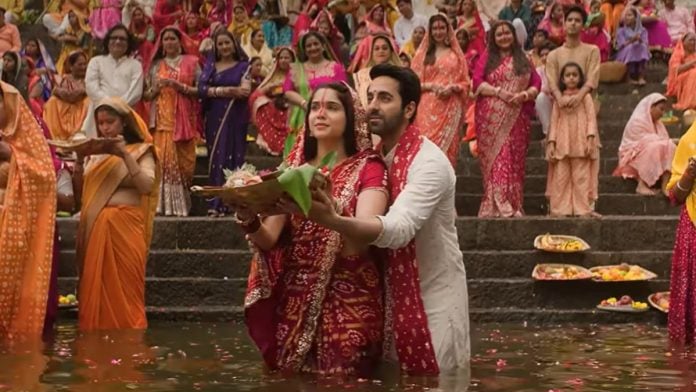
Bollywood moved beyond Sooraj Barjatya’s formula of sanskar, saadgi and shaadi decades ago. But with Yeh Prem Mol Liya, he is returning to a world of perfect families, overflowing with sanskar and unconditional love, attempting to take Indian audiences back to an idea of family life that feels distant from the dysfunctional families they have come to appreciate watching on screen.
The problem with Barjatya and Rajshri Films is that they view Indian families through one lens. Everything is smooth, everyone loves each other, and after a minor hiccup, even the biggest disagreements eventually find a happy ending. It is a version of family life that was never real and is increasingly difficult to relate to.
Bollywood was infected with the sanskari syndrome in the 1990s, and Barjatya was among its biggest flagbearers. Films such as Maine Pyar Kiya (1989), Hum Aapke Hain Koun (1994), Hum Saath-Saath Hain (1999), and Main Prem Ki Diwani Hoon (2003) followed a familiar formula: two people in love, a family with strict rules, disapproving parents, and misunderstandings that eventually disappear. Love wins, the family reunites and everyone lives happily ever after.
There cannot be a Hum Saath-Saath Hain in 2026. Or so we thought. Families are nuclear now, and this is a generation that understands the vocabulary of boundaries and generational trauma. It is not that audiences have simply grown bored of the Rajshri formula. It is that the idea of family itself has changed, and cinema has increasingly begun to reflect that. And yet Rajshri came up with Ye Prem Mol Liya.
Same family, many films
The poster and trailer of Yeh Prem Mol Liya look more like an episode of Yeh Rishta Kya Kehlata Hai or Saath Nibhaana Saathiya. One poster shows the entire family taking pheras around the sacred fire because in Barjatya’s world, marriage is never just between two people; even the grandfather gets involved. The film reportedly questions why only a woman should leave her home after marriage — a valid question — but wraps it in familiar orthodoxies, pallu-covered heads and cheesy dialogues.
Social media users have also been criticising the recurring themes in Barjatya’s films, calling them outdated.
“Subject feels outdated, & films of this genre aren’t really working at box office. Although Sooraj’s loyal audience might turn up, and songs being HIT on Reels could also work in the film’s favour..FLOP vibes,” a user wrote on X.
“Our own families can barely live together, so expecting in-laws to do so is asking for too much. The concept is weak. Nobody really cares about relatives bonding and all that anymore,” another commented.
Barjatya has been repeating the same formula for decades. From Dulhan Wahi Jo Piya Man Bhaye (1977) to Maine Pyar Kiya (1989), Hum Aapke Hain Koun..! (1994), Hum Saath-Saath Hain (1999), Main Prem Ki Diwani Hoon (2003) and Vivah (2006), the settings and actors may have changed, but the family values have remained the same. Swap Salman Khan for Hrithik Roshan or Shahid Kapoor, and little else changes. The mansions remain enormous, elders are always right, women are expected to sacrifice, and the hero is almost always called Prem. Barjatya has made several films, but it often feels like he has made the same one repeatedly with just different casts.
Barjatya is refusing to look out of the window and notice that the world has changed drastically.
Also read: Women want a soft man. Dar-e-Nijaat’s Abu Bakar shows masculinity can be gentle
Showing the other side
Now audiences have loved films such as Kapoor & Sons (2016), which offer a very different picture of family life. It explores two brothers who struggle to get along, with their parents having a troubled marriage, and a grandfather who pretends to be seriously ill whenever he feels ignored. Its characters are bound by love but also weighed down by resentment, secrets and unresolved disagreements.
Cinema shapes how we see families, and Barjatya has spent decades selling us the same idea that everyone loves each other, disagreements are temporary, and the family patriarch always gets the last word. And, all it takes to fix an Indian family is a little sanskar and a group hug.
In Hum Saath-Saath Hain, there is a line that goes: “Jisse hum jhagadte hain, pyaar bhi toh sabse zyada ussi se karte hain (The people we fight with are also the ones we love the most)”. But that is false, and Seema Pahwa’s Ramprasad Ki Tehrvi (2019) offers an answer. Following the death of its patriarch, an entire family comes together for 13 days of mourning. Old grievances, property disputes and simmering tensions soon surface. The film finds humour in these uncomfortable situations without resorting to forced comedy. Its characters are flawed and selfish, yet recognisable. Being part of the same family does not mean they necessarily understand or even like each other.
Films such as Mira Nair’s Monsoon Wedding (2001), Piku (2015), and Gullak have dealt with the idea of Indian families differently. Monsoon Wedding tackled the uncomfortable question of maintaining family niceties at weddings even when an abuser is among the guests. Piku showed a complicated but affectionate father-daughter relationship, while the web series Gullak captured the humour and conflicts of a middle-class family living in a modest two-bedroom house.
Indian families are dysfunctional and rarely as perfect as Rajshri films make them. It is time for Rajshri to move beyond its familiar formula and explore these realities instead of serving us the same picture-perfect household.
Views are personal.
(Edited by Aamaan Alam Khan)