



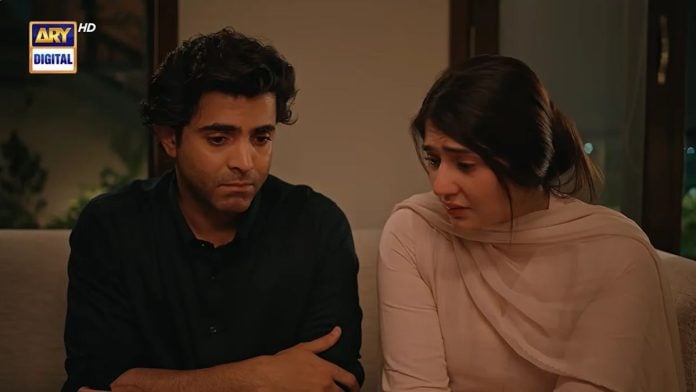
A Pakistani TV series, Dar-e-Nijaat, is currently doing the rounds on the internet, and it has very little to do with the usual ingredients of a viral romance. Unlike the usual fictional heartthrobs who win audiences over with brooding silences, grand declarations, and dramatic displays of affection, this time the internet has fallen for something rather radical: a soft man.
Abu Bakar, played by Sheheryar Munawar Siddiqui, does not shout to establish authority. He does not judge a woman by her past, mistake possessiveness for love or emotional volatility for passion. Instead, he notices, listens, and understands. He shows up and is dependable without making a performance of it. And, perhaps the most important, he respects women even if they cannot offer him the same grace or affection in return.
At one point, even the female lead Zaryab, played by Durefishan Saleem, calls him fictional and unreal. The character herself acknowledges how difficult it is to believe that such a man would exist. And this is where lies the key to Abu Bakar’s popularity. A man displaying basic emotional intelligence has become a cultural event.
Perhaps the deeper problem is that we have been watching too many men confusing masculinity with volume.
Abu Bakar and ‘masculinity’
Pop culture has served us a particular idea of a romantic man. He is brooding, temperamental, even occasionally cruel, fiercely possessive and somehow always certain that his feelings need to be prioritised. I am not even touching the harassing and stalking for now. He might insult you in one scene and fight the whole world for you in another. He might refuse to communicate but can make everything okay with one big grand romantic gesture. So, in a way, we have been conditioned to see emotional unpredictability as intensity and jealousy as proof of affection.
But Abu Bakar offers a different proposition. His masculinity doesn’t come from competing with a woman, overpowering her or making her feeling indebted to him, but rather from standing beside her. He doesn’t have to diminish her to feel like a man. His kindness is not conditional, neither a performance to be rewarded with love.
The contrast is particularly interesting given the larger religious framework of Dar-e-Nijaat. The show gives a contrast to Abu Bakar in Zaamil, played by Nameer Khan, who represents a very different version of masculinity and religion. For Zaamil, religion becomes an instrument of control, a way to police women in his life, and establish his own moral superiority. One uses morality to exercise power. The other doesn’t need power to establish morality.
And maybe this is why Abu Bakar has struck a chord with the audiences, especially women. We have been sold on the idea of the grand romantic gestures, the surprise trip, the gigantic bouquet, the public declaration. And there is nothing inherently wrong with any of these things. Who doesn’t enjoy being swept off their feet every now and then? But what we have done is we have started to confuse the spectacle of love with the substance of it.
Blame it on the devil’s content-churning machine — social media, where now relationships are performed to an audience. The algorithm keeps feeding us these extravagant versions of romance until ordinary affection starts to seem inadequate. Nobody can make a grand gesture every day but they can make small consistent efforts everyday. And that is what we recognise and relate to, the small genuine efforts of someone who cares.
That goes without saying that we should not pedestalise the bare minimum in the name of kindness. We should not have to celebrate men for not shouting, for not being abusive or not judging women. These are the foundations of a decent relationship. It’s comical to think that something which should be the pre-requisite feels so extraordinary, and it says a lot about the emotional climate we have become used to.
Also read: Cousin marriage isn’t a Muslim punchline, Samay Raina. Look at the data
What it takes to be gentle
In a world that rewards self-interest, aggression and being the loudest person in a room, tenderness feels like an act of rebellion. A soft man represents a spit on the face of the manosphere. Because being considerate requires you to look beyond your own self-interest and being empathetic requires you to make room for someone else’s feelings. Being gentle requires a certain confidence because you are not constantly trying to prove that you are in control.
We have spent so much time learning that we should chase passion that we have forgotten to look for peace. We have romanticised anxiety and uncertainty and called it butterflies. We take the exhilarating highs and lows and call it chemistry. But love is not supposed to feel like a cliffhanger. The most romantic thing one can do to make you feel safe is give you the freedom to be completely yourself without making you feel that it will cost you their affection or get a loud reaction.
Perhaps Abu Bakar is fictional. But if a fictional man being gentle, attentive and emotionally available can send the internet into a collective swoon, it’s sad to see that all our standards are collectively in hell.
Views are personal.
(Edited by Aamaan Alam Khan)