






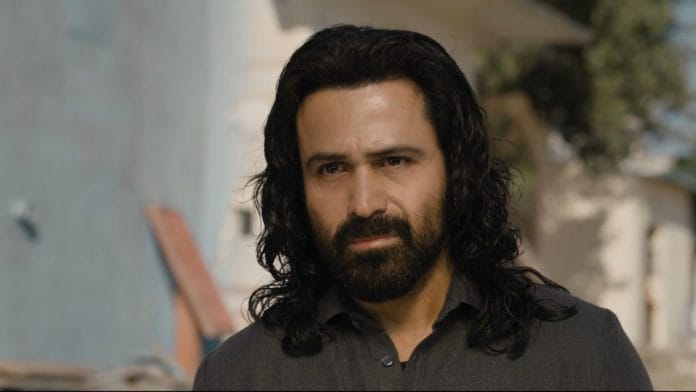


Emraan Hashmi is going back to his roots with Awarapan 2. After years of experimenting with different roles and trying to move away from the ‘serial kisser’ tag, Hashmi is returning to one of the films that defined the other side of his career. And the nostalgia around him is so strong that Awarapan 2, the sequel to a film that failed at the box office, surpassed Batwara 1947 on their opening day.
Hashmi started his career in the 2000s with films such as Footpath (2003) Murder (2004), Zeher (2005), Aashiq Banaya Aapne (2005), Gangster (2006), and Jannat (2008). Most of his first decade was filled with erotic thrillers, and these films established his “lover boy” and “serial kisser” image. While these films did not always become massive box-office hits, songs like ‘Aashiq Banaya Aapne’, ‘Aap Ki Kashish’, and ‘Jhalak Dikhla Ja’ by Himesh Reshammiya constantly reinforced his image as Bollywood’s unapologetic kisser.
Himesh Reshammiya, Mohit Suri, and Emraan Hashmi became a combination that defined a particular phase of Bollywood.
What is particularly notable is that his erotic thrillers found commercial success partly because they offered explicit eroticism, something mainstream Bollywood rarely did at the time. Audiences went to these films expecting those scenes, and over time, that became inseparable from Hashmi’s identity. His cult following was built around that specific genre and its appeal.
But Hashmi then decided to take a different direction and got on the road less taken. He tried to explore himself and his filmography with films such as Once Upon a Time in Mumbaai (2010), Shanghai (2012), Ghanchakkar (2013), Tiger (2014), and Azhar (2016). With the introduction of OTT in the Indian entertainment space, he also experimented with Why Cheat India (2019), The Bard of Blood (2019), and Taskaree: The Smuggler’s Web (2026).
While several of these films were appreciated and showcased a different side of Hashmi, they did not always perform strongly at the box office. And the reason is clear: he was a little too serious in these roles, which the audiences were not expecting from their “love guru”.
Awarapan (2007), directed by Mohit Suri, was one of his flop movies, but it was also one of the clearest examples of this experiment. A serious film based on the 2005 South Korean film A Bittersweet Life, it did not have the erotic scenes that audiences had come to expect from an Emraan Hashmi film. His preconceived image did not do justice to the movie’s theme, and the film failed. But the songs became hits over time. ‘To Phir Aao, ‘Tera Mera Rishta’, ‘Mahiya’, and ‘Maula Maula’ still feature on people’s playlists.
Once he stopped consistently delivering the same kind of content, his visibility and impact on box-office began to fade, and he nearly vanished from the industry.
Then came the social media age. The Gen-Z discovered Emraan Hashmi through small clips, reels, memes, and old songs, rather than by watching his films in theatres. They came to know about the anti-hero, the lover boy, and, above all, the “serial kisser”.
But the context had changed. What was considered bold, unusual or even uncomfortable in mainstream Bollywood in the 2000s had gradually become far more visible and accepted. With greater exposure to Hollywood, international cinema, and streaming platforms, younger audiences were already familiar with erotic thrillers, intimacy, and more openly sexual storytelling.
Also read: 10 Indian films that told Partition’s story, Garm Hava to Gadar
Back to the roots
For the young, Hashmi’s films are not shocking or outrageous as they once were for millennials. The very image that had once made him controversial now felt almost nostalgic. They began looking at Hashmi less as the actor who had crossed a line and more as the actor who chose a path that others in Bollywood were too uncomfortable to take.
And Aryan Khan’s The Bads of Bollywood directly tapped into that nostalgia. Hashmi cameoed as himself and as an intimacy coach, since no one knows that subject better than him. When Raghav Juyal’s character started fanboying over Hashmi and weirdly sang his old songs like ‘Kaho Naa Kahoo’, it reminded everyone of the classic Hashmi.
And perhaps that reminded Hashmi of when he was loved and why he was loved. The music, the image, and everything that came with that phase turned into nostalgia rather than controversy.
Now, with Awarapan 2, Emraan Hashmi is coming back with the same hairstyle and dressing. He is recreating that same anguish and deception. He is not exactly returning as the “serial kisser”, but he is returning to the image and the emotional space that audiences associate him with.
That is why the sequel to a flop movie is creating more excitement than expected. After two decades of trying to reinvent himself and move away from the identity that made him famous, Emraan Hashmi has finally taken a step back and gone back to his roots.
Views are personal.
(Edited by Aamaan Alam Khan)