



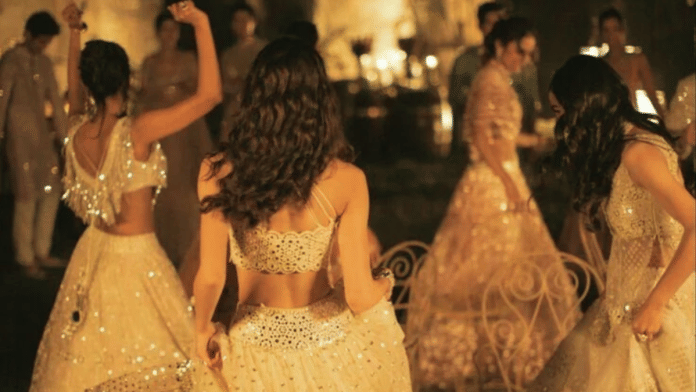
There was a time when dressing up for Diwali meant pulling out your favourite silk kurta, finding that one pair of special jhumkas, and wearing a little more kajal than usual. It was festive, it was fun, but most importantly, it was Diwali. The festival did the talking and the outfit was an afterthought.
Cut to 2026, and I am wondering if we have collectively forgotten the difference between a Diwali party and a wedding sangeet. As soon as the festive season arrives, our Instagram feeds fill up with celebrity looks, make-up videos, and it feels less like going to a card party and more like attending a wedding.
Lehengas, heavy embroidery, and too much jewellery. Don’t get me wrong, I am all for dressing up. In fact, I will never be the person telling anyone to tone down their glamour. But there needs to be some difference in the two occasions.
Of course, there is a commercial angle to this. The wedding industry has already made occasion dressing a year-round business, and festive fashion seems to have become its newest extension. But do we really need another occasion to justify buying an outfit that looks like something we would wear to a wedding? Also, is it fair to our wallets? A new outfit for every occasion is not cheap, even if it is “simple”.
Copy, paste, repeat
The problem isn’t the lehenga. It is the sheer predictability of it. And I am honestly too bored of it.
Every festive season, we are served variations of the same outfit: a heavily embellished lehenga and a statement blouse.
Change the colour from champagne gold to wine, add a different neckline, and yay, you have a new festive collection.
It’s almost as if the fashion industry is using AI, rehashing the same silhouettes and colours. The Lakmé Fashion Week isn’t enough; Diwali now must also look like a wedding.
What is even more amusing is how everyone seems to be following the same festive fashion handbook.
The same colour palettes, hairstyles, jewellery and even the same designer obsession. One year it’s champagne gold, the next it’s muted pastels, then suddenly everyone is wearing a jewel-toned lehenga. We have reached a point where you can almost predict what the next festive collection will look like: the same as this one, just with one minor change.
Wasn’t fashion supposed to be an expression of individuality? If everyone is dressed in the same aesthetic, where exactly is the personal style.
Also Read: This Diwali, India is holding back shopping—and dipping into savings to foot the bills
Instragrammification of fashion
What about the pressure to make every festive appearance an Instagram moment? The Instragrammification of fashion is a serious disease.
Somewhere between celebrity airport looks, influencer GRWMs and designer festive edits, getting dressed for a festival has become a production exercise. There is so much pressure to stand out, not repeat outfits, and make every Diwali party look one of a kind.
We are dressing for the camera rather than the occasion.
At some point, we need to remember that we are attending a Diwali party, not shooting a designer campaign. The festival is about wearing beautiful clothes that allow you to move, eat, sit cross-legged, burst a few phuljhadis (sparklers) and enjoy yourself without worrying about whether your lehenga is too heavy to walk around.
And no, minimalism does not have to mean boring.
Indian fashion has an embarrassment of options when it comes to textiles, crafts, silhouettes and regional dressing traditions. We have Banarasi silks, chikankari, bandhani, ajrakh, Maheshwari, jamdani, Kanjeevaram silks and countless other crafts that deserve more attention than another generic sequin-covered outfit.
I miss the idea of festive dressing being a little more effortless. A beautiful chanderi suit, a printed saree, an old family heirloom, a well-cut kurta with interesting trousers or even a simple anarkali can look infinitely more charming than another heavily embellished lehenga.
Of course, there will always be people who love a full-blown lehenga moment, and more power to them. If wearing a dramatic outfit makes you happy, go ahead and give the paparazzi something to work with. But the problem begins when that becomes the default expectation of festive dressing.
So, consider this my annual fashion-police notice: put the lehenga down.
Diwali is a festival of lights; you don’t have to blind people with your embellishments. And, you can look stunning without looking like you are waiting for the baraat.
Views are personal.
(Edited by Insha Jalil Waziri)