



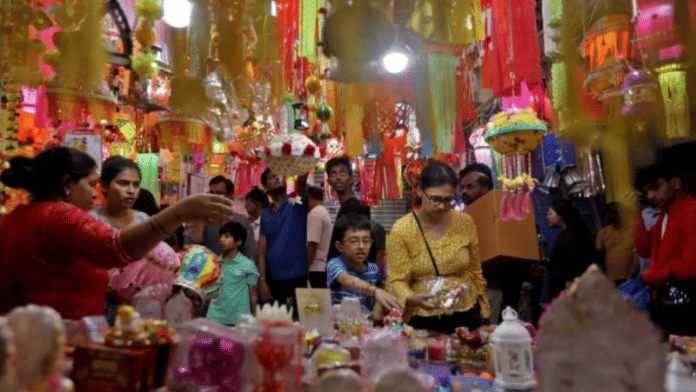
New Delhi: The festive season is a costly affair worldwide. But mixed with Navratri, Dussehra and Diwali, the average household budget gets its yearly revamp. This year, according to a study by Local Circles, a community social media platform, urban Indian households are likely to spend nearly Rs 20,000 on average this festive season.
However, this is 6 per cent less than what most Indian households spent last year, going from Rs 2.1 lakh crore to Rs 1.96 lakh crore. Citing increased nationwide inflation, the study found that household budgets are under strain. Early festive indicators point to selective spending.
Conducted over 307 districts across the country, the Mood of the Consumer survey found that a majority of 57 per cent of urban Indian households will be shelling out money.
Of this, only 9 per cent are likely to spend over Rs 1 lakh and another 30 per cent will spend somewhere between Rs 10,000 and over a lakh.
But what are Indian households spending on this festive season?
The shopping list
The survey found that roughly 72 per cent will buy new clothes, accessories or other fashion items. Forty-five per cent surveyed would spend on furniture and other home appliances; another 45 per cent said their money will go into a travel and holidays fund.
Whereas 39 per cent would invest in food and gifting. Investment in home renovation and technology stands at 22 per cent each, buying automobiles stands at 10 per cent, and only 6 per cent said they will buy jewellery.
But this shopping list will likely be funded by past savings. Almost 34 per cent of urban Indian households spending this festive season are likely to fund a significant part (25 per cent or more) of it from savings; with nearly 83 per cent dipping into their savings for some of it.
“Households drawing down savings now may have less of a buffer for the wedding season and the expenses that follow into 2027. Urban India will light its diyas this Diwali as it always does; the difference this year is how much of the oil is being drawn from household savings,” the survey read.