



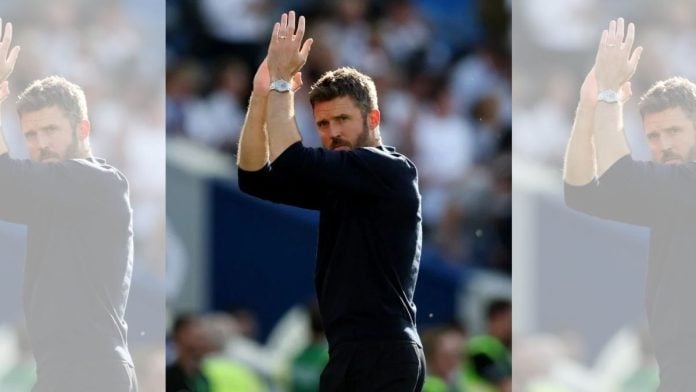
Another run-up to the winter break in football, another manager has been shown the door at Manchester United. Michael Carrick was sacked after nine months, despite pushing the team towards a third-place finish in the 2025-26 season. A disastrous start to the current season, which left the team hovering around the relegation zone, pushed Manchester United’s hierarchy to pull the trigger yet again.
Carrick could just pull off one victory in 10 matches — feeble statistics for a club of that stature, which had won 13 Premier League titles and three Champions League titles. However, Carrick’s sudden removal exposes how Manchester United’s owners have been operating for more than a decade — with a lack of intent, responsibility and accountability.
Since Alex Ferguson retired as head coach in 2013, Manchester United have tried to rebuild their fortress by appointing new managers, including some big names. David Moyes, Louis van Gaal, Jose Mourinho, Ole Gunnar Solskjaer, Erik ten Hag, Ruben Amorim and now Carrick have all been part of this cycle, with each facing the same fate. They promised to restore Manchester United’s glory, but none of them was allowed to build a team around a long-term vision.
Every manager has a different vision
This kind of approach in football comes at a cost. Every manager has their own style of playing the game. For instance, Mourinho relied heavily on box-to-box defence once his team had scored. On the other hand, Solskjaer and Amorim experimented with quick counter-attacks and a more rigid tactical identity, respectively.
Carrick, meanwhile, built his approach around a fluid 4-2-3-1 possession and transition system, focusing on short-passing midfield combinations and positional rotations. He backed technical players who could combine in midfield, rotate positions and dictate the tempo.
A manager like Solskjaer, who prefers quick transitions, will need players with pace, movement and the ability to exploit spaces behind opposition defences. A coach who plays with a high defensive line needs defenders comfortable defending large spaces.
Someone who prefers a deeper block might prioritise physicality and defensive discipline.
A player brought in for one manager might not suit the next one’s method. When the manager leaves, the club is left with a squad that no longer believes in the same vision the previous manager had tried to instil. Manchester United have been stuck in this loop since 2013.
This time, too, things may not be different at Old Trafford after the club announced Mauricio Pochettino as their head coach. He plays an aggressive, high-pressing style built around a high defensive line and relentless running intensity to win the ball back high up the pitch.
But Manchester United has been playing an opposite style of football for the last nine months under Carrick — patient ball retention, control in midfield and a passive mid-block.
With every new coach comes a fresh set of demands for reshaping the squad. The new manager asks for players who suit his ideas and style of play. The club spends again, only to sack the manager when results fail to go their way.
Also read: Cristiano Ronaldo won 5 Ballon d’Ors in 10 years. Here’s how each season unfolded
Money cannot replace patience
Manchester United had the money to compete with Europe’s biggest clubs. But they lacked planning. Money has been spent on players and managers, but neither has been given enough time to prove their worth at such a high-intensity level of football.
Every good manager needs time to build a squad. Ferguson took more than three years to win his first trophy for Manchester United. The rest is history. German mastermind Jurgen Klopp spent three years building Liverpool’s squad before lifting silverware. Mikel Arteta took more than six years to win his first league crown, ending Arsenal’s 22-year wait for the Premier League. Even Pep Guardiola took a little less than two years to win his first trophy at Manchester City.
That is what patience can do. And Manchester United’s owners — the American Glazer family, the majority shareholders, and British billionaire Sir Jim Ratcliffe — clearly lack it.
The Glazers are to blame for Manchester United’s steady decline since 2013. Supporters have questioned the club’s debt, investment and lack of sporting ambition. Ratcliffe’s arrival sparked hope for a new beginning. But the same managerial instability has continued.
Football is a team sport. It requires calculation, tactical understanding and players learning to work with one another. A manager cannot walk into a dressing room, dictate a formation and expect 11 players to rout their opponents.
A club cannot expect a team to develop an identity when it keeps changing its coach after a bad spell. Manchester United need to understand how the sport works. This is football; everything is possible here. But without time, patience, and a plan, even the best managers will struggle to deliver.
(Edited by Maryam Hassan)