





What doesn’t innovate almost certainly becomes irrelevant, and this holds true for the reality TV shows in India. The genre has two refreshing challengers to Bigg Boss, which has dominated the unscripted television space for 19 years now in a rather templatised fashion.
The first one is Lock Upp, hosted by actor Ritesh Deshmukh and filmmaker-choreographer and popular YouTuber Farah Khan. The second season of Ekta Kapoor’s reality show has come after four years in a fresh new avatar. And boy has it made headlines.
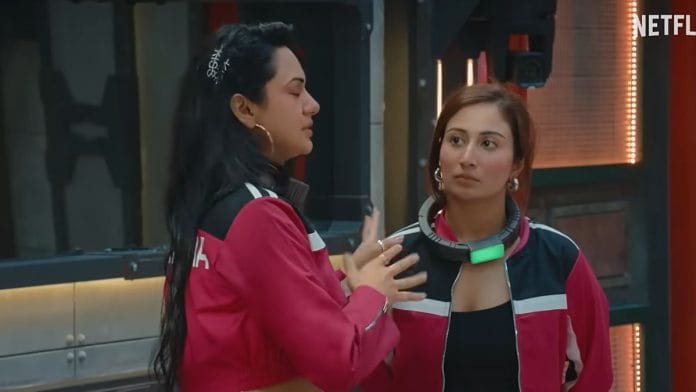
Then there is Alliance, with Kunal Kemmu and ‘System’ debuting as hosts. Unlike the staccato voice in Bigg Boss, System is a lazily named computer screen that tells the contestants what to do.
Both Lock Upp and Alliance have ditched traditional TV channels and chosen the OTT space for release. Instead of dropping the episodes all at once, new episodes drop daily, keeping the audiences hungry for more.
And though the new entrants have the fundamental requirements of a quintessential reality TV show—controversy-courting celebrities competing in a contest for survival—they have not shied away from experimenting.
For the past many years, reality television in India has been feeding the same old formula to new faces year after year. It was starting to feel like white noise that plays in the background as we doomscroll. The last time Bigg Boss had a viral moment was 15 years ago, when Pooja Misrra’s behaviour was immortalised in a meme. And not only Bigg Boss, but other reality series such as Roadies and Splitsvilla have lost their loyal audience.
Lock Upp and Alliance were needed to jolt the flagbearers of Indian reality TV to reinvent their shows and keep up with the times. These shows try out bold new themes, debate on current topics, and devise clever challenges to push contestants to their psychological, if not physical, limits.
An interesting social experiment
Take Lock Upp for example. The show’s premise is straightforward: 15 celebrities left to their own devices for six weeks, with no phones, no internet, and no contact with the outside world.
The celebrities are cherry-picked based on their digital baggage, and that is Lock Upp’s first bold step. Unlike Bigg Boss, it doesn’t wait for contestants to unravel their personalities and for controversies to follow. Controversy is written into the format. Inmates have been charged and labelled for their “criminal” social media posts.
Actor Ram Kapoor, one of the seniormost contestants in the show, is “irresponsible”. Content creator Shresta Iyer, the sister of India’s new T20 captain Shreyas Iyer, is an “entitled brat”. The agenda is clear: redeem yourself from these charges through the course of the show.
This is where it gets fun. True to its name, the house resembles a prison. The celebrities are put up in cells. They must work to earn, and then budget their pittance to feed 15 for a whole week. And no money earned means celebrities go hungry for an entire day. When was the last time you saw celebs live without any food on reality TV? These artificially-created shortages elicit unhinged reactions from inmates—Ram Kapoor stages a protest, while younger contestants get into non-stop screaming matches—in an almost-authentic simulation of a prison.
Another audacious addition to Lock Upp is the daily debate, which guarantees the show remains in the news cycle. Let me illustrate. On the first day, the contestants were asked to debate if infidelity should be acceptable in a marriage. And Kapoor’s response, arguably in the affirmative, had his online fans in a frenzy.
The show not only embraces uncomfortable subjects, but also welcomes provocateurs to ensure maximum chaos. Case in point: TV actor Shilpa Shinde’s wild-card entry into the lockup right after the inmates debated her recent confession of filing a false sexual harassment case against producer Sanjay Kohli.
The comments from Madhuri Jain Grover, who is the wife of entrepreneur Ashneer Grover, that only the rich must have a third child have been the centre of another firestorm. That it wasn’t edited out has earned Lock Upp my trust for being truly unscripted.
Also read: It’s Cheated Rivalry season. The Haaland-Bellingham bromance is run by the straight-gay economy
Same same but different
Alliance, on the other hand, has placed its bets on big names—actors Ravi Kishan and Sohail Khan, VJs Mini Mathur and Nikhil Chinapa—and technifying the reality-TV format. The latter is not the show’s USP, though.
Its main attraction is its games, and there are many. While Alliance is an adaptation of the Dutch reality TV show De Bondgenoten, it has spruced up its format by borrowing elements from several other reality series including Million Dollar Secret, Traitors and Beast Games. Western classical music for transitions, ‘System’ for announcements, and secret tasks don’t let the momentum die even for a second. Alliance has no uniformity within episodes, and the dynamism only makes it more distinct from Bigg Boss’ repetitive structure.
Lock Upp too has some components inspired by Squid Games—the inmates’ neon pink overalls, the guards covering their faces and carrying fake guns, and an island in its opening montage, possibly generated by AI, to bring out the feeling of being marooned. However, the concept is home-grown, creator Ekta Kapoor said. Nevertheless, full marks to both for attempting to break out of a set template and innovate.
Views are personal.
(Edited by Prasanna Bachchhav)