








Christopher Nolan’s The Odyssey has just been released, but months before it was out, its casting had already acquired the texture of an internet morality play.
There is something deliciously ironic about watching audiences invoke the sanctity of historical accuracy to defend a woman who, according to legend, hatched from an egg.
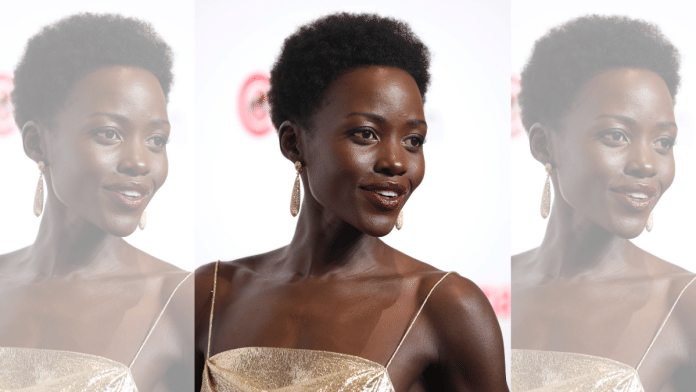
Casting Oscar winner Lupita Nyong’o as Helen of Troy inspired the predictable chorus: she could not have been dark-skinned. Even Elliot Page’s casting provoked another cycle of outrage. Is he playing Achilles? How can a trans man play the golden boy of Greek mythology? Then, the internet found out he was playing a Greek warrior, Sinon, and yet the indignation remained. Page is, after all, a transperson.
But Zendaya as Athena has generated comparatively little resistance. A reminder that audiences are remarkably flexible about diversity when it is packaged within an already familiar ideal of beauty. Plus, she is biracial.
All these long-drawn debates regarding the castings have been dressed up as fidelity to Homer. However, it is, in fact, a debate about beauty standards and about who has historically been allowed to embody them.
What would Homer say?
This kerfuffle would have left Homer himself baffled. His Helen belongs to the porous territory where myth and poetry constantly trespass upon each other. His was a world where gods walk among mortals, prophecies determine kingdoms, and the most famous woman in literature is born through divine intervention. The modern insistence on forensic realism would have seemed alien to an epic that never aspired to document precision.
The textual evidence is even thinner than many of Nolan’s critics appear to believe. Helen has just once been described as having “pale arms” — an epithet that classicists have long understood less as a racial category than as an aristocratic one. Pale skin in antiquity frequently signified a life away from agricultural labour, the complexion of privilege rather than ethnicity. Homer’s poetry offers metaphor and convention; it does not provide a casting call.
Representation is one of art’s oldest promises that every generation should be able to find itself reflected in the stories it inherits. When children and adults alike see people who look like them occupying the centre of a story rather than its margins, it expands the ownership of that work.
The confidence with which contemporary audiences visualise Helen owes far less to ancient Greece than to centuries of European art. Renaissance painters, Victorian illustrators, neoclassical sculpture and, eventually, Hollywood all settled upon a singular visual depiction of feminine perfection: fair skin, symmetrical features, European physiognomy. Repetition hardened convention into certainty until an artistic tradition came to masquerade as historical fact.
Also Read: Which Odyssey translation should you read before watching Christopher Nolan’s movie?
Welcome to Hollywood
Cinema has rarely been burdened by reverence for authenticity. Hollywood spent most of the twentieth century cheerfully redistributing identities whenever commercial convenience demanded it. White actors played Asian, Indigenous and Middle Eastern characters with astonishing regularity.
Scarlett Johansson’s Ghost in the Shell (2017), Emma Stone’s Aloha (2015) and Mickey Rooney’s grotesque Asian caricature in Breakfast at Tiffany’s (1961) are remembered precisely because they exposed an industry that regarded whiteness as infinitely adaptable while treating everyone else’s identity as optional.
Films have not abandoned authenticity. But audiences have become strangely selective about when they prefer it.
There are, naturally, limits. Historical biography is constrained by history itself. No serious filmmaker would cast a Black actor as Steve Jobs or Winston Churchill simply because identity in those stories is inseparable from the historical record.
But mythology and literature occupy a different imaginative contract. They endure because they are endlessly interpreted. Shakespeare has worn the costumes of feudal Japan, Nazi Germany and contemporary Manhattan without anyone suggesting that Hamlet had thereby ceased to be authentic.
Performance always seemed to matter more than resemblance. Even Cate Blanchett portrayed Bob Dylan, a man, in I’m Not There (2007) and grasped his mercurial intelligence and walked away with an Oscar nomination. She didn’t look like Dylan, but she is an actor, and she did a fine job. No one complained because she was white and in the acceptable bracket of beauty.
Morgan Freeman’s God in Bruce Almighty (2003) remains one of cinema’s most memorable acts of casting because his presence overwhelmed literalism. An actor’s vocation is transformation, not duplication. And audiences should let Nyong’o’s acting chops do the talking. But the scrutiny intensifies because she is a Black woman.
The same contradiction is visible much closer to home. Hindu texts repeatedly describe Krishna as dark-complexioned — his very name is associated with darkness — yet in movies and TV shows every depiction of the Hindu deity has been fair-skinned and it barely generates a murmur of protest. Fairness, absorbed through colonial inheritance and commercial cinema, easily became our default visual language for divinity.
The anxiety surrounding Nyong’o’s casting arrives before her performance. The objection resides entirely in the image. We have set such a narrow standard of beauty that even one of the most luminous actors today is asked to justify whether she can plausibly be the woman whose face launched a thousand ships.
The classics survive because every age remakes them. Homer has belonged to Byzantium, Renaissance Florence, Victorian England, post-war America and modern classrooms across the world. Hollywood’s Eurocentric ideas about Ancient Greece do not possess an exclusive claim upon the poet, any more than Verona owns Shakespeare.
Literature and cinema belong to everyone to interpret, embody and emulate.
Views are personal.
(Edited by Insha Jalil Waziri)