




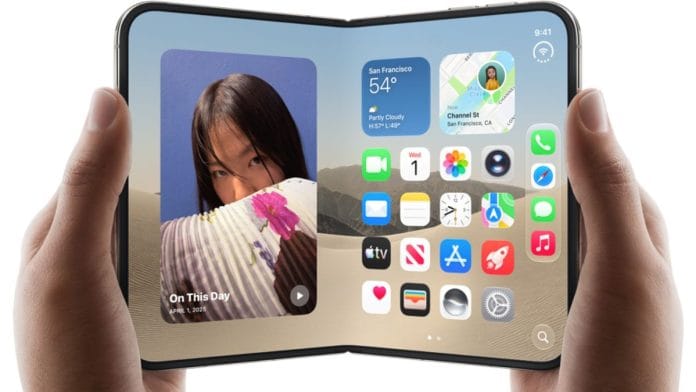

Apple has launched its next-generation iPhone, introducing the much-awaited foldable edition—the iPhone Duo. Then came the iPhone 18 Pro Max and Pro models, as backups. And it ended there. Apple decided to ditch its base models.
Most Indians were waiting for the last part, where Apple usually dropped its cheapest models. But this time, it didn’t, removing a thin, superficial cover that hid its truth—Apple means a separate class, a separate hierarchy which isn’t meant for everybody.
The base model for the iPhone Duo has been pegged around Rs 3 lakh in India. The top model can cost you around Rs 4.5 lakh. Well, with this much money, you can complete the down payment for a premium hatchback car in India. In fact, the on-road price of the base model of Alto K10 is around Rs 4.3 lakh in New Delhi.
One can always say, the iPhone Duo ‘was never meant to cater for the middle class’ in Indian society. Fair enough. But the Pro and Pro Max models have also been priced between Rs 1.64 lakh and Rs 3.29 lakh. With an average salary of Rs 3.8 lakh a year in India, such phones will always be a distant dream.
Nonetheless, the sheer price pain for smartphones continued when Apple took it a notch higher. It decided to increase the price of previous editions’ base models, flipping the traditional playbook completely upside down. They discontinued the long-standing practice of reducing the price of previous-generation models when new flagships arrive.
This unprecedented move is colloquially referred to by industry watchers as the “RAMageddon effect,” where the cost of memory chips has shot up as a result of excessive demand by AI models and data centres. And this can become a good excuse for Apple to justify the price absurdity.
But for customers, it’s stripping away equality. An equality which was once provided by Apple itself.
Also read: From BAPS-Paris to Kochi, the same patriarchy: protect women by removing them
The illusion of social status
The hullabaloo around the iPhone 18 launch was expected. Most treat iPhone launch events as cultural gatherings where people queue up, wait for hours, compare cameras, choose from colours and discuss specifications—most of the time, which remains the same.
And Apple had a way of implying ‘there is an iPhone for you too’. That is when the base models came into play. It was the fig leaf in Apple’s hierarchy model. You can spend Rs 50,000 to Rs 70,000 to enter the club. That’s not cheap, but it’s achievable for a section of India’s middle class.
With that gone, it seems Apple is removing a ladder that was once provided by them. It looks like a status symbol being snatched away. The worst part? Apple is not at all being subtle about it. It’s like, in your face, that the status symbol is an illusion that is not within everyone’s reach.
During the launch event, Apple CEO John Ternus, who recently took over from Tim Cook, said, “In other words, you would arrive at something remarkably familiar, because there’s no product in the world better designed to be your intelligent personal hub than iPhone.”
Well, when he calls it a “personal hub”, what happens when access to that “hub” becomes more and more expensive, deliberately pushing those on the lower rungs out of the ecosystem?
For years, Apple had been clever and subtle about its hierarchy. You could enter the ecosystem without buying its most expensive device. You could skip the Pro Max and Pro models, wait for an older version, or pick the base model with the low specifications. There was a way around the hierarchy that Apple had created.
Apple could have sold exclusivity at the top while maintaining accessibility at the bottom. The base iPhone made the ecosystem feel bigger. It was meant for people who wanted to climb a ladder with an aspiration.
Apple has always been a luxury company meant for a certain class. But at this year’s launch, they made it evident.
Views are personal.
(Edited by Ratan Priya)