



Deserving OBC candidates cannot be denied the benefits of reservation due to arbitrary administrative interpretations. They have the constitutional guarantee of equality. The determination of creamy-layer status among OBCs must strictly adhere to the principles laid down in the Department of Personnel & Training (DoPT) memorandum of 1993.
In particular, the salaries earned by parents employed in public sector undertakings (PSUs), banks and other organisations cannot, by themselves, be the deciding factor in denying their children OBC Non-Creamy Layer (NCL) benefits. The nature and status of the parents’ posts must also be considered.
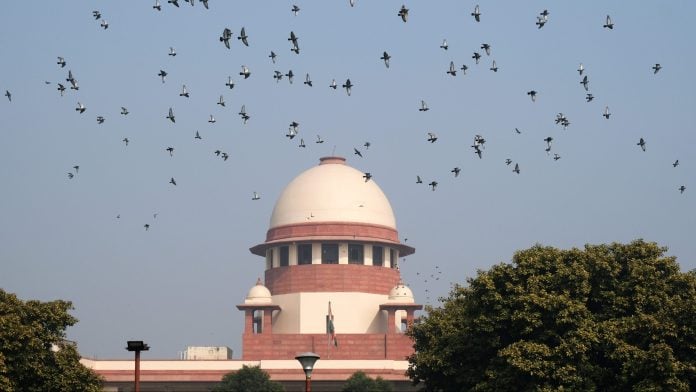
The Supreme Court, in its landmark judgment dated 11 March 2026 in Union of India & Others v. Rohith Nathan and Another, has brought significant clarity to this issue. The order also settled the legal position governing OBC creamy-layer determination.
1993 and 2004 DoPT Office Memorandum
The controversy stems from a clarification issued by the DoPT on 14 October 2004, which deviated from the 1993 Office Memorandum laying down the criteria for identifying the creamy layer among OBCs.
The 1993 Office Memorandum provides for exclusion based on the status of parents’ posts under different categories. Category II(C) extends the service-related criteria to employees of PSUs, banks, insurance organisations, universities and similar institutions by comparing their posts with equivalent or comparable government posts. However, until such equivalence is determined, the memorandum provides for the application of the Income/Wealth Test under Category VI.
In contrast, a clarification issued by the DoPT on 14 October 2004 addressed the application of the OBC creamy-layer criteria to the children of employees of PSUs, banks and other organisations, particularly where post equivalence had not been established. The clarification counted parental salary income separately when determining creamy-layer status.
Consequently, several candidates who had cleared the civil services examination and other competitive examinations were illegally denied OBC-NCL benefits because their parents’ salaries exceeded the prescribed income limit, even though the equivalence of their parents’ posts with government posts had not been determined.
This created an unequal situation and a grave injustice. Children of OBC government employees were assessed under the status-based criteria applicable to their parents’ posts. In contrast, children of OBC employees in PSUs and banks could be excluded merely because of their parents’ salaries.
The affected candidates approached various Central Administrative Tribunals, which granted relief by holding that salary income could not be used mechanically to exclude candidates from OBC reservation, contrary to the rules laid down in the 1993 Office Memorandum.
The union government challenged these decisions before the Madras, Delhi and Kerala High Courts. The high courts unanimously dismissed the challenges and upheld the relief granted to the candidates.
The matter ultimately reached the Supreme Court. Comprising Justice PS Narasimha and Justice R Mahadevan, the court bench dismissed the appeals filed by the Centre. It held that a government letter or clarification cannot override or amend the substantive provisions of an existing 1993 office memorandum.
The court clarified that, where equivalence between posts in PSUs, banks and other organisations and government posts has not been determined, the Income/Wealth Test under Category VI applies. Importantly, the 1993 Office Memorandum provides that salary income and agricultural income are not to be clubbed with income from other sources for this test.
The top court held that salary income alone cannot be the deciding factor in determining whether a candidate belongs to the creamy layer. The status and category of the posts held by the candidate’s parents must also be taken into account.
The judges also considered the difference in treatment between children of government employees and children of employees in PSUs and other organisations. Excluding candidates in the latter category merely on the basis of salary, without examining the nature and category of their parents’ posts, would amount to hostile discrimination between similarly placed persons.
Such unequal treatment would violate the constitutional guarantees under Articles 14, 15 and 16. Supreme Court took note of the 21st Report of the Parliamentary Committee on the Welfare of Other Backward Classes. It directed the government to create the required supernumerary posts to accommodate eligible candidates and intervenors who satisfied the OBC-NCL criteria laid down in the judgment. It also directed the Centre to consider their claims and implement the judgment within six months.
Following the judgment dated 11 March 2026, the central government approached the Supreme Court, stating that implementing the judgment might adversely affect the spirit and intention of reservation policy. Among other reliefs, the government sought two years to implement the order.
I appeared and argued before the Supreme Court on behalf of some candidates.
On 6 November, the Supreme Court made it clear that the interpretation of the 1993 Office Memorandum and the 2004 clarification could not be reconsidered in those proceedings. The same applied to its rejection of mechanical exclusion based on salary income, and the relief granted to the successful litigants. The court also reiterated that the legal principles laid down in its March 2026 judgment are binding under Article 141 of the Constitution.
Still, the individual relief granted applies to the respondent candidates and intervenors before it. That judgment cannot be interpreted as a general reopening of completed selections, appointments or seniority. The court directed the creation of such supernumerary posts as may be required to accommodate candidates who satisfy the OBC Non-Creamy Layer criteria clarified in the judgment.
It also directed that all selections, appointments and allotments against roster points made after 11 March relating to reservation and creamy-layer exclusion must follow the 1993 Office Memorandum.
Also read: Both upper caste and quota creamy layer cite merit. But their goals are different
In so far as the Civil Services Examination 2025 results are concerned, the government’s prayer to carry out the allocation under the earlier interpretation of the creamy-layer rules was rejected, and the Court directed that the principles laid down in its March judgment must be followed. The Court rejected the request for two years and granted two months from 6 November to comply with its judgment.
These Supreme Court judgments are milestones in social justice, marking an important step toward correcting 22 years of injustice. I hope Prime Minister Narendra Modi will ensure that the judgment is implemented promptly and without further administrative delays. Centre should not subvert the Supreme Court’s judgment by using tactics such as Article 143 presidential references.
The constitutional promise of social justice must not be reduced to lip service, but must be reflected in effective implementation.
Thiru P. Wilson is a Senior Advocate and Member of Parliament (Rajya Sabha). Views are personal.
(Edited by Ratan Priya)