








The sharp decline in the Indian rupee’s value over the past two and a half months, amid the ongoing war involving the US, Israel, and Iran, has become a major concern for policymakers.
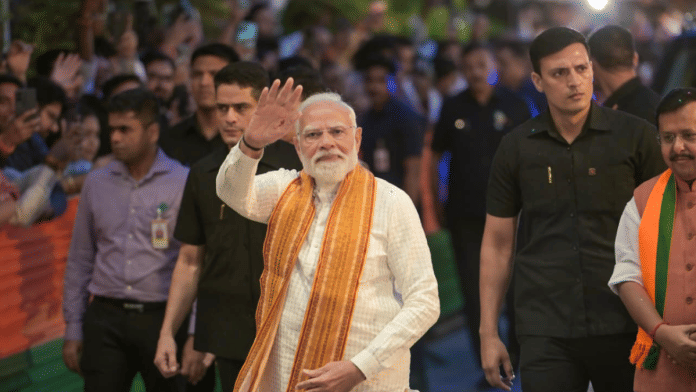
Though not directly referring to the fall of the rupee, anyone can guess that Prime Minister Narendra Modi’s appeal to the nation on 10 May 2026—to conserve petrol and diesel by minimising unnecessary vehicle use, curtail foreign travel, work from home, and conduct meetings online—was actually an appeal to citizens to help protect the rupee by conserving foreign exchange.
It’s important to note that during this period of the Gulf conflict, India’s foreign exchange reserves have depleted by $ 38 billion, declining from $ 728.5 billion on 27 February 2026 to $ 690.7 billion by 12 May 2026.
Generally speaking, there are two views about the stability of the rupee. One set of people believes that the exchange rate is nothing but a market-determined variable, and one should not worry, even if the currency depreciates, as imports and exports will adjust automatically to the changing exchange rate. They are of the view that depreciation of the domestic currency may discourage imports, while simultaneously encouraging exports. They also believe that the Indian rupee is overvalued and that any intervention by the Reserve Bank of India (RBI) to arrest its decline could hurt the economy—encourage imports and discourage exports.
The second set of people favours a strong rupee. They feel that only a strong currency can help control inflation, keep foreign exchange outflows, due to debt services (repayment of principal and interest), dividends, royalties, salaries and other income transfers under check.
Prime Minister Narendra Modi, before taking over the reins of power, had argued that misguided policies of the previous governments were responsible for the rupee’s decline, and therefore, a right set of policies can only help stop the depreciation.
RBI can’t save the rupee
Though the value of the rupee has always been a matter for discussion, we need to understand that, however strong a government is, it cannot artificially determine the exchange rate and help it appreciate. The exchange rate is determined by the forces of demand and supply of foreign currencies (say dollars), while demand for foreign exchange comes from imports of goods and services, debt servicing (repayment of principal and interest on the loans raised in the past), income transfers on account of dividends, royalties, technical fees, salaries, and other income transfers. Foreign exchange comes from exports of goods and services, net inflow of foreign direct investment (FDI), and foreign portfolio investment receipts from abroad etc.
If the government wishes for a strong rupee, it cannot achieve the same artificially by administratively determining the exchange rate. No doubt, sometimes RBI does engage in market interventions and tries to curb short-term volatility in the rupee by increasing the supply of foreign exchange in the market, but this has only a limited impact in the long run if the rupee depreciates due to a chronic deficit in the balance of payment on the current account (CAD).
Any attempt by the RBI to artificially keep the value of the rupee intact requires it to inject more and more dollars from its kitty of foreign exchange reserves. Therefore, there is a danger of reserves being depleted if the RBI continues to interfere in the foreign exchange market. What we really need now is to correct the basic factors responsible for this deficit, in order to improve the value of the rupee.
The value of the rupee had remained relatively stable between 1 April 2024 and 31 March 2025, and depreciated by only 2.3 per cent. But since 1 April 2025 to date, it has depreciated by 11.7 per cent. Major depreciation occurred since the advent of war from 27 February 2026, till 13 May 2026. The rupee has depreciated significantly, by 4.4 per cent from 91.1 per US dollar to 95.5 in a short span of two and a half months.
We understand that the main reason behind the decline is the rising prices of crude oil, which is ballooning the balance of trade deficit, and the sustained selling by the Foreign Portfolio Investors in stock markets. Though we expect that the rupee will stabilise after the war, the long-term solution to the problem can be found by correcting the balance of payments of the country.
The first component of the balance of payment is the merchandise trade balance. Over the years, India has seen a significant rise in imports of merchandise and sluggish exports over time. But during 2025-26, the imports witnessed a sudden spurt, while exports almost stagnated. As a result, the merchandise trade deficit increased by nearly 50 billion US dollars, rising from US$ 283.5 billion in 2024–25 to US$ 333.2 billion in 2025–26.
This sharp increase in trade deficit was partially offset by a higher surplus in invisibles trade, which increased by $25 billion from $188.8 billion in 2024-25 to $213.9 billion in 2025-26.
Also read: Rahul Gandhi vs Modi on CBI chief selection is a sideshow. The agency shouldn’t exist at all
Rising import bills and foreign exchange outflows
The major items of merchandise imports by India include petroleum products, gold, edible oils, chemical fertilizers, etc. Another big component of foreign exchange outflow is foreign travel by Indians. Continuous and fast rise in merchandise imports and stagnated exports is an alarm bell for the economy in general and for the value of the rupee in particular. Demand for foreign exchange due to foreign travel and Indian students going abroad for studies has also been increasing in recent years.
It is estimated that in 2025-26, the crude oil import bill will be nearly $135 billion; the expected outgo of foreign exchange on gold imports, chemical fertilisers, and edible oil bills is expected to be $ 72 billion, $14 to 18 billion US dollars, and $19 billion, respectively. Foreign exchange spending by Indian travelers going abroad and Indian students going to study abroad is costing nearly $ 30-35 billion and $15-20 billion, respectively.
The Prime Minister’s recent appeal to the citizens is valid. Given the gravity of the problem of a constantly declining rupee due to global conflicts, a disturbed value chain, and the danger of depletion of our foreign exchange reserves, the nation has to act fast, rising above the narrow political narratives, to safeguard the interests of the country. If we can reduce the outgo of foreign exchange by even 10 per cent, by reducing imports and restraining ourselves, we can save nearly $ 30 billion, and help save the value of the rupee.
Ashwani Mahajan is National Co-Convener of Swadeshi Jagran Manch and a former professor at PGDAV College, University of Delhi. He tweets @ashwani_mahajan. Views are personal.
(Edited by Ratan Priya)