








As the dust settles after the elections and the Congress finally finds a candidate for Kerala’s chief ministerial post, national attention is returning to the energy crisis triggered by the West Asia conflict. It is surprising that the political class is behaving as though the war between US-Israel and Iran began only last week, when election results were announced. But the conflict has been tormenting global energy markets for more than three and a half months. Several Asian countries have already initiated emergency measures and restrictions on energy use, not merely as suggestions, but through enforceable administrative orders backed by punitive action for violations.
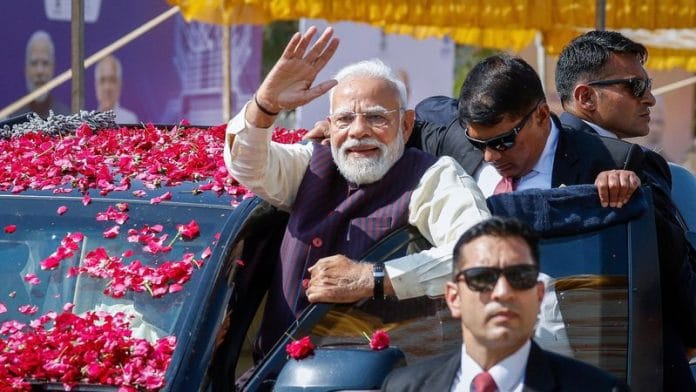
Prime Minister Narendra Modi has suggested a ‘seven-point programme’ to mitigate the effects of the energy crisis and tide over the current shortages arising from the West Asia conflict. These suggestions include avoiding gold purchases for at least one year, cancelling foreign travel and destination weddings, encouraging work from home (WFH), decreasing fertiliser use by about 50 per cent, reducing edible oil consumption, promoting carpooling and public transport, encouraging the use of electric vehicles (EVs) for local transport, and emphasising ‘Be Indian, Buy Indian’ by encouraging swadeshi products.
The cumulative effect of these suggestions, if followed seriously by a large section of consumers, is likely to lessen the central government’s economic burden by plugging the outflow of foreign exchange.
According to a report by the United Nations Development Programme (UNDP), shortages and the subsequent non-availability of energy, or exorbitantly high oil prices, could lead to rising living costs that would seriously affect poor and near-poor households. The report also warns of a sharp increase in fertiliser prices ahead of the key crop-sowing season, lower yields resulting in food insecurity, and employment losses due to the possible closure of informal businesses and micro, small and medium enterprises (MSMEs). Women and migrant workers are likely to face greater subsistence issues across several Asian countries.
India is no exception. Moody’s Ratings has already lowered India’s GDP growth forecast for 2026 by 0.8 percentage points to 6 per cent, mainly due to weak private consumption, slower capital formation and industrial activity, along with higher energy costs. It has also lowered the 2027 growth outlook to 6 per cent from earlier estimates, citing lingering global and domestic pressures.
Also read: Modi’s austerity appeal amid Gulf war shows his luck may have run out
What drove the austerity appeals
This is not the first time, and probably will not be the last, that the Indian economy’s growth trajectory has faced headwinds. The coronavirus pandemic forced an economic retreat, but it also highlighted India’s resilience and capacity to absorb shocks and rebound with vigour. The current West Asia crisis and the ongoing Russia-Ukraine conflict are likely to have a deeper and longer-lasting negative impact, even if the conflicts end soon. Hence, the Prime Minister’s seven-point appeal is timely and strategically significant.
The Prime Minister’s appeal to reduce fertiliser use assumes greater importance because the government’s fertiliser subsidy bill reached a staggering Rs 6.77 lakh crore between 2022 and 2026. This was driven by a pricing structure under which urea is sold to farmers at Rs 242 per 45 kg bag while its actual cost is approximately Rs 2,200.
Besides the vagaries of weather, changing crop patterns, monsoon delays or failures, and the non-availability of sufficient farm labour — partly due to the ‘freebies’ culture patronised by political parties — the West Asia crisis has added to shortages and disruptions in the supply of liquefied natural gas (LNG), a crucial feedstock for nitrogen-based fertilisers such as urea.
While the government cannot suddenly withdraw subsidies, implement the recommendations of the Economic Survey 2026 overnight, or shift entirely to organic manure, it should have already put in place a long-term sustainable plan. Successive governments have failed to evolve an alternative to imported fertilisers.
Barely forty-eight hours after government sources assured the public that there were no plans to impose restrictions on the use of international cards or raise import duties on precious metals such as gold and silver, the government increased import duties on gold and silver from 6 per cent to 15 per cent, and on platinum from 6.4 per cent to 15.4 per cent.
While this steep increase in duties may reduce dollar outflow, protect the rupee, and curb the current account deficit (CAD), it is also likely to fuel inflation and increase the risk of smuggling. A long-term Sovereign Gold Bond scheme with attractive returns could serve as a better alternative for long-term investors while also streamlining imports and improving economic management.
Also read: 3 things Indians should know about PM Modi’s austerity appeal
It’s not an economic Emergency
Looking at the larger picture, the Prime Minister’s austerity measures seem logically sound, relevant, and symbolically significant for crisis management. Earlier appeals, such as the call to surrender LPG subsidies, adopt digital payment systems like UPI, and participate in the Swachh Bharat Abhiyan, have seen positive results.
The Prime Minister’s seven-point austerity measures should not be viewed as signs of an economic Emergency, but rather as an attempt to prepare citizens for a prolonged period of geopolitical and geoeconomic uncertainty. Nevertheless, the government needs to do much more than just asking people to tighten their belts. The current economic crisis, and the shocks likely to follow, demand long-term structural reforms and swift policy interventions rather than temporary, band-aid solutions.
Seshadri Chari is the former editor of ‘Organiser’. He tweets @seshadrichari. Views are personal.
(Edited by Prashant Dixit)
Talking rubbish because he is a bhakth.