





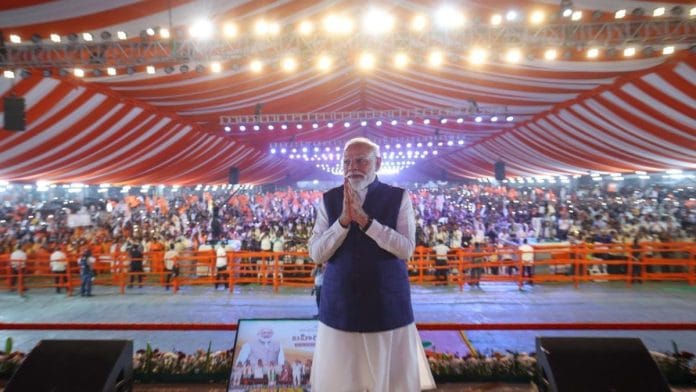


In a recent speech in Hyderabad, Prime Minister Narendra Modi urged Indians to work from home, delay gold purchases, and refrain from unnecessary international travel. Some have perceived the recommendations as merely symbolic, while others have deemed them impractical. However, a closer examination of the underlying data reveals a strategic communication regarding the gravity of India’s current economic situation.
The catalyst for this appeal is the disruption of the Strait of Hormuz, a critical maritime passage between Iran and Oman through which nearly 20 per cent of the world’s oil supply is transported. The disruption has driven the price of Brent crude oil to exceed $107 per barrel this week, which previously peaked above $126 last month. Brent crude serves as the global benchmark for oil pricing, influencing the cost of commodities ranging from gasoline to plastics worldwide. While many nations experience a surge in Brent prices as a significant inconvenience, for India, it exposes a fundamental economic vulnerability.
India imports approximately 88 per cent of its crude oil, with 40 to 50 per cent historically passing through the Strait of Hormuz. It is estimated that every $10 per barrel increase in Brent prices expands India’s current account deficit by approximately 0.3-0.5 per cent of GDP, adding billions to the annual import expenditure. The current account deficit, which represents the difference between a country’s earnings from and expenditures to the rest of the world, is a critical indicator of an economy’s sustainability. With Brent prices escalating from approximately $60 to over $120 within a few months, this deficit is rapidly widening.
3 requests, 3 items
Each of Modi’s three requests directly corresponds to specific items in India’s import ledger.
Oil represents the most pressing concern. India’s expenditure on crude oil and petroleum imports amounts to hundreds of billions of dollars annually, constituting approximately 22 per cent of its total import bill. By encouraging citizens to work from home, carpool, and use public transportation, Modi is not idealising the pandemic. Rather, he is urging citizens to undertake actions that monetary policy cannot swiftly achieve: to reduce petroleum demand at the household level, even marginally, in order to alleviate pressure on the rupee and the trade deficit.
Gold constitutes the second area of concern. In April, India’s gold imports increased 24 per cent, reaching an unprecedented high of $71.98 billion, up from $58 billion the previous year. India imports nearly 85 per cent of its gold requirement, positioning it among the world’s most gold-dependent nations. Every rupee spent on imported gold represents a rupee exiting the domestic economy, thereby exerting pressure on the current account. At a time when the current account deficit is already strained by oil imports, Modi‘s request is a prudent one: not to permanently forego gold, but to temporarily pause its acquisition for a year, until the economic situation stabilises.
Outbound tourism constitutes the third area of economic outflow. When Indians travel abroad for leisure, they expend foreign currencies such as dollars, euros, and dirhams. Collectively, this outflow worsens current account pressures. Modi’s ask is both time-bound and specific, serving as an economic buffer rather than a critique of lifestyle choices.
Also read: Trump-Xi summit reveals a rivalry too deep to decouple, too tense to cooperate
What should Indians infer from PM Modi’s appeal?
First, it should not be perceived as a cause for alarm. India’s foreign exchange reserves, comprising a stockpile of dollars, gold, and other assets held by the Reserve Bank to defend the rupee and finance imports, provide a substantial cushion. Remittances from the Indian diaspora continue to bolster this buffer, and the government has proactively diversified crude sourcing away from routes dependent on the Strait of Hormuz. The institutional frameworks remain robust.
Second, it is important to recognise that the prime minister’s message represents a preliminary stage in the forthcoming policy discourse. More stringent measures could follow, such as adjustments to import duties, recalibrations of fuel prices, and incentives for domestic alternatives.
Third, individuals should assess their own financial circumstances. Domestic gold prices have reached unprecedented levels, averaging above Rs 1,50,000 per 10 gram in early 2026, which may not be the most rational entry point for new purchases. Sovereign Gold Bonds and gold ETFs, exchange-traded funds that track the gold price without necessitating physical import, provide the same inflation hedge with a significantly lower foreign exchange impact on the economy. For equity investors, the depreciation of the rupee from approximately Rs 84 to Rs 95 against the dollar over the past year serves as an indicator. Export-linked equities, shares in companies that earn in foreign currency, such as IT services or pharmaceuticals, tend to benefit when the rupee weakens, as their dollar revenues convert into more rupees domestically.
There exists, however, a valid counterargument. For millions of Indian households, gold is not a luxury; it is savings, collateral, and insurance combined. Requesting people to forego it is tantamount to asking them to accept increased exposure to a depreciating rupee without a clearly defined alternative store of value. While Sovereign Gold Bonds offer some assistance, their penetration remains limited.
Similarly, the option to work from home is a privilege unavailable to the vast majority of India’s workforce. Modi’s appeal, regardless of its well-intentioned nature, resonates differently depending on one’s position within the income distribution. The economist’s instinct is to ask not only whether the policy makes sense in aggregate, but also who, specifically, is being asked to bear the cost.
Ultimately, Modi’s appeal is not a directive but an invitation to comprehend the economy in which one resides and to act accordingly. The numbers suggest that it is not a bad idea.
Bidisha Bhattacharya is Consulting Editor (Economy) at ThePrint. She tweets @Bidishabh. Views are personal.
(Edited by Prasanna Bachchhav)
As children, grandmother told us of the man who prayed to God, Haay Rabba, mera kharcha vadhaa. Explained that a man could only spend more if he earned more. ( No credit cards to max out in those days. ) So while this may be a time for austerity ( government setting a fine example for citizens ), that will mean, in myriad ways, a shrinkage of GDP, jobs, tax revenues. 2. A better course would be for our government to work with other major governments to swiftly bring this war to an end. 3. Sensex and INR chasing each other down in a spiral.