




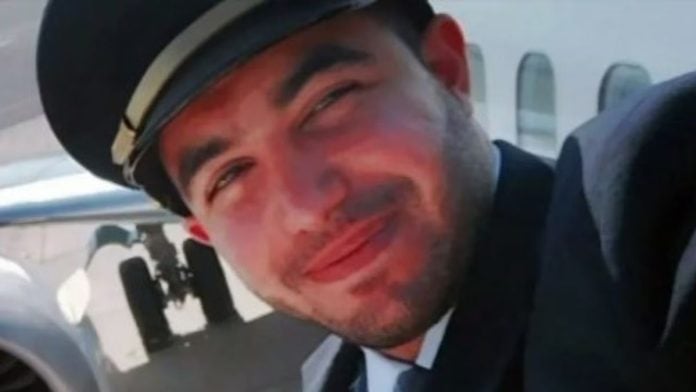

Eleven times, First Officer Gameel el-Batouti gently whispered the words, as EgyptAir 990’s autopilot disconnected and the Boeing 767-300 began dropping toward the ocean at close to the speed of sound—“Tawakkaltu ‘ala Allah.” I rely on god.
From past studies, experts knew el-Batouti’s pitch should have risen and his delivery quickened as he entered a state of panic, and lost the ability to function and reason. They found “a rhythmic repetition of the phrase rather than an accelerating trend.” “Tawakkaltu ‘ala Allah”: Each iteration of the incantation was serene, even as the airframe began to disintegrate and the recording system died.
As investigators work to understand the motives behind First Officer Hammam al-Hammami’s near-successful plan to crash Tel Aviv-bound FlyDubai flight FZ1073, the 1999 EgyptAir case offers a bleak warning. We may never know the truth. America’s National Transportation Safety Board said el-Batouti had deliberately put the aircraft into a nosedive—but was unable to determine “the reason for the relief of the First Officer’s actions.”
There is little doubt al-Hammami came within seconds of killing all 172 people on board. Less clear is what led to his decision. He was reportedly removed from flight duties as an Oman Air trainee pilot in 2024, after being found with jihadist literature. Although there is speculation al-Hammami targeted Israel to avenge the war in Gaza, investigators have said nothing.
Few stories are as simple as they first appear. Earlier this week, the United States sentenced military psychiatrist Nidal Hasan—responsible for killing 13 people in 2009, including pregnant bomb-disposal expert Francheska Velez—to execution by firing squad, the first since the Second World War. Hasan’s attempt to cast his actions as vengeance for American war crimes never got a hearing in court.
Lone-wolf terrorists like al-Hammami aren’t alone, though; they are heard. Their actions are, as it were, performances of the rage and fantasies of hundreds of millions of people. Easy clichés about the mindless bloodlust of jihadists do nothing to address the despair among Muslims over the genocidal war in Gaza and the failure of the international system to end it. Leaving the truth about al-Hammami unresolved invites myth-makers to endow him with the halo of martyrdom.
The unspeakable truth
Lying in a hospital bed soon after shooting dead 13 people, an intravenous drip irrigating his mind with the powerful barbiturate sodium amytal, Howard Unruh explained why he’d done it. The first well-documented mass killer in recorded American history, psychiatrist Richard Garber recorded, spoke of wanting to be sexually intimate with his mother and hating her at the same time. Later, he told doctors he blamed his mother “for everything, smothering him, babying him.” For psychiatrists practicing in the high noon of Sigmund Freud’s influence in America, this was analytic gold.
Better still, the story allowed for a finding of insanity, so no trial could be held. Unruh was a gay soldier, a war hero, subjected to homophobia—and the US was not ready to hear his story. The decorated veteran, a tank gunner in the Battle of the Bulge, had come home to relentless shaming about his sexuality. Taunts of “Nancy Boy,” “girly,” “pansy,” and “fairy” followed him down the street, a friend later recalled.
The story of Nidal Hasan, the American military psychiatrist who killed his comrades at Fort Hood, shows why some killers are embraced as heroes. Hasan sacked his legal team—apparently so that he could present his actions as a legitimate defence of Islam against illegal American action. The judge rejected this line of argument, and Hasan barely spoke in court thereafter.
Less than 72 hours before opening fire with his FN Five-seveN pistol, though, Hasan sought permission to contact law enforcement with information on war crimes committed by his soldier-patients in Iraq and Afghanistan. His immediate superior, Naomi Surman, said he had made a similar appeal to her the previous month, only to be reminded of the strict confidentiality rules governing the doctor-patient relationship.
Eleven months after the Fort Hood massacre, leaked documents showed that American and British forces had granted their Iraqi partners immunity for rape, torture and summary execution, used air power against surrendering insurgents, and presided over a war in which more than 66,000 civilians had been killed.
Killing for a cause
“I feel like God,” wrote 18-year-old Eric Harris just three weeks before he marched through a school corridor with his friend Dylan Klebold, killing 13 people before the pair shot themselves.
“Everyone is always making fun of me because of how I look, how f****** weak I am and s***, well I will get you all back,” Harris continued.
Then came a moment of reflection: “I have practically no self-esteem, especially concerning girls and looks and such.” The scholar Jennifer Murray noted that violence was a transcendental experience for the mass killers she studied, a means of living out their fantasies of agency and power.
An unremarkable student, an honourable but unremarkable officer and a less-than-committed believer, Hasan likely began his journey toward personal godhood in the summer of 2001, when his mother, Hannan Hasan—Nora to her friends—died. The Hasan family had been only nominally observant, but the young soldier’s worldview had slowly begun to change, shaped by the fevered cultural climate born of the September 11 attacks.
Lonely and anxious, Hasan lurched from website to website and cleric to cleric, driven by fear that his mother might be condemned to hell because her grocery store had sold liquor. Scholars who have studied the case say he was seeking to construct a new identity, tied to the only community that seemed open to him. Among those he met was Anwar al-Awlaki, imam at the Dar al-Hijra mosque in Falls Church, Virginia, and an al-Qaeda recruiter who mentored terrorists such as Umar Farouk Abdulmutallab, Faisal Shahzad and Roshonara Choudhry.
There was, in fact, less to the al-Awlaki connection than media accounts suggested. From the declassified testimony of FBI officer Wade Ackerman, we now know al-Awlaki fled the United States after being warned that the FBI was asking about his use of sex workers, and feared exposure before his conservative congregation.
Late in 2008, as FBI officials listened in, Hasan emailed al-Awlaki some 20 times, offering to set up an essay contest in his honour and posing religious questions. The FBI did nothing because it did not regard al-Awlaki as a threat. The agency had conducted its own extended correspondence with him, documents show, and met with him at a prison in Yemen in 2007. The CIA concluded only in 2009 that al-Awlaki was a terrorist, and sought authorisation for his killing.
Over this period, Hasan became increasingly bigoted, quarreling with family members over Islam, insulting women co-workers and telling one colleague she would go to hell because she was not a Muslim. He also became convinced that his faith and his national loyalties could not coexist. The bigotry, though, did not turn to violence—until his personal neurosis collided with a cause.
Also read: MbS should have learned from grandfather Abdulaziz that intrigue is not a game for amateurs
The make-believe enemy
Twenty-seven years after the EgyptAir crash, conspiracy theories occupy the space that ought to have been claimed by fact. The government of President Bill Clinton chose not to confront a political ally in the Middle East, and allowed the FBI’s investigation of the pilot to die on the vine. Evidence that el-Batouti might have been enraged by allegations that he had propositioned a hotel maid and exposed himself to teenagers was never pursued. Egyptian nationalists proclaimed el-Batouti a victim of American imperialism and Islamists proclaimed him a martyr, while white nationalists asserted the pilot’s suicide was an act of religious terrorism.
Looking at America’s depressingly rich culture of hate, the anthropologist Hugh Gusterson famously described mass killing as a “kind of Rorschach inkblot in which people see what they fear, or what they want to see.” Few paused to ask how their nations, their communities or they themselves had helped set the stage for violence.
The courage of the pilots and passengers on FZ1073 prevented a catastrophic act of terrorism that would almost certainly have escalated the wars raging across the Middle East. Ending those wars, though, requires the region’s leaders to acknowledge that al-Hammami grew from the poisonous seeds they have sown.
Praveen Swami is a Contributing Editor at ThePrint. His X handle is @praveenswami. Views are personal.
(Edited by Ratan Priya)
Instead of confronting the direct line between radical Islamic indoctrination and the co-pilot’s actions, Mr. Praveen Swami spins out this pseudo-intellectual yarn about how ‘lone-wolf terrorists become martyrs when their motives remain unknown.’
This is the usual high-sounding, albeit futile, attempt to intellectualize plain Jihadi terror.
Please desist from myth-making, deflection through ambiguity, and all kinds of vague abstraction. That brand of writing is long past its expiration date and emanates a foul odor. Call a spade a spade. Life is short. Satyameva Jayate, nānṛtaṁ—truth alone triumphs, not falsehood—whether you agree or deny.
By the way, using a warm, smiling photo of a radicalized terrorist who tried to murder the Captain, and crash a plane full of civilians is the cherry on top of this editorial sanitization.